ochoin ochoin  | 24 Jan 2026 3:39 a.m. PST |
url=https://postimg.cc/JGZW21WD]
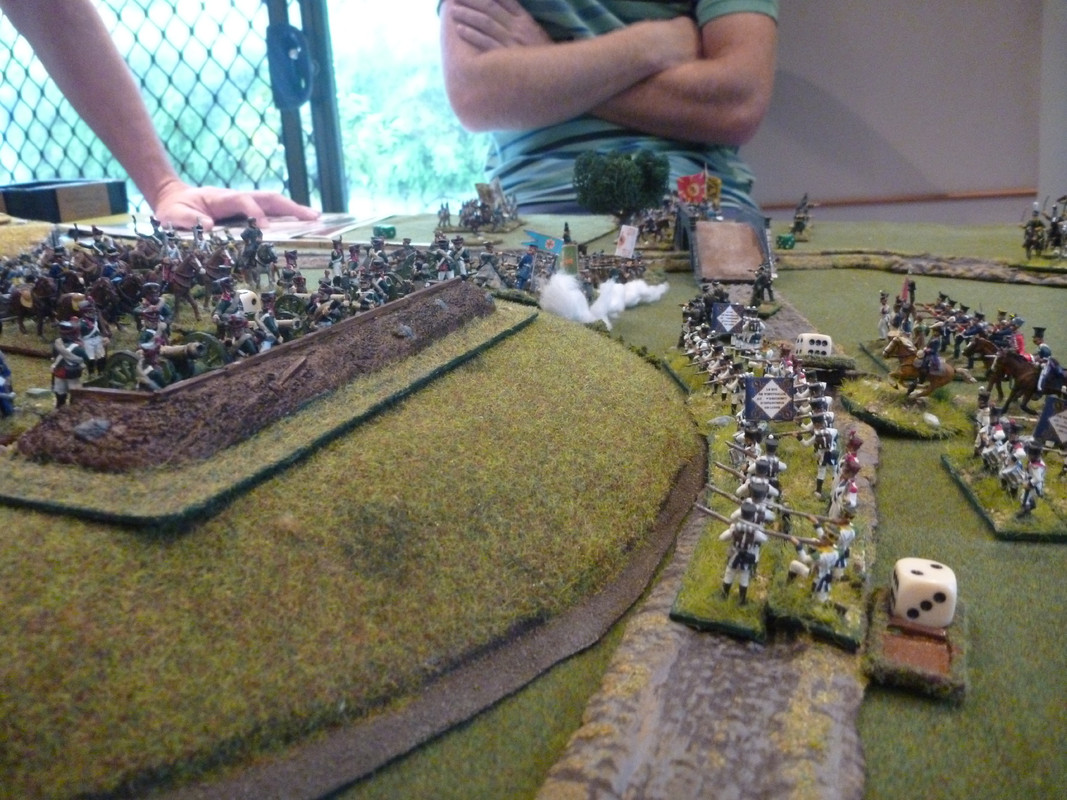
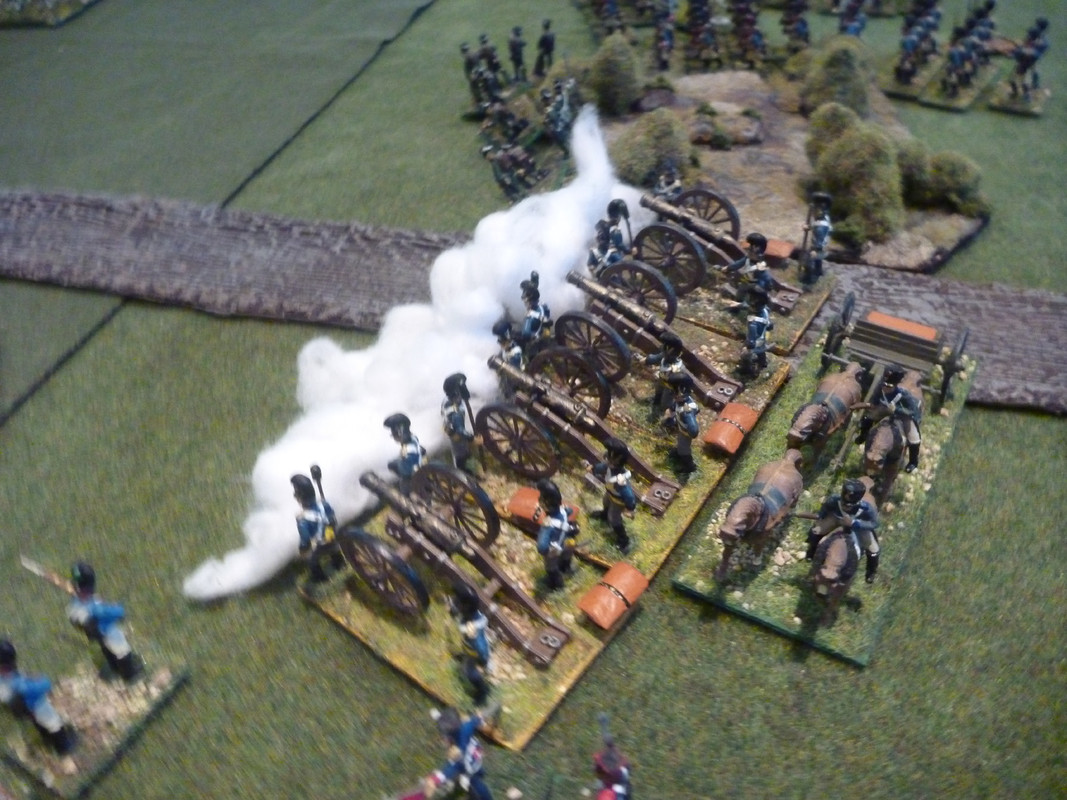
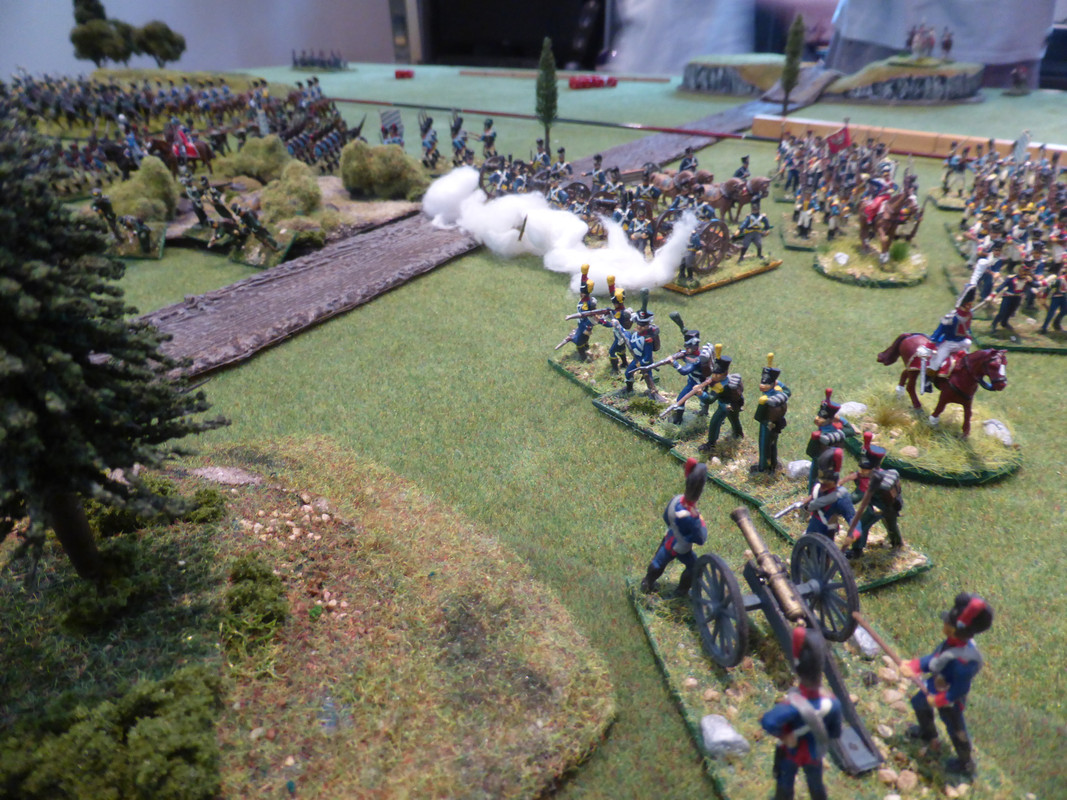
In your Napoleonic games, does artillery actually shape the battle, or does it mostly sit there waiting for a lucky dice roll or the blunder of your opponent ("We'll charge the guns!") I don't mean whether artillery is powerful on paper but whether it actively influences decisions: forcing units to halt, redeploy, form square, or attack earlier than planned. In several Napoleonic rule sets I've played, artillery feels impressive but passive — it fires each turn, occasionally causes damage, but rarely changes behaviour unless the dice spike. I now use 'Valour & Fortitude' and this feels even more so. Historically, even modest gunfire could pin formations, disrupt timing, and create pressure long before units broke.
Napoleon (a gunner, of course) was aware of this & often tried to force a result with his guns. On the tabletop, should artillery be about accumulated influence rather than isolated high-impact results? If so, how have your rules (or house rules) handled this? theminiaturespage.com
"TMP link theminiaturespage.com
"TMP link |
| Eumelus | 24 Jan 2026 4:18 a.m. PST |
My club mostly uses 1st-edition "Napoleon's Battles" (with a fair number of club "house rules"), and with NB it is absolutely the case that mid- to large-scale "Eastern Front" battles are shaped by artillery. A grand battery of 4+ artillery units (representing 24-32 pieces) dominates the ground in front of it and can never be blithely disregarded. Their concentrated fire is very likely to disrupt or even rout entire enemy brigades in a single turn (representing 30 minutes). Small battles and Peninsular fighting tend to be less affected, but even in those an attacker will generally seek an avenue of approach not covered by a defender's arcs of fire. |
| 14Bore | 24 Jan 2026 5:07 a.m. PST |
In Empire 3 its a major weapon, yet seem at conventions to find rules its poor. A battery should IMO and others to be able to keep any unit at bey at least on its front.
There are rules a infantry or cavalry unit can run right over it |
| robert piepenbrink | 24 Jan 2026 5:57 a.m. PST |
Again, a question of scale. A battery forces decisions on battalions and regiments. If you want to influence divisions and corps, you need a grand battery. But then you forfeit that minor plus everywhere else, so choose wisely. That's as true for CLS in 30's as it is for Wessencraft "Army Level" in 6mm. Nice to see Westphalians in action, but I can't see them taking the Grand Redoubt. |
| Frederick | 24 Jan 2026 6:04 a.m. PST |
Agree that artillery en masse can impact the battle, but it does need to be en masse – we have been using Black Powder as well as Valor and Fortitude, and I agree that in those systems artillery needs to handled thoughtfully – as an example in our last game a Prussian battery deployed without support was quickly gobbled up by an enterprising French colonel of hussars |
 Extra Crispy Extra Crispy  | 24 Jan 2026 8:06 a.m. PST |
I have seen some rules that give artillery a beaten zone. Moving or staying in it puts wear and tear on enemy units. In that case a supported unit or two creates a real tactical problem for the enemy. |
| robert piepenbrink | 24 Jan 2026 9:14 a.m. PST |
Ochoin, I get the feeling that the recent posts on artillery have some common origin or objective. Perhaps a direct approach would yield a more useful answer? |
| Shagnasty | 24 Jan 2026 11:13 a.m. PST |
I have been aghast at the influence grand batteries, especially French, can have on a game in Empire 3 but have no knowledge of the other rules mentioned. e 3 would not be my choice but they are all my Napoleonic fan friend plays. |
| ochoin | 24 Jan 2026 11:31 a.m. PST |
"Ochoin, I get the feeling that the recent posts on artillery have some common origin or objective" No. Just a spate of different games recently that got me thinking. ECW games , where artillery seems to have little or no impact & indeed, is a bit of an impediment.
An Ancients game where my expensive giant crossbows once again did nothing.
NB my final post:
TMP link
Napoleonic games with 'Valour & Fortitude' that has artillery batteries that are less effective than an infantry battalion. I am a tweaker (but seeking medical treatment). So hearing from others is useful. And, I don't know about you but I could talk wargames' rules till the legs dropped off a donkey. BTW those Westphalians suffered horrendous casualties but served to fix the Russians while their flank was turned. The entire Grand Battery was lost. |
| ScottWashburn | 24 Jan 2026 11:41 a.m. PST |
It's a good question and I'm not sure about a good answer. I've read instances where a single battery appearing unexpectedly on a flank could tie up an entire division for several hours. But then you battles like Wagram where huge masses of guns inflict enormous casualties and the targeted troops just stand there and take it. So I don't know. |
| 14Bore | 24 Jan 2026 12:35 p.m. PST |
Therd does seem as batteries got bigger troops started to take it
See Borodino as well |
| robert piepenbrink | 24 Jan 2026 2:19 p.m. PST |
Hmph. I'll stand by my earlier comments on another thread. So nearly as I can see--and setting aside Mohacs, maybe--down to more or less 1700, artillery is essential in a siege, but only attritional in open field battles. You could take guns without trouble. What you couldn't do was remain under fire all day, so its primary battlefield function was to force the outgunned army to attack. This seems to have been the case from the last bit of the 100 Years War through at least the ECW. By the mid-Eighteenth, firepower has improved enough that you really don't want to be the army without regimental guns, and even a gun section was enough to force the opposing brigade to deploy. (You keep hitting that in the AWI. Everyone seems to shake out into line at 300 yards--unnecessarily distant for musketry, but about the range at which 3 & 4-pound canister has an effect.) But there seems to be an unspoken consensus that even powerful guns can't hold their frontage against direct attack without some sort of works or obstacle--which is why Friedland seems to be such a shock. I wonder how much earlier such a thing was possible. My guess would be the guns were up to it by the SYW, but it couldn't happen until the drivers were militarized by the French Revolution. (Not just discipline: consider training.) After that, you've got 100 years of improving guns, but the problem I described earlier--what happens if you mass your guns, but the other guy attacks somewhrere else. (Same problem with tanks in WW2.) Once you hit the World Wars, really the problem is communications and logistics. If you can find the other guy, talk to you combat support arms, and have enough ammo, the other guy is dead. Which is why I don't game the 20th Century much or the 21st at all. In the words of LTC William C. Anderson USAF (Ret.) "War just isn't a lot of yucks anymore." I'll do a little SF skirmish. But for that, weapons ranges and effects are whatever I want them to be. Oh. Rules. Easy enough to simulate attritional effects down to 1700. For the 18th Century, unless you're playing a VERY small battle, assume everyone has regimental guns or give them a firepower penalty if they don't. Make it hard to impossible to move batteries once they've deployed. I think the hardest one to find a balance point runs from Napoleon to von Moltke, and good luck finding it. After that, your only hope is scenario design to keep the whole battle from becoming an artillery duel. I recommend limited ammunition and poor communications. They have the virtue of sometimes being true. I can only imagine how pleased those Westphalians were to have performed their pinning mission for the glory of France. |
| ChrisBBB2 | 24 Jan 2026 2:44 p.m. PST |
Artillery "forcing units to form square"?? I don't think so. More seriously: Yes, in our games people treat artillery with considerable respect. Deploying guns in the right place is one of the most important decisions a player can make. Assaulting positions without suppressing or distracting the defending artillery is a bad idea, so players do generally plan and prepare properly. Rule-wise, that's simply a function of artillery's range and firepower, and of the fact that fire results can halt an enemy's advance. (The rules in question are "Bloody Big Battles"). |
| ochoin | 24 Jan 2026 3:15 p.m. PST |
Lots of good points here. What seems to be emerging is that artillery influence depends heavily on scale and concentration — a lone battery rarely dictates events, but grouped guns and constrained avenues of approach clearly do. That still leaves the design problem I keep circling back to: how to represent pressure over time, rather than lucky spikes. Several posts mention beaten zones and wear-and-tear, which feels like the right direction. One thought I keep coming back to is whether artillery casualties should feed a morale or decision trigger at brigade level — not automatic collapse, but a point where accumulated gunfire forces a choice: pause, pull back, or commit to an attack sooner than planned. That feels closer to artillery shaping behaviour rather than simply inflicting losses. Here's a "wheeze" – I feel it could be a 'Special Rule' for given scenarios. Perhaps only occurring with artillery concentrations ie Grand Batteries. I'm curious whether anyone's rules or house rules handle that kind of tipping point well. And what do you think of my 'Capital Wheeze'? |




 goes to sea with the Terrain Mat.