ochoin ochoin  | 21 Jan 2026 2:11 p.m. PST |
I recently fielded a unit of giant crossbows in an Ancients' game. They were intended to stop opposing elephants. In reality, they did nothing.
TMP link Over many periods of wargaming, I find artillery balance hard to achieve – It either does too much or too little. Artillery on the tabletop: what role do you want it to play? Across different periods and rule sets, artillery often looks impressive but behaves very differently from game to game, period to period. In some rules it dominates the table; in others it's more of a supporting or psychological arm. I'm less interested in historical tables of firepower and more in tabletop effect. In your games, do you prefer artillery to function primarily as:
• A decisive arm that can break formations
• A supporting arm that shapes infantry combat
• Area denial / positional pressure
• A morale or command-disruption tool Have you encountered any rules or house tweaks that really improved how artillery "felt" in play—regardless of period or scale? I'm interested to hear experiences from Ancients through to Horse & Musket, through to WW2 & Modern. |
| pzivh43 | 21 Jan 2026 2:45 p.m. PST |
I've read that the problem with artillery in wargames (platoon/company level) is that it can end a game if it hits its target.
I like the way Bolt Action portrays off-board arty. It can arrive when you want (roll that 6) but usually there is some delay. |
| 14Bore | 21 Jan 2026 2:50 p.m. PST |
One thing been thinking recently is ammunition. Often read a battery would run out of on hand suppy and retire. Some seemingly quick fired so they could retire.
Did a scenario once fire was limited on one side, worked well as battery commander had to chose when to burn ip his limited supply. |
| robert piepenbrink | 21 Jan 2026 5:03 p.m. PST |
Too dependent on period and level. As examples, I think of 16th and 17th Century artillery as largely attritional in field battles. Artillery can't win them, but it can compel an out gunned army to attack. In the 18th and 19th centuries, they can often hold their own frontage against infantry--until the infantry become rifle-armed skirmishers. In the world wars, you need bad communications or limted ammunition or the infantry can be reduced to spotters. |
| bobspruster | 21 Jan 2026 6:52 p.m. PST |
How I employ the artillery in my games pretty much depends on the situation, and I'm talking 19th century here.
Defensively, I would use it to bloody opposing units before they close to boost the odds of winning a fight, or mass the guns to fire counter battery.
I would try to mass the guns again on the offensive in counter battery or to hammer a particular unit prior to attacking it.
The root word of battery is batter.
Rules wise, most that I've played seem to have the balance right. If anything, the effects might be a little less than what they should be. |
| ochoin | 21 Jan 2026 7:42 p.m. PST |
I think most of us are hitting the same problem from different angles: artillery is decisive historically, but has challenges in modelling at tabletop level. At platoon/company scale, a single good hit can end a game, which is why many rules blunt artillery or push it off-table. Bolt Action's delay system works because the firepower is there, but uncertainty replaces precision. The ammunition point is key. Historically, guns often didn't die — they fell silent. Limited ammo or orders to conserve fire force real decisions about when to shoot, not just what to shoot. In scenario play, that works very well. I've also used weather to limit shooting _ SYW games where early morning fog disallowed medium & long range shooting for X turns. Period matters too. 18th–19th century guns can dominate ground until skirmishers appear; in the world wars, without friction, artillery becomes overwhelming. Many rules model firepower but not the constraints. I might guess Bob's satisfying rules control the numbers of guns/batteries to stop it becoming the all-powerful "god"? IMO, used properly, artillery should shape the fight — disorder, pin, and tilt the odds — rather than simply erase units. I understand RP's caveat that issues change with periods but I think the issue is still how to "unleash the beast" carefully. |
| Mark J Wilson | 22 Jan 2026 8:35 a.m. PST |
I think it depends on what you want to do. If you want an accurate military simulation then in some periods artillery is the queen of the battlefield and that's the end of it. If you want a 'balanced toy soldier game' then write rules that give you balance either by e.g. limiting ammunition for powerful artillery or imposing communication issues for indirect fire or just plain making artillery less effective than it really was. Senarmont's artillery 'charge' at Friedland shows that even as early as 1800 massed artillery can be devastating so the other alternative is scenarios where there just isn't that much of it. |
| robert piepenbrink | 22 Jan 2026 1:22 p.m. PST |
Choice of scenario matters at least as much as rules sometimes. In a World Wars setting, pursuit/delay situations have less artillery ready to fire ammo stocked and zeroed in. Attacker/defender situations usually mean artillery is more important--unless someone's bacly overstretched or low on ammo. Even in the 20th Century artillery needn't dominate a game--but it will if you aren't careful. |
| ochoin | 22 Jan 2026 2:10 p.m. PST |
Scenarios are certainly a mechanism you can use to tweak the performance of artillery – think scenario "special rules". For example, in the Napoleonic rule set, "Valour and Fortitude", artillery is rather weak & ineffectual. Apart from habitually doubling the frontage (ie using two gun models rather than the stipulated one), I sometimes allow "Grand Batteries". Four gun models wide (increases field of fire) and double the killing ability. I have found that you should probably limit this to one GB a side in an average sized game to stop artillery becoming an unstoppable "god". @ Mark. What you write is very correct. Personally, I've only very rarely created "accurate battle simulation" which have some merit but are a little boring as the outcome is pre-determined by history. |
| ochoin | 22 Jan 2026 4:57 p.m. PST |
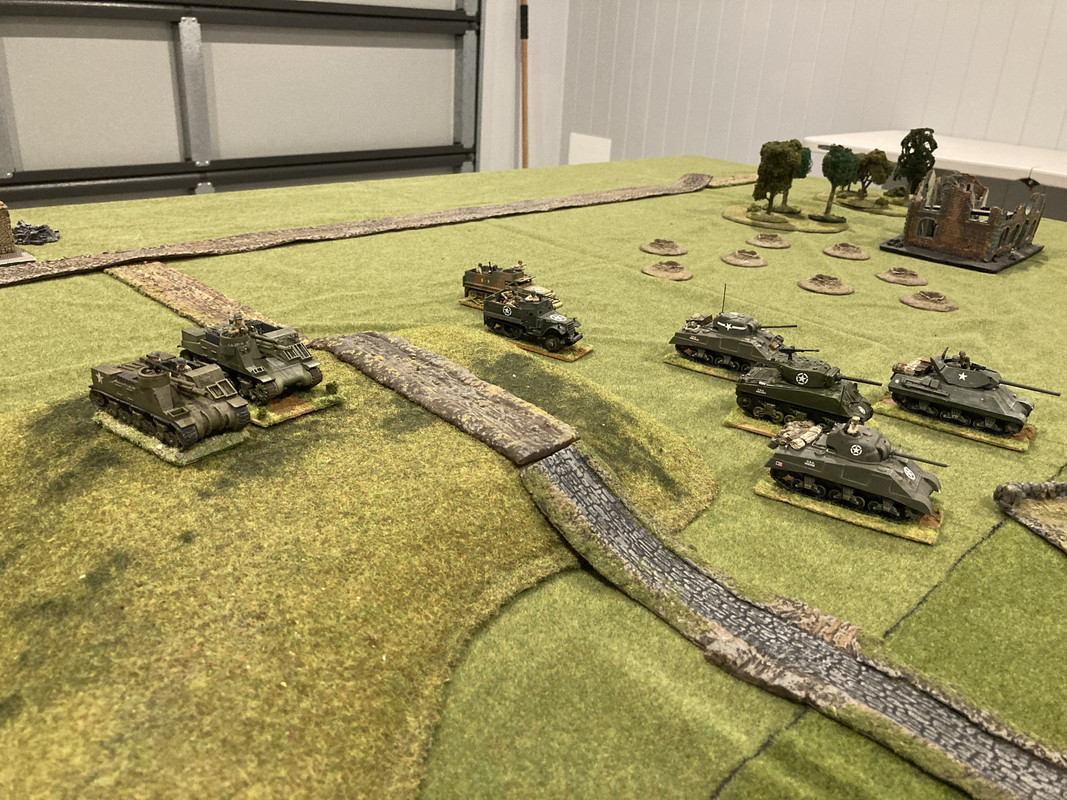
|
| robert piepenbrink | 22 Jan 2026 5:06 p.m. PST |
I have known of wargamers who put the artillery in another room to get the scale distance right. |
| ochoin | 22 Jan 2026 5:10 p.m. PST |
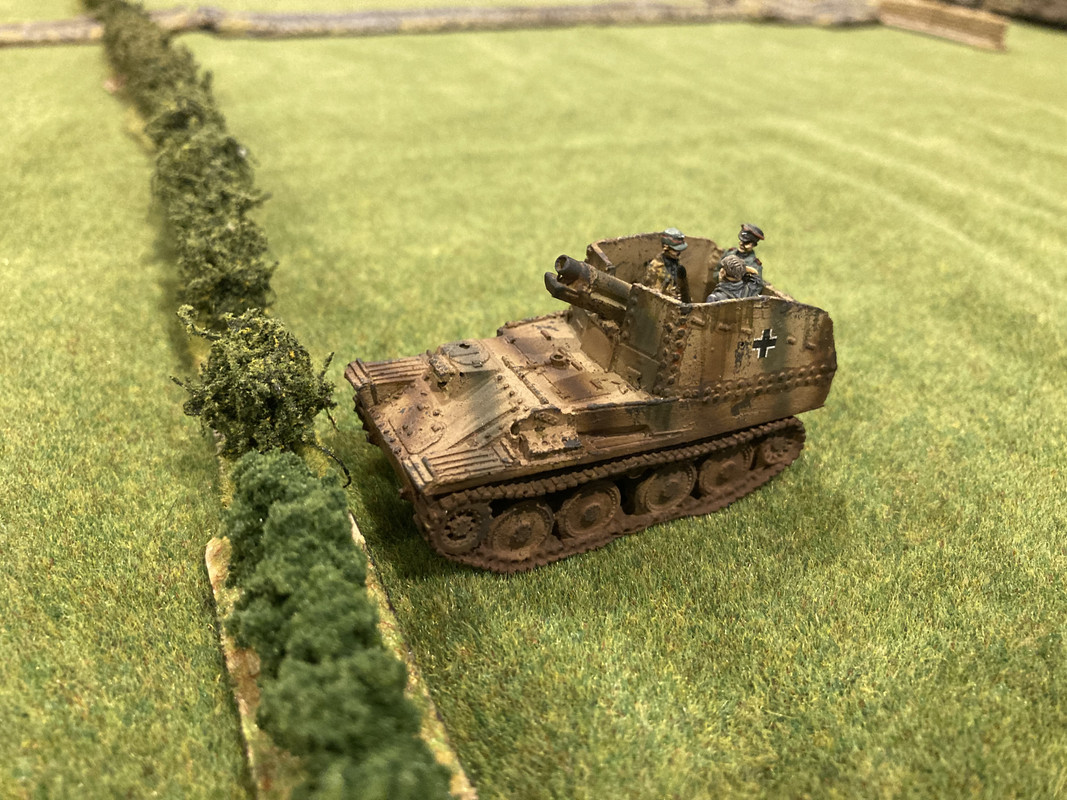
|
| UshCha | 23 Jan 2026 1:41 a.m. PST |
One of the hardest parts of writing our own rules was Artillery in the period 1940 to 2010.
We recognized artillery in many WW2 rule sets was just dreadful. So we went back to original sources. The US manuals on artillery state that in general artillery is used to Suppress and fix in place the enemy, not generally to kill it. We then looked at the amounts and damage it did. We were stunned with how many rounds were needed to impart an area and how few rounds were available in say a self-propelled gun.
So armed with that most rules seemed replicating artillery effect utterly. Many do not have an effective and credible way of reflecting suppression and avoid the need to plan artillery, allowing it to appear semi randomly if called, probably as this makes it useless and easy to plan, as no plan is likely to work as the delay is not credible. Pre-planned artillery is available in very few games as they do not cater for many real world scenarios. Limiting artillery by "purchased "guns does not suitability ration artillery so again it fails horribly.
So how should artillery work in the game, like it should in the real world? Mainly to suppress and fix in place or cause much damage as in counter battery but using massive amounts of ammunition in a relatively small area. In the Ukraine war the mercenaries were moaning they were not allowed the 300 shells required to eliminate a tank!
No of course someone will note artillery killed more than other arms. This is correct but because it cased lots of casualties a very small percentage every day and many in many vulnerable areas, not in battlefield conditions. pzivh43 The US mauals indicate about 8 155mm round to supress a platoon dug in, Typically an SP gun would carry 40 rounds. The manual itself indicates minimal damage to well dug in troops so whatever game you are reflecting looks to be massively overplaying artillery fire depending on position. 1 155mm round required to suppress troops in the open but then the troops hit the ground so then need 2 rounds to suppress again. This is definitely not a full wipe out. |


 discovers a better way to fill in hollow plastic bases.