… STELLMACHER
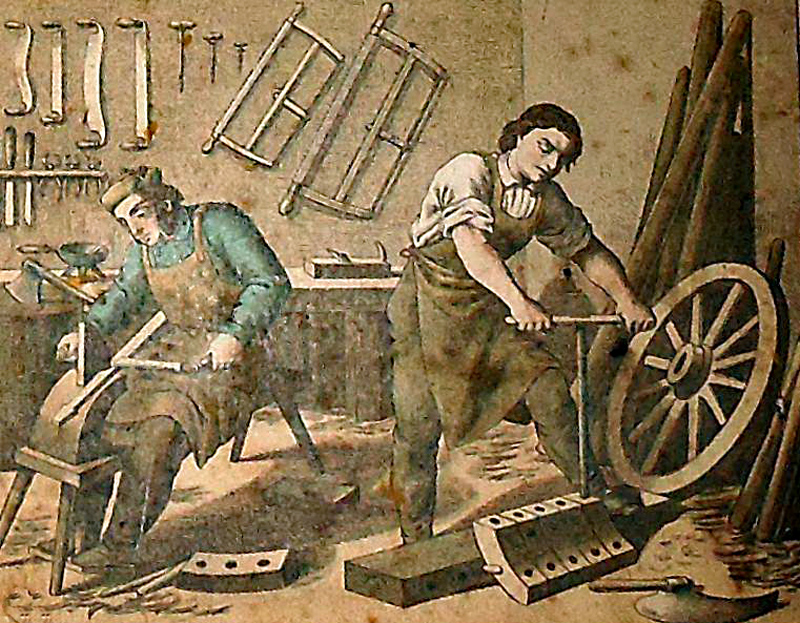
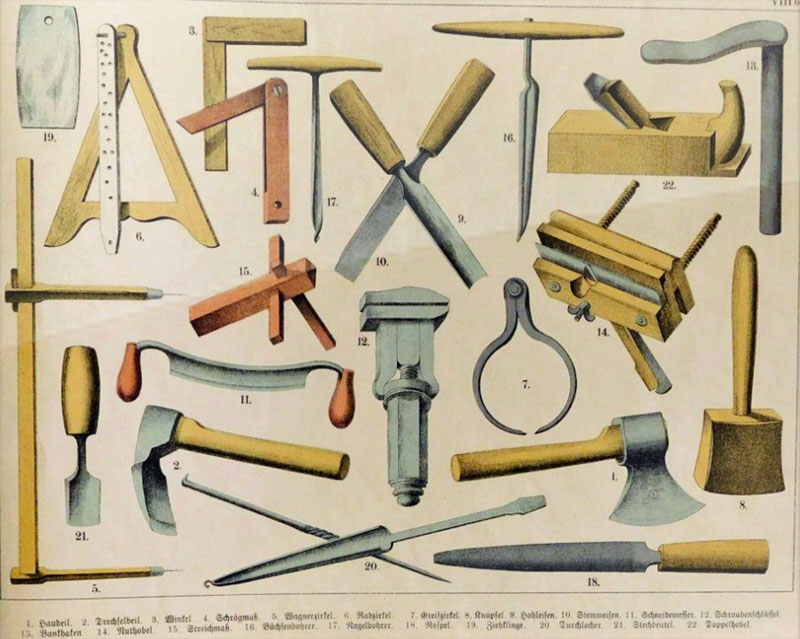
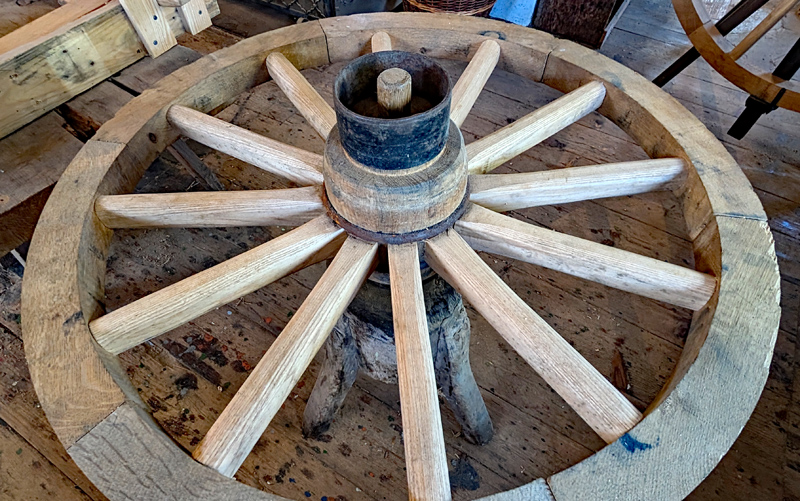
"In the early 19th century, craft trades played a significant role in rural Northern Germany. In some cases, these trades were pursued as a secondary occupation, while in others, they served as a full-time profession. Common trades found almost everywhere included millers, blacksmiths, shoemakers, tailors, joiners, and carpenters. As an example of rural craftsmanship in Northern Germany around 1800, I would like to highlight the wheelwright. My choice is prompted, in part, by the existence of a museum-style wheelwright's workshop in Langenrehm—located very close to where I live—and, in part, by the intriguing link between the civilian and military utility of this trade.
Unlike in the cities, where strict guild regulations governed craft trades and secured extensive monopolies for the respective guilds, rural trades were often free from such constraints or only rudimentarily organized. Many rural craftspeople were smallholders or "cottagers" (*Kötner*) who relied on their trade as a vital secondary source of income, particularly during the winter months. While urban workshops often focused on the production of goods in larger quantities, the primary emphasis in villages was on the repair and maintenance of tools and everyday items to ensure they remained functional for as long as possible.
Urban craftspeople frequently disparaged their rural counterparts, labeling them as "bunglers" or "unauthorized" (non-guild) laborers who offered cheap, inferior work. Around 1800, however, rural trades were often more flexible, closer to the customer, and more cost-effective than the rigid, guild-bound urban establishments—advantages that allowed them to increasingly hold their own. With the reforms introduced at the beginning of the 19th century, and under the influence of French legislation, the practice of trades and crafts was eventually liberalized in a step-by-step process…"
UT
FIGUREN UND GESCHICHTEN
link
Armand