… for the Future)
"Bogged down militarily in Ukraine, with Russia's economy in a shambles and Ukrainian drones penetrating ever deeper into the heartland and causing popular unrest, President Vladimir Putin's position is looking increasingly tenuous. In anticipation of an eventual leadership change, Russia analysts are already busy mapping out future scenarios.
In The Closing of the Russian Mind, Andrei Kolesnikov analyses the ideological dynamics of Putinism, its effect on Russia's role in the world and its implications for Russia's future. Kolesnikov is a Russian journalist and former senior fellow of the Carnegie Moscow Center. He has published widely on Russian politics.
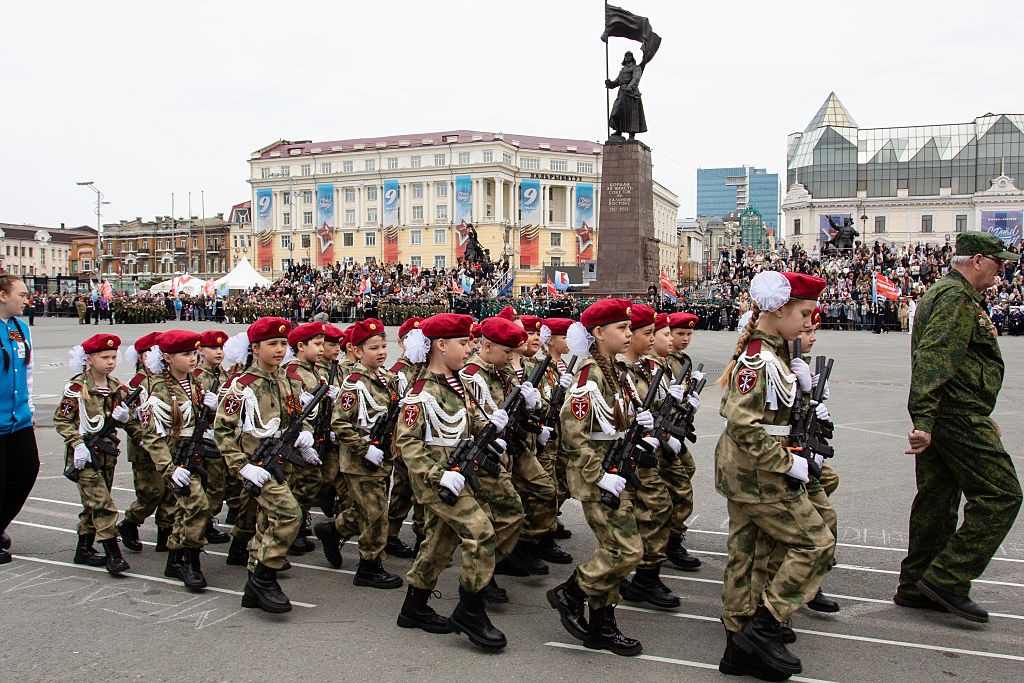
In Kolesnikov's view, Putin has succeeded in radicalising the Russian population in support of a form of ‘chauvinistic neo-imperialism' that relies on totalitarian methods. Many expect things to change once Putin is no longer in charge, but Kolesnikov is sceptical. As he sees it, a change in leadership is unlikely to engender broader change unless Russia undergoes profound political regeneration.
To make his case, Kolesnikov walks us through the evolution of ‘the Russian idea', a concept that evolved over centuries and forms the basis for today's ideology of state patriotism. The concept is based on what Russia considers its unique history, civilisation and traditionally close cooperation between the state, the Russian Orthodox church and Russian society. It is also based on the fact that Russia has nuclear weapons, and on Russians' unabashed pride in their country's history – including periods of violent repression…"
link
Armand




 plays Ambush Alley at Council of Five Nations.