Help support TMP


"Home ground advantage" Topic


2 Posts

All members in good standing are free to post here. Opinions expressed here are solely those of the posters, and have not been cleared with nor are they endorsed by The Miniatures Page.

In order to respect possible copyright issues, when quoting from a book or article, please quote no more than three paragraphs.

For more information, see the TMP FAQ.


Back to the Terrain and Scenics Message Board


Areas of Interest

General

Featured Hobby News Article


Featured Link


Featured Ruleset

Rencounter


Rating: gold star gold star gold star gold star gold star gold star gold star 


Featured Showcase Article

28mm BeestWars Hyenas

Strangely intelligent hyenas for BeestWars.


Featured Workbench Article

3Dprinting A River

Playing with rivers on a 3Dprinter.


Featured Profile Article

Editor Katie Makes a Video (Sort of)

A staff editor makes a hobby video.


68 hits since 7 Jul 2026
©1994-2026 Bill Armintrout
Comments or corrections?

Personal logo ochoin Supporting Member of TMP07 Jul 2026 4:06 a.m. PST

With the World Cup dominating the media, this topic suggested itself to me. And don't worry, I want to talk about our hobby & NOT sport.

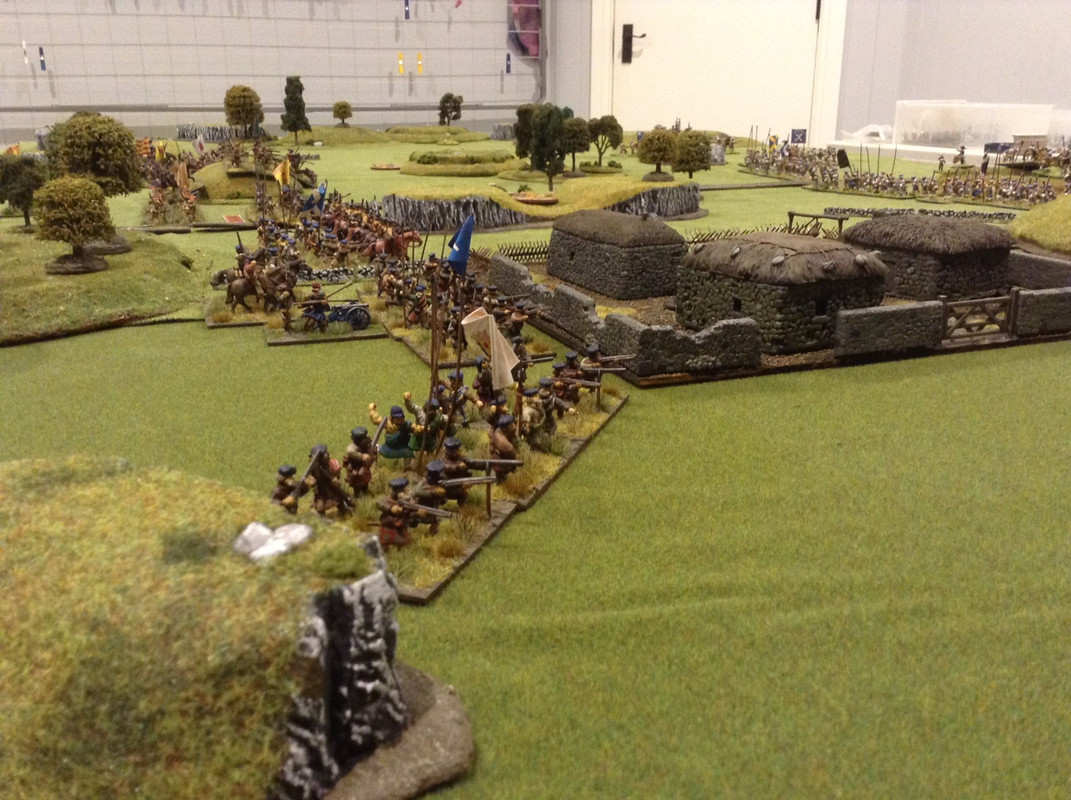
In past ECW games we gave Montrose's Highlanders a fighting chance against stronger Covenanter & English Parliamentarian army by making the table heavily wooded and hilly. The Highlanders had fewer pike and shot and weaker cavalry, but they were operating in the sort of country where they were accustomed to fighting.
theminiaturespage.com

‌"TMP link

What we really mean by 'home ground advantage'?

Does it include:

Familiarity with the local landscape, tracks, rivers and key terrain?
Fighting in the type of country your army is trained and accustomed to—Highlanders in hills, steppe nomads on open plains, desert armies in arid country or woodland tribes in forests?
Better local intelligence and shorter supply lines?
Support from the local population?
Higher morale from defending your homeland, families and way of life?

Should these factors be used deliberately by scenario designers to help balance otherwise unequal armies? Or should they already be reflected in troop quality, leadership and existing terrain rules?

Some examples that might be worth debating:

Should a Roman army campaigning in Gaul suffer a disadvantage against Gallic tribes who know every valley and forest?
During the Peninsular War, should French troops receive penalties while Spanish forces gain advantages simply because they are fighting on home soil?
In the American Civil War, should Confederate armies receive any inherent benefit when defending Southern territory?
Should an army fighting in its homeland receive a morale bonus even if the battlefield itself is unfamiliar? eg Gurkhas in foreign mountains?
In a campaign situation, if an experienced invading army has had weeks to reconnoitre the area, does "home ground advantage" largely disappear?
Should a battlefield be deliberately designed to favour the weaker army if it is fighting on terrain that best suits its traditional way of war?

Would you represent home ground advantage through:

terrain selection?
scenario objectives?
morale bonuses?
command or reconnaissance advantages?
special movement rules?
some combination of these?
or not at all?

How do your favourite rules deal with it? If they don't, how would you?

robert piepenbrink Supporting Member of TMP07 Jul 2026 6:02 a.m. PST

Depends on the level of the game. At a "map and pins" level, I'd expect local forces to have better intelligence, fewer logistical difficulties, faster replacement of losses and maybe slightly better movement rates. (They're the ones who know the South Pike is always boggy in late Spring, after all.)

On the battlefield--well, probably an edge on terrain selection or analysis, depending on how your terrain system works. Maybe a "home soil" morale advantage, though I'm not sure whether it should be an army of a unit thing. I think troop types largely take care of the "terrain type" business. Armies with a lot of light infantry will do better on heavily wooded tabletops and armies with heavy cavalry will do worse regardless of the species of the trees.

Good point about invaders growing familiar. Evidently Phil Sheridan did a better job of growing Union intelligence in the Shenandoah Valley than his predecessors, and by 1917 (or 1944) German forces in northern France should certainly have known the ground. (On the other hand, Napoleon never seems to have grasped the unique features of Spain, and his marshals did a remarkable job of never finding or producing decent maps.) If I were using scales, I'd say the familiarity advantage in terrain diminishes over time--or can be diminished by command emphasis, but there's only so much command emphasis to go around.

Sorry - only verified members can post on the forums.