Are gaming tokens the greatest advance in wargaming administration since the invention of the pencil?
Or are they colourful little reminders that our "simple fast-play rules" now require a small stationery department to run them?
Where do you draw the line between useful information and table clutter?
Looking around modern wargames, gaming tokens seem almost ubiquitous. Litko alone has hundreds of different designs and many rules companies now produce their own official token sets, not to mention those of us who make their own.
url=https://postimg.cc/Lnbfzym9]
In a way, they seem to be the successors to the clipboard and pencil notes used by earlier generations of wargamers. Rather than writing "disordered", "suppressed", "out of ammo" or "activated" on a roster sheet, we place a marker beside the unit.
Tokens certainly have advantages. They make game states visible, reduce memory lapses and can speed play.
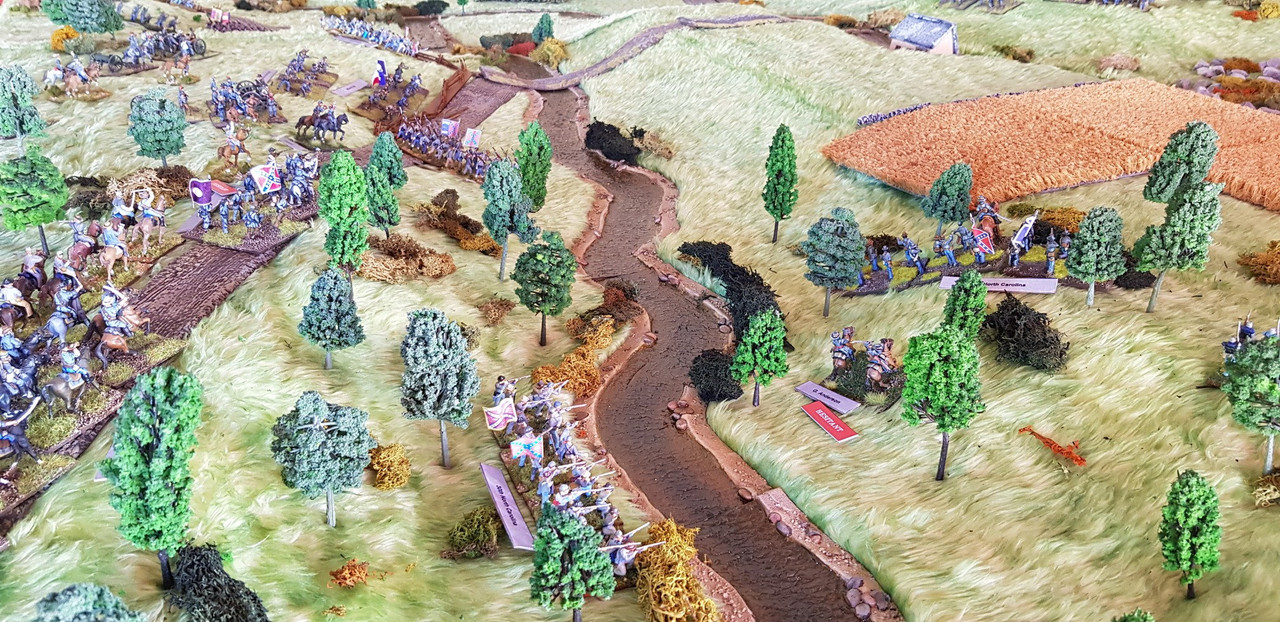
On the other hand, a table full of acrylic markers can detract from the visual appeal of painted armies and scenic terrain. Some games seem to require almost as many markers as miniatures.
So where is the ideal balance?
What information belongs on the tabletop as a token, and what is better recorded elsewhere? Have modern rules become too dependent on markers, or are they simply a practical solution to increasingly sophisticated game mechanics?





 is after something that has presence, that actually looks like a small stand of tropical bushes, and is cheap, tough and portable.