ochoin  | 10 May 2026 1:23 a.m. PST |
Who fielded the finest Macedonian-style army: Philip II of Macedon, Alexander the Great, the Successor kings, or Pyrrhus of Epirus? I have a Pyrrhic army & know I can modify it by adding & deleting units, to make any from the menu:
url=https://postimg.cc/8jqq433z]
Philip created the system—sarissa phalanx, Companion cavalry, hypaspists and a true combined-arms army. Alexander inherited it and used it with unmatched generalship, mobility and tactical daring. The Successor armies made it bigger and more elaborate—more pikes, more cavalry, more specialist troops, more elephants—but did they improve it, or just make it less flexible? Then there's Pyrrhus, often called the best commander after Alexander. Why? Did he preserve the ideal balance: phalanx, cavalry, flexible infantry, and elephants—all still working together as a true battlefield system? So what mattered most:
Generalship?
Strategic vision?
Army composition?
Flexibility on the battlefield? Did Macedonian warfare peak with Alexander—or did Pyrrhus and the Successors take it even further? url=https://postimg.cc/8sCQzLMS]
|
 Herkybird | 10 May 2026 2:00 a.m. PST |
That is a tough question! I think I would say Phillip II's army was best.
Pyrrhus's Agema never matched earlier Hetairoi (Companion Cavalry)
Alexander inherited Phillips' but over time, his army incorporated Asiatics and mercenaries to a greater degree to keep his numbers up.
The other Diadochi seem to have focused on Phalangitae – and their cavalry was a mixed bag.
That is my thought anyway, I am sure all wargamers have their own, equally valid, opinions! |
 John the OFM | 10 May 2026 5:00 a.m. PST |
When I was a WRG Ancients player in 25mm, the Seleucids were my biggest money pit. A full page and a half in the Army list book. Three periods. I did them all. Please note that as a tournament player, historical accuracy was a distant second to following the list. One could ASSUME that the list was quasi-accurate, at best. |
| Red Jacket | 10 May 2026 7:57 a.m. PST |
I am not familiar enough with the Macedonians to venture an opinion, however, I would love to see more photos of your armies. What you show is very impressive. |
| mildbill | 10 May 2026 7:59 a.m. PST |
Generalship mattered most. Thus, Alex followed by Pyrrhus. The guy in Egypt had the best strategic vision, so you could make a strong case for Ptolomy. |
| ochoin | 10 May 2026 1:03 p.m. PST |
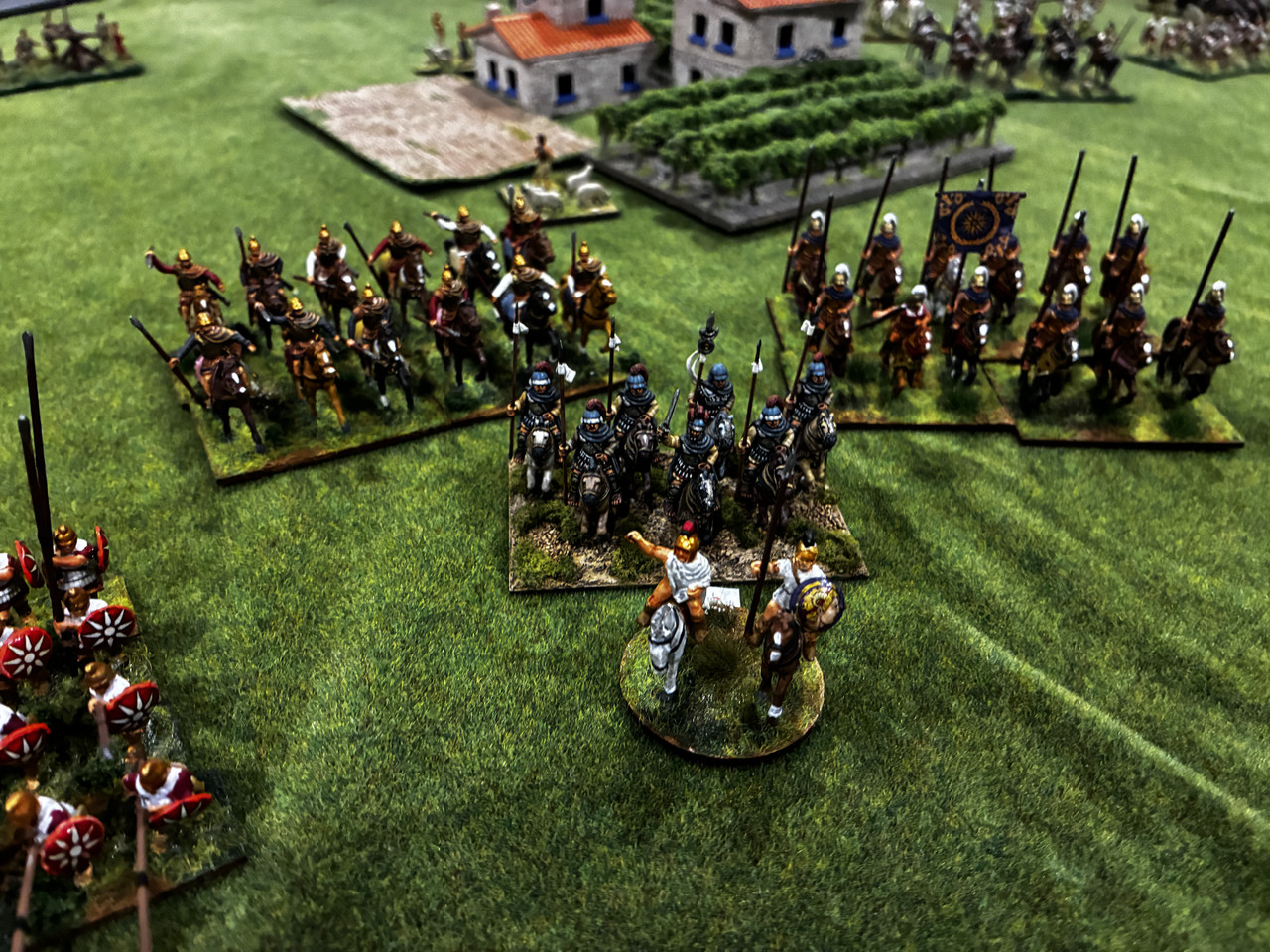
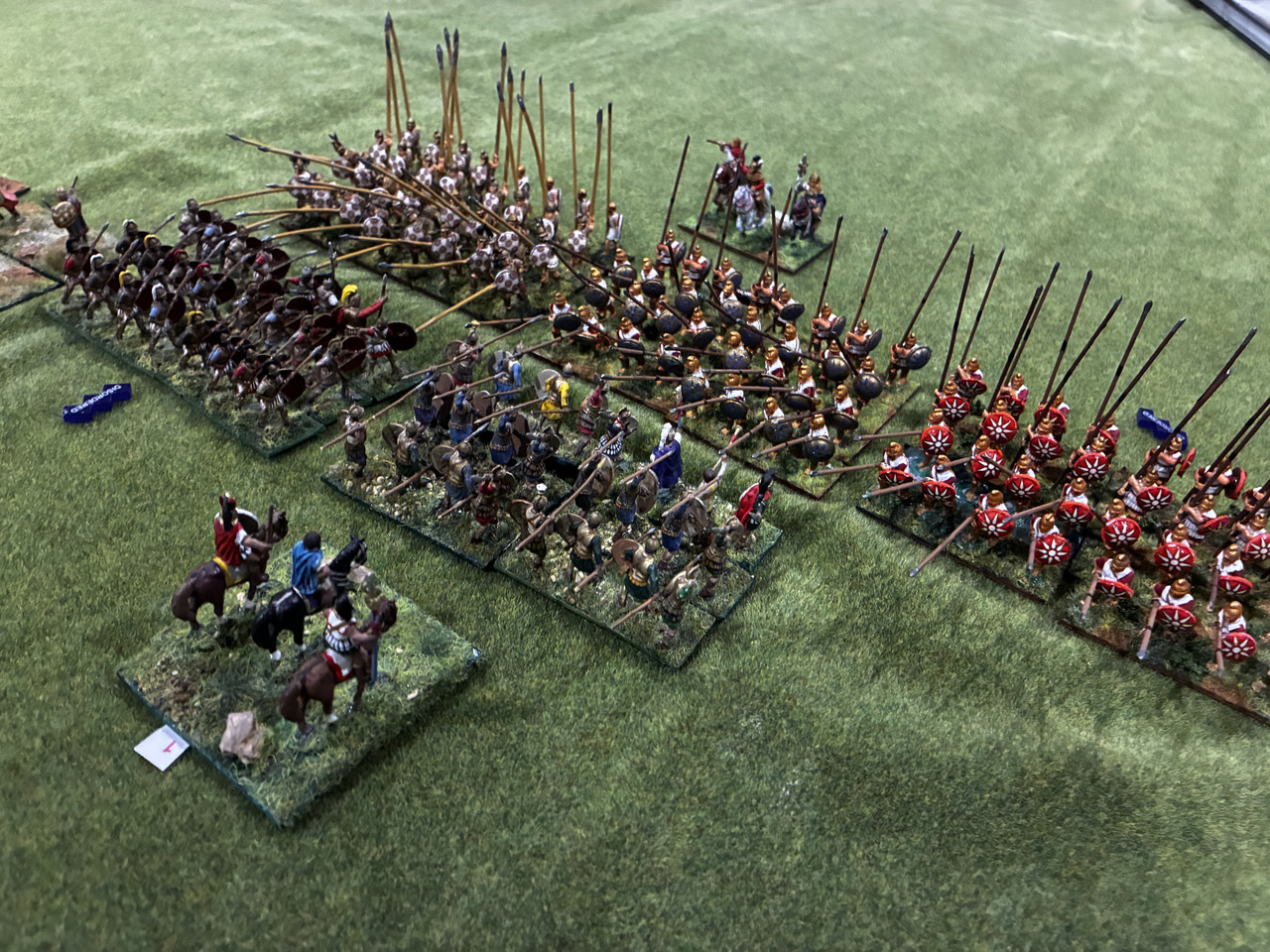
Red Jacket – you're too kind. These photos are from a solo battle I played back in January:
TMP link The figures are 20mm & 1/72 metals & plastics. |
| ochoin | 10 May 2026 1:05 p.m. PST |
Some very interesting distinctions emerging here—between the best army, the best commander and even the best strategist. I can certainly see the case for Philip II. He built the original military machine: phalanx, Companion cavalry, flexible infantry and proper combined-arms doctrine. Alexander inherited something exceptional—and then demonstrated what supreme generalship could achieve with it. Herkybird raises an interesting point on Pyrrhus's Agema versus the old Hetairoi. I wonder whether Pyrrhus's cavalry was truly inferior, or simply operating in a different tactical environment. His real strength may have been preserving battlefield flexibility while some of the Successor armies became increasingly phalanx-centred. And yes—the Seleucids are fascinating. Possibly the most diverse and elaborate of all the Successor armies, but did that variety make them stronger—or simply more difficult to command effectively? Perhaps the real question is: are we judging the best military system, or the best man using it? As requested, here's another view of my Pyrrhic army—phalanx, cavalry and elephants all ready to test whether Pyrrhus really was the last true master of the Macedonian way of war… |
| Herkybird | 10 May 2026 2:44 p.m. PST |
Re the Agema of Pyrrhus and the earlier Hetairoi, it is possible that Pyrrhus guarded his smaller Agema by keeping it in reserve, mostly. It is interesting that he charged with the Thessalians at Heraclea and seems (at least to me) to have treated them as his primary cavalry spearhead. |
| ochoin | 10 May 2026 5:08 p.m. PST |
I have Pyrrhus' Agema in my army- you'll see them depicted as a seven figure unit in the top photo. mildbill's comment about generalship can be realised in the "Hail Caesar" rules with giving Pyrrhus a command rating of '10' but also attaching the Agema to him personally. This 'Small Unit' is given 'elite' status & carry the kontos (enemy lose Charge Bonus). This makes them very expensive, fairly fragile but, if used with discretion, a game-winner. I think these measures allow Pyrrhus' abilities to be apparent. I should add, the Agema does not always overcome its opponents and I have been left with egg on my face several times. In further posts, would examples from your rule set of choice be useful to illustrating your response to the OP questions? |
 piper909 | 10 May 2026 8:42 p.m. PST |
I'd think the proof ultimately is in the pudding -- who can match Alexander's record? None of the Successors and not even Pyrrhus. So I'll take Alexander's Army for $500 USD, Alex. |
| ochoin | 10 May 2026 10:58 p.m. PST |
For $500 USD, what is the Makran? |
| jefritrout | 11 May 2026 6:16 a.m. PST |
I would either argue for Phillip II as he went from a hostage in Thebes with his country being overrun by Illyrians to the creator of the recognized Macedonian army. With all that Phillip had done who's to say what he might have accomplished with his army against the Persians. As assassin made it all moot. What about Eumenes the Greek. He managed to survive and win against pretty much everybody until he was betrayed by the Argyraspides. I think Pyrrhus was the better general. Everyone else had to fight against an army that was worried about surviving. The Romans could just keep throwing more soldiers at the problem. If Pyrrhus or Hannibal would have lost the numbers that the Romans did fighting against them, both would be finished. |
| Marcus Brutus | 11 May 2026 8:10 a.m. PST |
The Romans could just keep throwing more soldiers at the problem. You are describing the effect but not the cause. Persia had greater resources than Rome but it was Roman tenacity and will power and their unwillingness to surrender that allowed for them to replenish their loses. And it should be remembered that in the case of Pyrrhus that he never gained a decisive victory over the Romans in battle. |
| Herkybird | 11 May 2026 8:55 a.m. PST |
And it should be remembered that in the case of Pyrrhus that he never gained a decisive victory over the Romans in battle. That depends how you define A decisive victory… |
| ochoin | 11 May 2026 12:33 p.m. PST |
How do people rate Antiochus the Great's Seleucid army—not necessarily as the best Hellenistic army but perhaps the most interesting from a wargamer's perspective.? The Seleucid host seems to have had everything: Macedonian phalanx, peltasts, elephants, scythed chariots, cataphracts, Companion-style cavalry, horse archers, even imitation Roman troops later on. A true military toolbox—capable of almost any battlefield combination, though perhaps not always easy to control. Did Antiochus create the ultimate "combined arms" Successor army—or just an over-complicated one? For wargamers, it must surely be one of the most enjoyable armies to collect and field: armoured cavalry thundering forward, scythed chariots causing chaos (or chaos to their own side!), elephants looming behind the phalanx… Historically, was it genuinely effective—or simply spectacular? And on the tabletop: does anyone not enjoy deploying a Seleucid army? |
| Shagnasty | 11 May 2026 1:03 p.m. PST |
For the combination of leadership, experience, range of experience and success It can only be Alexander's army. The thought of his surviving Babylon and going west is tantalizing. The surviving, Carthaginians and Romans would have bee great additions to his future forces. |
| mckrok | 11 May 2026 1:20 p.m. PST |
I'm a fan of the Lysimachid Successor Army. It's relatively rare among wargamers and paints up very pretty with all those Thracians. pjm |
 Yellow Admiral | 11 May 2026 3:28 p.m. PST |
Antiochus the Great's army looks like a wargamer's optimized list-building army. He had at least one unit of each "best" type available. I'm not all that familiar with his campaigns and battles, but it seems to me Antiochus' army was not so much "combined arms" as "a lot of unit types". To use combined arms, you have to actually coordinate different arms into a coherent system, either tactically or operationally. Antiochus might have been good at combined arms operations; he was very successful at long strategic conquests against asymmetrical opponents. But he had very mixed results in pitched battles, which suggests tactical weakness of some sort, and at Magnesia, coordination problems were probably what got his center and left broken. Combined arms with large ancient armies was hard, and depended on mutually supportive subordinates (not something Hellenistic kings were known for). Back when I played a lot of ancients I didn't like Seleucid armies much, so I never tried to play one. These days I'm thinking I'd like to try again. |
| ochoin | 11 May 2026 3:39 p.m. PST |
mckrok mentioned the Lysimachid Successor army as a contender. What made Lysimachus's army stand out among the Successor kingdoms? I'm no expert but on the surface, it doesn't seem that special. Was it simply a well-balanced Macedonian army—phalanx, heavy cavalry, light troops and elephants and its position in Thrace give it access to particularly good cavalry or tougher infantry? Was it more conservative and "old Macedonian" in style than some of the larger, more elaborate Successor armies? Or is the argument really about Lysimachus himself—a capable commander making effective use of a solid military system? The Lysimachids don't seem to get discussed as much as the Seleucids or Pyrrhus, but perhaps they deserve more attention. |
| mckrok | 12 May 2026 1:27 p.m. PST |
Lysimachus was an excellent commander, but his faction was relatively short lived and there wasn't anything that spectacular or special about his army. It's a core Successor Army with a lot of Thracians, and I enjoy having a lot of prettily painted Thracians on a tabletop. I find a Lysimachid Army does well in mixed terrain – cavalry and phalanx in open ground and Thracians in the rough/difficult terrain. Otherwise, the Thracians tend to get slaughtered in the open. I found winning with a Thracian only army difficult to do, but mixed with a Successor, I can get them on a winning team. pjm |
| jefritrout | 12 May 2026 2:07 p.m. PST |
Ochoin, I have a soft spot for the Seleucid army as it is my first army. Wasn't even 12 years old When I painted up some Minifigs to be Seleucids. Lots and lots of different toys to play with. The problem with identifying generalship is Phillip, Alexander and the first group of Successor who fought under those 2 are the best. (inc. Lysimachus, Antigonis one-eyed, Eumenes). Pyrrhus is the best general of the later generations. |
| Yellow Admiral | 12 May 2026 9:40 p.m. PST |
I would never rate them "best", but I do find the father/son combo of Antigonos Monophthalmos and Demetrios Poliorketes to be my favorite to read about. I have a soft spot for Demetrios because of his naval arms race with Ptolemy, and his developments in siegecraft. - Ix |