
"Vasilek (Cornflower). 2B9" Topic
4 Posts
All members in good standing are free to post here. Opinions expressed here are solely those of the posters, and have not been cleared with nor are they endorsed by The Miniatures Page.
For more information, see the TMP FAQ.
Back to the Firearms Message Board
Areas of InterestRenaissance
18th Century
Napoleonic
American Civil War
19th Century
World War One
World War Two on the Land
Modern
Featured Hobby News Article
Featured Link
Top-Rated Ruleset
Featured Profile Article
Featured Book Review
|
Please sign in to your membership account, or, if you are not yet a member, please sign up for your free membership account.
| Cuprum2 | 08 May 2026 6:20 p.m. PST |
Vasily-Vasya-Vasilek YouTube link Today, the 2B9 Vasilek automatic mortar is a unique piece of armament, the product of a dark Soviet genius. Its core idea was to increase a battalion's firepower while maintaining a relatively modest footprint. It gained fame thanks to the war in Afghanistan; without it, it might well have remained a rare and limited-production weapon. Its entire development and service history has been a rollercoaster of ups and downs, something few weapons have experienced. And its history is long, beginning in the era of continuous fronts and fortification lines…
The Vasilek's development is much older than is usually portrayed. Its roots go back to Germany, where they developed the 5 cm Maschinengranatwerfer M19 automatic casemate grenade launcher (generally referred to as a mortar in Russia and the West due to the ammunition it uses) for installation in permanent fortifications like the Western Wall. Their purpose was to drive infantry away from fortifications, prevent assault groups from infiltrating, and lay a curtain of fire in front of the front. The breech-loading 50mm mortars used by the French, for example, were insufficient in terms of firepower due to their scarcity, weak ammunition, and poor accuracy, so someone in Germany, in 1938, decided to automate the firing. Their effectiveness wasn't particularly high, especially since the initially respectable rate of fire of 120 rounds per minute had to be reduced in practice (there was a control panel for the rate of fire from 40 in increments of 20 rounds per minute) to prevent overheating. The automatic system was electrically powered. Only 150 were produced, the majority of which went to zones liberated by the Allies, but a couple of M19s in 49P8 armored cupolas were installed in Poland. At least one of these German M19-equipped pillboxes managed to keep our infantry at bay for two days, so information about them found its way to the right place. Perhaps they were captured by the Soviets, or perhaps the Allies shared a prototype or information, but either way, soon after the war ended, the USSR began work on a casemate automatic mortar (KAM). After the war, the USSR was heavily involved in developing new artillery systems and modernizing existing ones, and casemate weapons were not overlooked. In fortified areas, mortars were typically used to prevent assault groups from infiltrating, encircling, and quietly disabling a pillbox. Here, the key factor was not so much the mortar's explosive power as the density of fire, and an automatic mortar was ideal for this. Such a weapon was proposed by Viktor Filippov, who, unlike the Germans, invented an automatic mechanism based on the barrel's recoil during firing. When the recoil force was released, the barrel opened, a new shell was fed into it, the moving parts returned to their normal position, and the gun fired. This was simpler, lighter, and more reliable than an electric drive, especially since there were no spent cartridges, so there was no need to fiddle with extracting them, as with small arms or cannons. The barrel was water-cooled. The rate of fire reached 300 rounds per minute. The caliber chosen was 82 mm, since 107 mm was already too large, and 50 mm had long been out of production. But… As Filippov himself later recalled, the invention application was shown to Stalin in 1946, but he replied that we couldn't produce it now. The same situation existed with dozens of other projects—the country needed to recover, urgently developing an atomic bomb and jet aircraft. And other artillery also had many problems, for example, the already obsolete 76 mm divisional guns needed to be replaced. The project was delayed until 1955, when it was accepted into service. But then came the nuclear age, when it was believed that any fortified position, even slightly protected, would be reduced to the point of being radioactively radioactive. Plus, Khrushchev clamped down on everything that didn't concern his beloved missiles, and further work on the KAM was shut down.

In 1954, work began on a version more relevant to the realities of the time. The KAM was mounted on a wheeled carriage for motorized riflemen. This was its main difference from its casemate-mounted counterpart. It was likely already at this time that the rate of fire was reduced to 170 rounds per minute to prevent the barrel from overheating. It was intended primarily for suppressing the enemy both in the field and in trenches. In 1959, the mortar successfully passed trials and was recommended for serial production, but this only happened in 1967, when the Soviet Army began a massive rearmament of its artillery in order to catch up and surpass NATO, which had already acquired its own new generation of post-war artillery. The F-82 was completed according to the Vasilyok design bureau and was accepted into service in 1970 as the 82-mm automatic mortar 2B9 as part of the 2K21 complex.
The irony of the Vasilek's adoption is that the trusty 82mm BM-37 mortars began to be replaced in battalions in the 1970s with 120mm mortars to increase the units' firepower. The 2B9s were initially intended to suppress enemy infantry with automatic fire, fitting perfectly into the overall battlefield. However, they weren't produced in large numbers at first—just over 500 were produced before the war in Afghanistan. A paltry number by Soviet standards, but it's worth remembering that warehouses at the time still held nearly 150,000 mortars of various calibers ranging from 82mm to 240mm, while the troops primarily needed the Gvozdika, Akatsii, Giatsint, and Pion mortars.

Overall, the Vasilek was similar in both appearance and weight and dimensions to the 76mm mountain artillery. But, unlike the latter, it can't be disassembled and carried by a crew—after all, 622 kg is a considerable weight. It was initially transported in the back of a 2F54 (a GAZ-66-05 variant) as part of a 2K21 system, which also included a spare parts kit and a transportable ammunition pack. Lowering the mortar to the ground or retrieving it takes about 1.5 minutes. Today, the "Vasilok" is carried on modifications of the Ural-4320. Its rate of fire is 170 rounds per minute, but the practical limit is 100-120. Due to intense heat, even with water cooling, the number of shots fired must be severely limited over time. So, while 60 shots can be fired safely in the first minute, only 300 can be fired within half an hour, and without water, 40 and 200, respectively. The firing position's aiming angles are 30 degrees horizontally in each direction and +7 to +85 degrees vertically. The Vasilek is loaded with 4-round cassettes, and the 2K21 carries a total of 226 rounds. It seems like the mortar could easily consume this amount, but due to cooling requirements, it's quite sufficient. If not, then in Afghanistan, for example, a mortar platoon could have had a couple more supply trucks riding behind it. The standard ammunition for the Vasilek is the 3VO1 round with an O-832DU ten-fin fragmentation mortar round, an M-6 fuse, and a Zh-832DU main charge. The mortar's muzzle velocity is 272 m/s, and its range is up to 4,270 m, which is sufficient to cover machine gun positions, old ATGMs, and light mortars. The O-832DU weighs 3.1 kg, 450 g of which is explosive. However, the mine is still very old and currently has a serious drawback: it produces a small number of fragments, only 400-500. For increased firepower, it can be loaded with the more modern 3-O-12 mine.

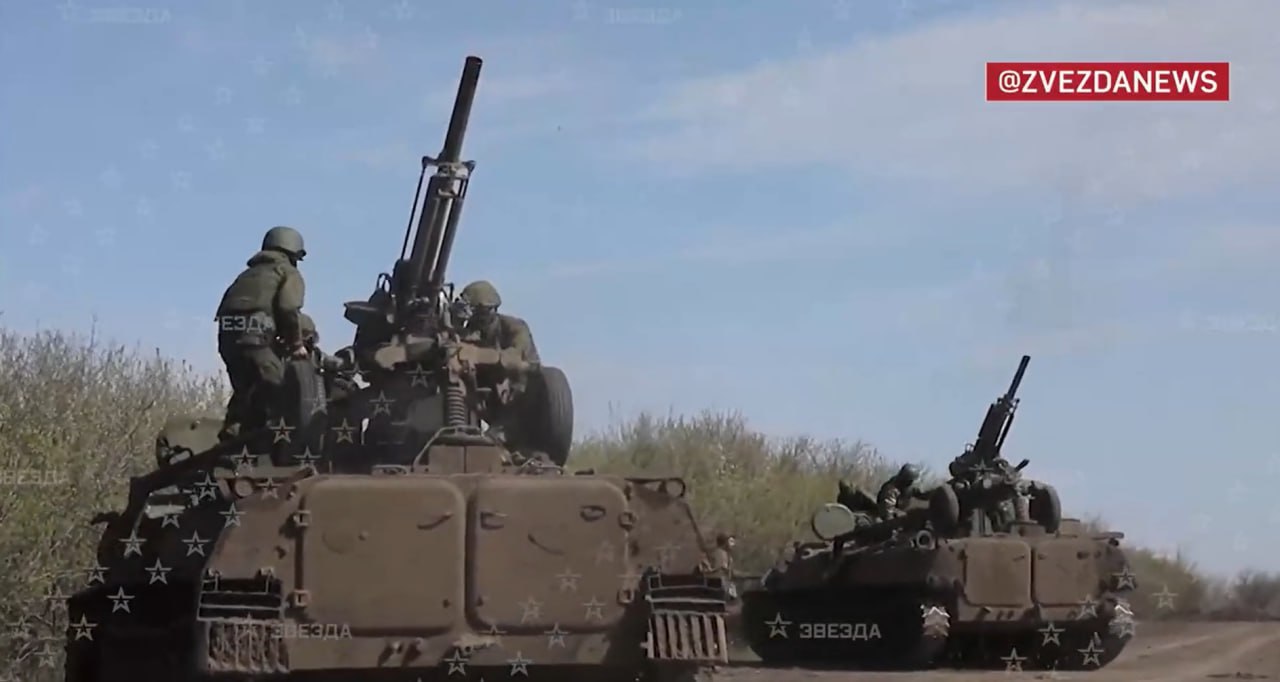
The Vasilek gained its fame in Afghanistan, where it debuted and, along with the "Podnos," displaced 120 mm mortars from the battalion level. In the mountains, carrying anything heavier than an 82 mm mortar was difficult, and the automatic mortar, although significantly heavier than the regimental mortar, could cover a huge area in a short period of time. Militants in open fields, lacking armored vehicles to cross the area under fire, didn't care what caliber was used against them. Thus, several Vasiloks could create a continuous barrage zone at a long distance to cover the retreat of a special forces group, the evacuation of a downed helicopter crew, etc. Following the initial combat, a modernized version, the 2B9M, was introduced. It featured a purely air-cooled barrel, which increased reliability, albeit at the cost of an extra 10 kg. In addition to factory modifications, there were also military modifications, such as mounting on a tracked chassis. The Shishiga (GAZ-66), despite all its advantages, fared poorly in the mountains with its heavy mortar and ammo, and had no armor at all. The mortar was usually mounted on the ubiquitous MT-LB, and occasionally on infantry fighting vehicles. These ersatz self-propelled guns proved highly sought after by the troops, and one can only wonder why similar self-propelled mortars haven't been developed and mass-produced in our country yet. As of August 1, 1987, of the 823 82mm mortars in the Soviet Army, a third were Vasilki. |
| Cuprum2 | 08 May 2026 6:28 p.m. PST |
Although the Vasilek remained in service after the withdrawal from Afghanistan, it no longer held such a legendary status. It was used practically everywhere in the post-Soviet space, starting in the early 1990s. But in some places, it was in short supply—mortar batteries weren't up to the standard six Podnos and three Vasileks in time—and in others, it proved less than effective. For example, after the fighting in Chechnya, we began reintroducing 120mm mortars to battalions, and even considered 120mm self-propelled artillery systems like the Khosta. There were many reasons for this—in built-up areas and forests, the 82mm mortar proved too weak. While a Podnos shell hitting the roof of a private home in Chechnya could destroy the attic, a Sani mortar could easily smash through the ceiling, burying militants in the rubble. Long-range ATGMs, requiring engagement from 5-6 km away, became commonplace. Neither the Vasilek nor the Podnos were capable of doing all this. There was also growing outrage about how bad the 2B9 was, constantly breaking down. This was due to the high number of rounds fired by the assault rifles, many of which had already seen multiple wars, as well as the sharp decline in the training of soldiers. Overall, Vasileks were rare in the post-Soviet space in the 1920s, only regularly appearing in the Donbas. But with the recent expansion of the war in Ukraine, they have increasingly begun to appear in the Russian army.

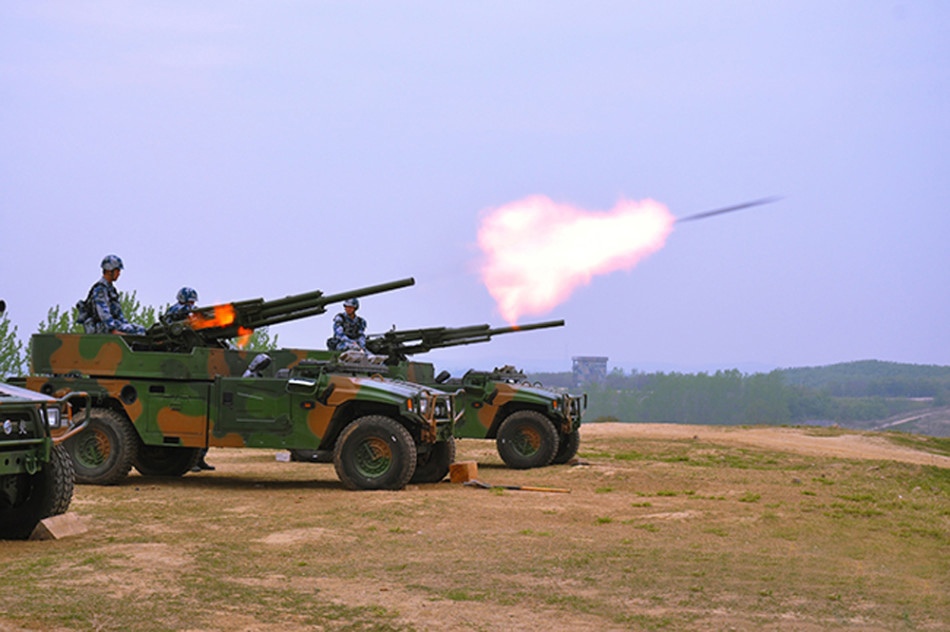
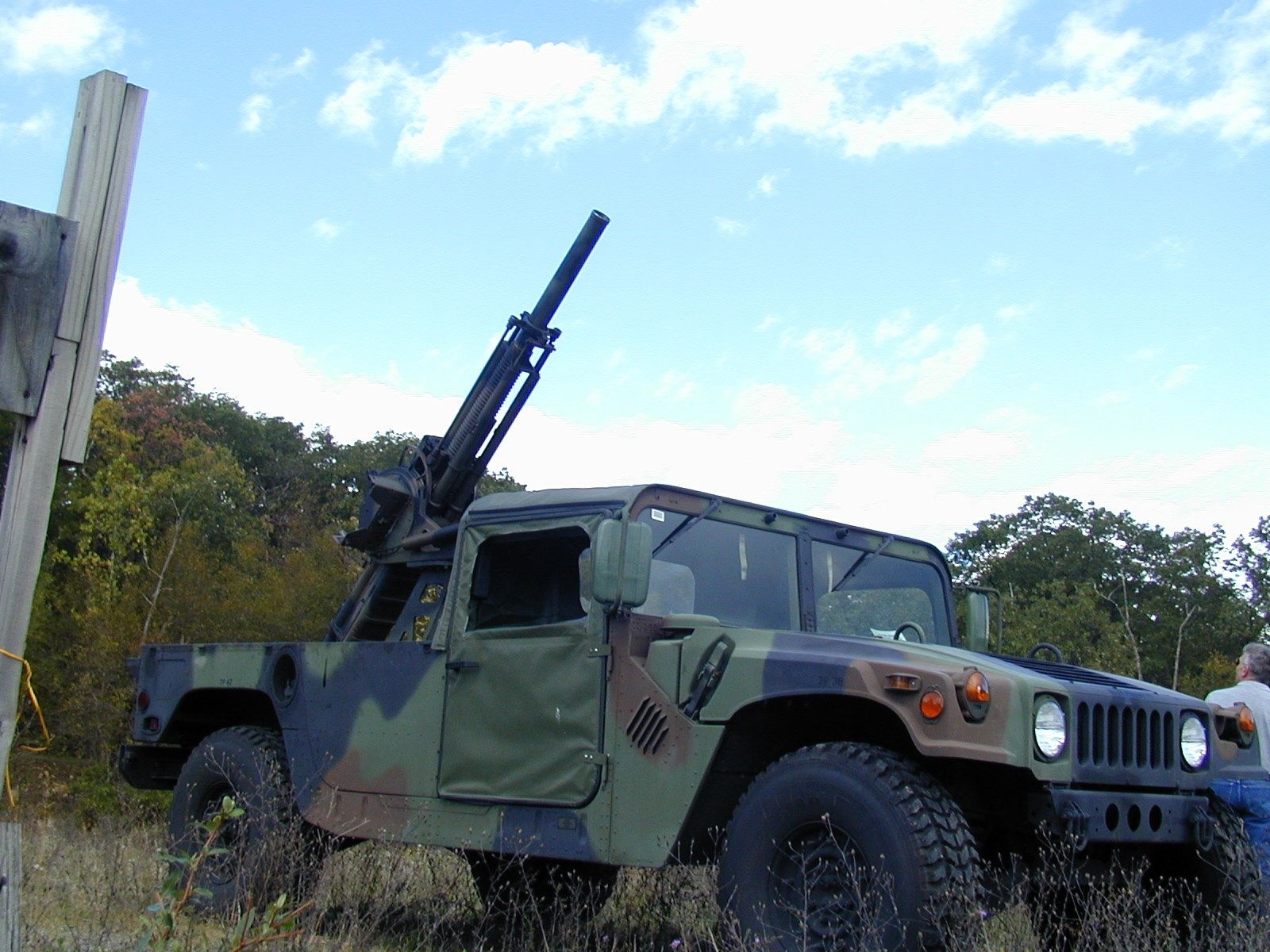
The Vasilek was almost never widely used internationally. It wasn't sold to anyone, except for a license to produce it to the Hungarians in 1987, but they limited themselves to a small batch, built a prototype self-propelled variant based on an infantry fighting vehicle (IFV), and then abandoned the project. At one point, a small batch of them appeared in Syrian hands, and a little later, Russia supplied its 2B9s to Syrian government forces. A small number were also supplied to Iraq, back in the Soviet era. But the Chinese were the ones who took a liking to the automatic mortar. After a slight modernization, they produced their own W99, which has recently begun to be supplied en masse to the Chinese military. For the Airborne Forces, they developed the PCP001 self-propelled gun based on the Mengshi, a local copy of the HMMWV. The VRY001A ammunition carrier is also produced on the same chassis. The automatic mortar delivers too much firepower for its low weight to be ignored by paratroopers, who are counting every kilogram. Moreover, the 2B9 once attracted interest in the United States. A self-propelled gun based on the HMMWV, called the Scorpion, was developed and tested by units of the 82nd Division. There was a ton of positive feedback from the military, but the leadership considered this a lack of standardization of weapons and refused to greenlight the project.
While the idea of an automatic mortar wasn't original, the USSR managed to perfect it and mass-produce a truly unique weapon. Is there room for improvement for the Vasilok? Of course, modern mines with increased power could be used, the range could be increased, the weight could be reduced with new materials, and the weapon could be mounted on a tracked chassis. Will this be possible? Who knows, time will tell. |
 ochoin ochoin  | 08 May 2026 11:00 p.m. PST |
Thank you for that, Cuprum. The Vasilek is a fascinating hybrid—part mortar, part light artillery piece. Its real strength doesn't seem to be just automatic fire but the ability to put a sudden concentration of HE onto a target before the enemy could react. In Afghanistan especially, that must have been invaluable: lighter and easier to deploy than a 120mm mortar, but capable of saturating an area in seconds. Its later decline also makes sense. Against urban targets, fortifications, or enemies operating at longer range, sheer shell weight matters more than rate of fire—which explains the return to 120mm systems. A very Soviet solution: mechanically clever, highly specialised, and remarkably effective in the right conditions. |
| Cuprum2 | 09 May 2026 4:04 a.m. PST |
A single gun fires 40 rounds per minute, while a battery of four guns fires 160 82mm mortar shells per minute. The gun is quite mobile, as one photo shows – it can be fired simply from the back of a truck (or from an MT-LB), meaning it can be quickly deployed to the required position.
In the modern era, without the usual "fog of war" (the constant presence of reconnaissance drones in the air approximately twenty-five kilometers behind the front line), the ability of artillery to quickly arrive, deploy, deliver a massive strike, and immediately leave the position before return fire or attack drones arrive is a major advantage. This made the Vasilek a relevant weapon again. However, it is still a design from the 1950s, and it would be a good idea to develop a more modern weapon based on it (as the Chinese have done). |
|





 looks at some new terrain products, which use space age technology!


