This year, we are committed to putting on demonstration games at two local Shows.One is in October, the other November. For us, these show games are a big deal – 5-6 players & several hundred figures, bespoke terrain etc.We'll be staging a WW2 and a Punic Wars games.
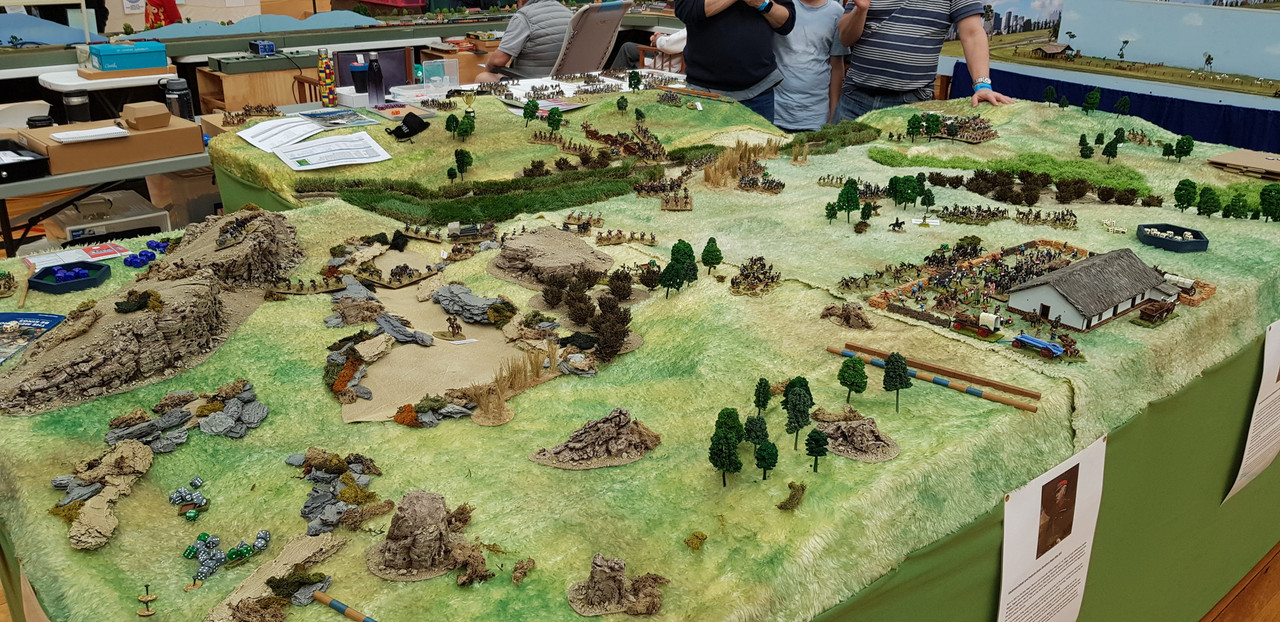
A previous, AZW game:
theminiaturespage.com
"TMP link
A large table, multiple commands, and an umpire keeping the game flowing.
I'll be umpiring at least one. I've found that the umpire's contributions often have more impact on the success of the game than you might expect.
By this I don't mean major house rules or wholesale changes to published systems. I'm referring instead to simple, low-effort techniques that reliably improve player engagement, create a sense of fog of war, keep games moving and add a stronger historical feel without increasing complexity.
In the past, I've used things like asymmetric player briefings, hidden or conditional objectives and deliberately limited information about enemy morale or reserves. I've also found that handling command friction through the umpire, rather than through extra tables or dice rolls, can smooth play while still preserving uncertainty.
I'm interested in hearing what small, practical umpire or scenario-design tricks others have used that consistently work in large, multi-player games. What techniques have you found make a noticeable difference at the table without slowing the game down?