Help support TMP


"Zulu War British fatigue caps?" Topic


4 Posts

All members in good standing are free to post here. Opinions expressed here are solely those of the posters, and have not been cleared with nor are they endorsed by The Miniatures Page.

Please remember not to make new product announcements on the forum. Our advertisers pay for the privilege of making such announcements.

For more information, see the TMP FAQ.


Back to the 19th Century Discussion Message Board

Back to the 19th Century Product Reviews Message Board


Areas of Interest

19th Century

Featured Hobby News Article


Featured Link


Top-Rated Ruleset

Rank & File


Rating: gold star gold star gold star gold star gold star gold star gold star 


Featured Workbench Article

Simple Magnetic Flight Stands

Personal logo Editor in Chief Bill The Editor of TMP Fezian takes another stab at building a more perfect flight stand.


Featured Profile Article

First Look: Minairons' 1:600 Xebec

Personal logo Editor in Chief Bill The Editor of TMP Fezian looks at a fast-assembly naval kit for the Age of Sail.


Featured Book Review


170 hits since 9 Jan 2026
©1994-2026 Bill Armintrout
Comments or corrections?

Baranovich09 Jan 2026 2:37 p.m. PST

I'm starting a 28mm Zulu War wargaming project.

Am going to go with a mix of Perry and Empress miniatures.

However, in going through the ranges I noticed something that gave me pause.

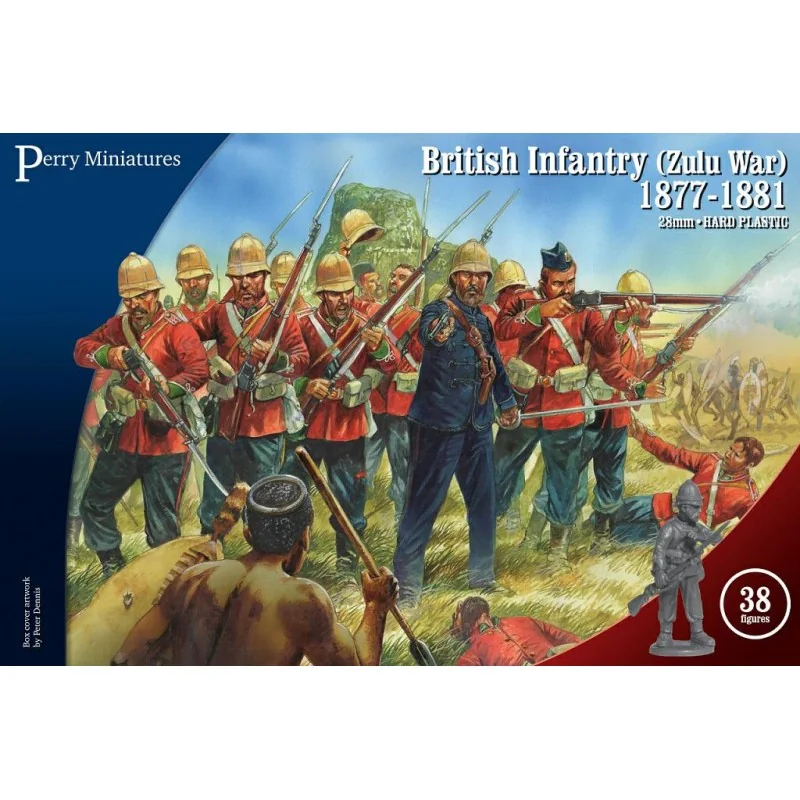
On the box art for Perry's plastic British set, as well as the actual mini. images for some of both Perry's and Empress' British packs, they show some soldiers wearing a small cloth cap which appears to be painted in a very dark blue or grayish black.

My question is – what are these? Was there actually an alternate headgear that British soldiers could wear instead of the hard shell helmet? You see this cap make brief appearances in the 1979 movie "Zulu Dawn", it's being worn by the young buglers in various scenes. Curiously, they seem to not make any appearance in the earlier 1964 movie "Zulu". Not that historical drama movies should be taken as actual reference, but both films seem to at least get the basic kit sorted out. Excepting things like the bright golden badges being on pristine white helmets in "Zulu", etc.

But in all the reference books I've got on the Zulu War, I haven't seen this cap being worn by any soldier on the actual march, or being part of the basic infantry kit.

The reason I call it a "fatigue cap" is because it looks like it serves the same purpose as like the Union forage/fatigue cap from the Civil War, whereas the stiffer Hardee Hat was usually considered to be the infantry dress hat.

But I was always under the impression that the British helmet was the usual headgear worn on the march. That dark cap seems like it would be something that was worn off-duty. But according to Empress and Perry they were supposedly worn not only on the march but also in combat while on the firing line?

Any new info. that could shed on light on this would be much appreciated!

picture

picture

picture

picture

HMS Exeter Supporting Member of TMP09 Jan 2026 4:47 p.m. PST

In addition to the prevailing white, usually dyed tan in the field, Foreign Service Helmet, 2 other forms of headgear were used.

The "Garrison cap'y" Glengarry Hat, you referenced,, was issued as an undress cap. There was also the "Fatigue Hat" normally issued to officers and specialist personnel.

link

Personal logo Extra Crispy Sponsoring Member of TMP09 Jan 2026 4:47 p.m. PST

24th infantry Glengarry cap maybe?

picture

Frederick Supporting Member of TMP11 Jan 2026 9:03 a.m. PST

That would be the undress forage cap more commonly known as the Glengarry, introduced into use as an undress cap in 1874, replaced in 1895 by the field service cap for line infantry

I imagine that the glengarry was worn in a number of situations where an undress cap was more suitable – in battle I can see why most if not all troops would want a helmet. On the march you might think that the glengarry would be more practical but apparently the way the helmets were constructed (with a gap between the outer shell of the helmet and the helmet liner) in a way that helped keep the person wearing it cool – I guess they didn't call them "sun helmets" for nothing!

Sorry - only verified members can post on the forums.