"US 2025 National Security Strategy - an overdue reset" Topic
133 Posts
All members in good standing are free to post here. Opinions expressed here are solely those of the posters, and have not been cleared with nor are they endorsed by The Miniatures Page.
Please do not post offers to buy and sell on the main forum.
For more information, see the TMP FAQ.
Back to the Ultramodern Warfare (2016-present) Message Board
Areas of InterestModern
Featured Hobby News Article
Featured Recent Link
Top-Rated Ruleset
Featured Showcase Article Another episode of Identity That Figure!
Featured Profile Article
Current Poll
Featured Book Review
|
Pages: 1 2 3
| Tango01 | 26 Jan 2026 11:19 p.m. PST |
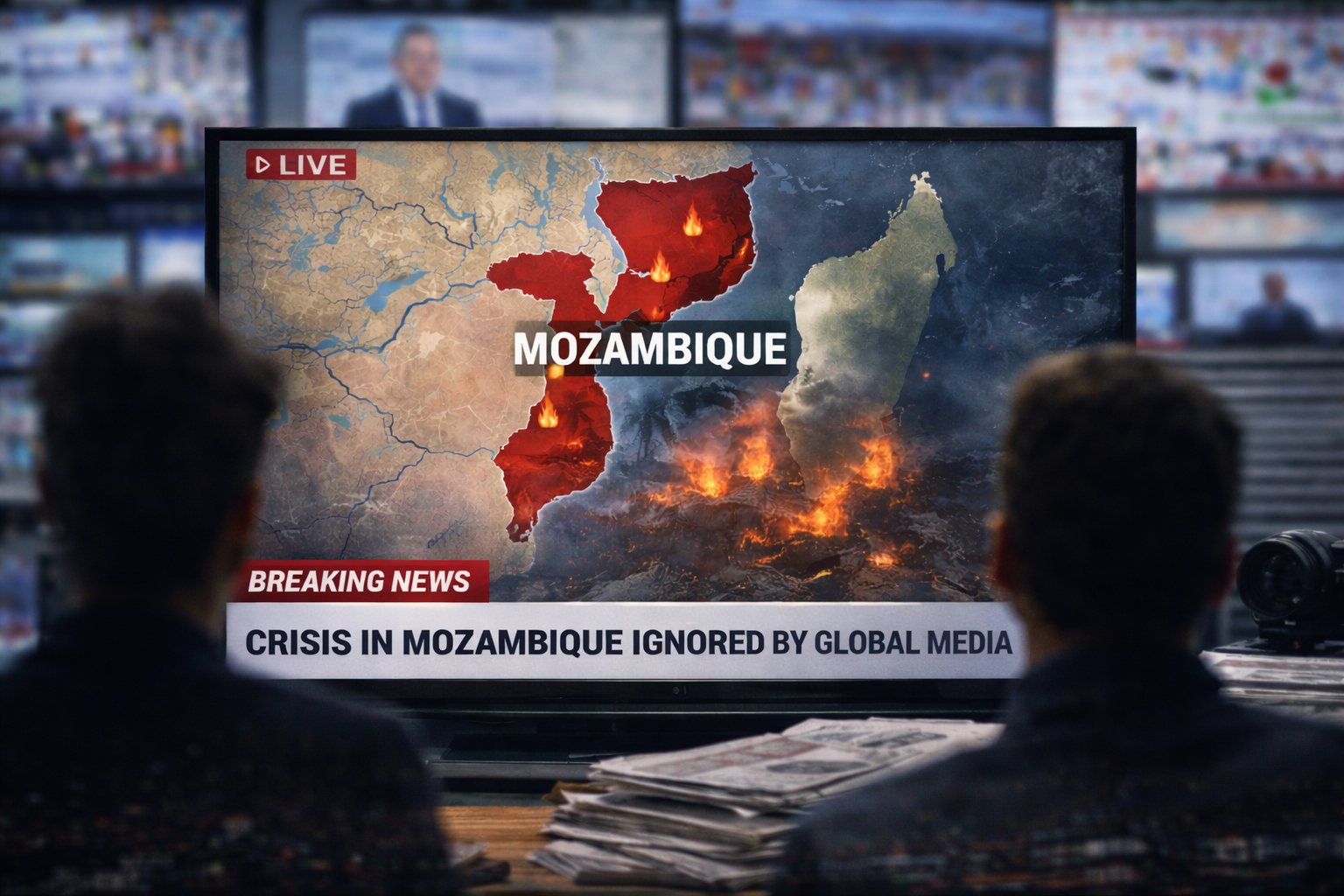
A War Without Headlines: Mozambique's Insurgency and the Global Security Blind Spot
link Armand |
 SBminisguy SBminisguy  | 28 Jan 2026 9:30 a.m. PST |
Reviewing "allied" reactions to trade and political actions from the Trump admin, I'm struck by the reactions to what seems obvious -- Trump has always used disruption to clarify a deal, so to speak. Much of the criticism of President Trump's foreign policy assumes that unpredictability is a flaw—that public pressure, awkward proposals, and confrontational rhetoric reflect impulse rather than design. But viewed through the framework of the new National Security Strategy, a different interpretation suggests itself. What appears as turbulence may instead function as deliberate strategic probing, meant to expose alignments, dependencies, and weaknesses that quieter diplomacy has long concealed. This context matters because the strategy is explicit about its central premise: **China is now the United States' primary strategic adversary**. Not a competitor to be integrated, not a stakeholder to be socialized, but a systemic rival whose economic, technological, and military power is increasingly incompatible with American security interests. The strategy therefore prioritizes decoupling—selectively but decisively—between China and what have traditionally been considered "Western" economies. That goal immediately raises a harder question: **who will actually stand with the United States if competition turns into confrontation, and who cannot be counted on**? One observer described Trump's approach as "throwing chum in the water." The metaphor is inelegant but apt. Chum does not create predators; it reveals them. It forces movement, exposes hierarchy, and distinguishes disciplined actors from reactive ones. In geopolitics, controlled disruption can serve the same purpose by compressing decision timelines and compelling states to show—rather than declare—where their priorities truly lie. This logic is not new to Trump. Long before entering politics, he used similar tactics in business negotiations. In real estate, licensing, and litigation, Trump often opened with public disruption not to close deals immediately, but to gather information. Who panicked. Who countered calmly. Who sought alternatives. Who revealed dependence. The final agreements were often conventional, but shaped by intelligence extracted during the disruption phase. What has changed is the scale. That same method has now been applied to statecraft—and implicitly codified in a security strategy that no longer assumes alignment, but tests it. The recent controversy over Greenland illustrates the point. Taken literally, public discussion of Greenland's status was never likely to result in a transaction. Its value was diagnostic. By raising a sensitive security issue in an unconventional way, the administration stripped away layers of diplomatic process and forced allies to react in real time. Those reactions, rather than the proposal itself, became the signal. Canada's response was telling. Instead of quietly reinforcing alignment with Washington, Ottawa moved quickly to emphasize deeper engagement with China. That move did little to improve Canada's security, but it revealed how deeply Chinese trade already functions as a hedge, how fragile confidence in the U.S. relationship becomes under stress, and how much anxiety exists within the establishment about the political shift Trump represents. Under the logic of the new strategy, this is not betrayal. It is information. The aim is not to preserve comforting assumptions about alliance cohesion, but to determine **who can be relied upon in a prolonged strategic confrontation with China—and who may become a liability**. Europe's reaction to Greenland requires similar precision. It was not "Europe" as a whole that responded with urgency, but the core institutional powers of the European Union—particularly those most invested in supranational governance. Officials in Brussels, Paris, and Berlin moved quickly to issue sharp statements and frame the episode as an emergency defense of sovereignty. Other European states reacted quite differently. Countries such as Italy and Poland were notably more measured, treating the episode as a diplomatic irritation rather than an existential threat. That divergence matters. It suggests the intensity of the response correlated less with geography or security risk than with institutional identity and political incentives within the EU itself. The contrast becomes sharper when set against Ukraine. Ukraine faces an ongoing war that has reshaped Europe's security environment and imposed enormous costs. Yet the EU's response there has been cautious and incremental, marked by prolonged debates over weapons transfers, energy exposure, and escalation risks. Greenland, by contrast, triggered near-instant rhetorical unity—at least among the EU's institutional core. From a realist perspective, the asymmetry is revealing. Ukraine represents cost, sacrifice, and domestic political risk. Greenland represents **control**—over narrative, over institutional authority, and over who gets to define boundaries inside the Western alliance at a moment when strategic cohesion is being tested. A similar pattern appears in trade and energy. Faced with American pressure to rebalance tariffs and expand purchases of U.S. energy—part of a broader effort to disentangle Western economies from Chinese and Russian dependencies—the EU largely declined to negotiate. Instead, it accelerated a low-tariff deal with India that preserves indirect access to Russian oil via Indian refineries, rather than increasing direct energy purchases from the United States. Again, alternatives existed. The decision to route around Washington was political, not economic. And again, the strongest resistance came from the EU's institutional core, where decoupling from China or Russia would force painful internal adjustments. There is a deeper political layer beneath these reactions. Trump's approach challenges not just policies, but how power is exercised. By insisting on burden-sharing, national responsibility, and explicit tradeoffs, it re-politicizes decisions many elites have grown accustomed to managing through institutions and consensus. What is framed as recklessness often reflects fear of exposure—fear that dependencies will be revealed and assumptions tested. This kind of probing has a historical precedent, though executed very differently. Nixon and Kissinger used triangular diplomacy during the Cold War to unsettle rivals and reshape the balance of power through calibrated shocks and strategic ambiguity. Trump's method is louder and more public, shaped by a polarized and media-saturated environment. But the underlying logic is similar: set the tempo, collapse ambiguity, and force alignment choices sooner rather than later. Under the new National Security Strategy, disruption is not a side effect. It is the mechanism. Reaction becomes intelligence. The risks are real. Disruption without follow-through can become drift. Probing without reintegration can fracture alliances rather than strengthen them. Nixon and Kissinger understood that exposure must be followed by structure. Still, the wager embedded in the strategy is clear. It is better to identify now—before a crisis—which partners will stand with the United States in a confrontation with China, which will hedge, and which may actively undermine collective security. Seen this way, Greenland was never the issue. Canada was not the target. Europe was not being abandoned. The real objective was clarity. And under the new National Security Strategy, clarity—however uncomfortable—is treated not as a diplomatic liability, but as a strategic asset. |
| Grattan54 | 28 Jan 2026 10:57 a.m. PST |
I didn't know there was a crisis in Mozambique. So I guess the article is right. It does sound serious. |
| Tortorella | 28 Jan 2026 3:11 p.m. PST |
Some good points SB. I think Trump almost instinctively does some of this. And things have changed with such direct approaches. Iran and Venezuela in particular. Not thrilled by the methods, but finally doing something about these things matters. But I also think a lot of it is feeling out how far he can bend ally countries to his will.  This lessens achievements overseas, also IMO. |
| Tango01 | 28 Jan 2026 11:28 p.m. PST |
Forget Greenland — securing Diego Garcia should come first
link
Armand |
| SBminisguy | 28 Jan 2026 11:51 p.m. PST |
|
| 35thOVI | 29 Jan 2026 5:51 a.m. PST |
"Talks between the U.K. and the U.S. over the future of the Chagos Islands in the Indian Ocean have reportedly reopened after President Donald Trump's comments cast doubt over an agreement that would see Britain hand sovereignty of the strategically vital archipelago to Mauritius. British Prime Minister Keir Starmer confirmed Wednesday that the U.K. had reopened discussions after the president had panned the deal and branded it an "act of great stupidity," GB News reported. "Shockingly, our ‘brilliant' NATO Ally, the United Kingdom, is currently planning to give away the Island of Diego Garcia, the site of a vital U.S. Military Base, to Mauritius, and to do so FOR NO REASON WHATSOEVER," Trump had posted on Truth Social. "There is no doubt that China and Russia have noticed this act of total weakness." He added: "The UK giving away extremely important land is an act of GREAT STUPIDITY, and is another in a very long line of National Security reasons why Greenland has to be acquired."
" |
| Tortorella | 29 Jan 2026 7:03 a.m. PST |
I disagree with the Asia Times here, 35th. What exactly is the real issue here for Trump? The US and UK have a very long term lease unaffected by the transfer of sovereignty. BTW Trump previously had no issue with this whole thing. It seems like he is afraid it will undermine his Greenland takeover. Hardly an act of "total weakness."IMO. It will continue to be off limits to the tiny local population as a military base and a CIA black site. The locals have no reason to throw away the rent income. China has no sustainable force it can project in the region other than a drive by appearance occasionally. More of a target for the US than a threat. Not broken, don't fix it. Things at home are more important these days. IMO. |
 Legion 4 Legion 4 | 29 Jan 2026 8:52 a.m. PST |
Based on reports the US, Greenland and Denmark are working it out to the benefit of all concerned. That island is strategically located in the Western Hemisphere. It has to be properly defended. And the Chicoms, Russians, etc. can't get a foothold in our back yard. With the advent of hypersonic missiles. The ADA has to be located as far out as possible to intercept these extremely fast missiles. I.e. Golden Dome, etc., etc. |
| Dagwood | 29 Jan 2026 9:06 a.m. PST |
Greenland is well defended. General Winter gets promoted to Field Marshal Arctic Winter. Very little else needed, at least until global warming makes the rest of the world uninhabitable anyway. |
| 35thOVI | 29 Jan 2026 9:45 a.m. PST |
"As of January 2026, Denmark has significantly increased its military presence in Greenland to over 200–300 troops, deploying additional combat soldiers to bolster Arctic sovereignty. This includes roughly 100 soldiers in Nuuk and another 58–100+ in Kangerlussuaq, with plans for a sustained, long-term presence." "As of January 2026, Greenland's defenses are centered on the Pituffik Space Base (formerly Thule AB), which hosts roughly 150–200 US personnel. Denmark supports this with the 1st Squadron of the Royal Danish Navy (four Thetis-class, three Knud Rasmussen-class vessels) and an active reinforcement by Danish troops under Operation Arctic Endurance, which includes over 200 soldiers as of mid-January 2026." "European Allies: Roughly 30-35 personnel from other European nations arrived for training and to show solidarity.
France: Sent 15 mountain specialists.
Germany: Sent 13 personnel.
Others: Norway, Finland, the UK, and the Netherlands contributed smaller contingents (officers)." "Based on reported activities in early 2026, the non-US military aircraft in or deployed to Greenland include:
Royal Danish Air Force (RDAF): Operates Challenger 604 surveillance aircraft, with at least one permanently stationed in Kangerlussuaq.
Danish Armed Forces: Utilizes Lockheed C-130 Hercules transports for Arctic operations.
Danish Fighter Jets: F-35 Lightning II stealth fighters are patrolling Greenland from bases on Iceland, with some deploying to Greenlandic bases.
European Allies (Rotation): As part of a NATO response to security tensions in early 2026, France deployed a Multi-Role Tanker Transport (MRTT) aircraft to support the operations.
Air Greenland (Civilian/SAR): While technically a civilian company, Air Greenland operates Airbus H225 helicopters for Search and Rescue (SAR) in North Greenland. " |
| SBminisguy | 29 Jan 2026 11:37 a.m. PST |
The US and UK have a very long term lease unaffected by the transfer of sovereignty. Ahh….because that worked so well with the transfer of Hong Kong to China… Greenland is well defended. Sure -- NOW it is… |
| 35thOVI | 29 Jan 2026 12:09 p.m. PST |
Based on what placed out, does not seem so. |
| Tortorella | 29 Jan 2026 12:16 p.m. PST |
Just to make sure – I was talking about Diego Garcia, and the possibility that Trump has seen this as a threat to direct control of Greenland. SB – money talks. And Diego does not have millions of Chinese inhabitants. |
| Legion 4 | 29 Jan 2026 6:15 p.m. PST |
Greenland is well defended. General Winter gets promoted to Field Marshal Arctic Winter. Very little else needed, at least until global warming makes the rest of the world uninhabitable anyway. Ahhh … I don't think that is correct. Both the Chicoms and Russians can operate in extreme cold. And so can the US. E.g. I spent 22 months in the ROK. The winters are extreme. The 2ID is still there. Albeit downsized. Plus we now have the 11th ABN Div. stationed in Alaska. Called the "Arctic Airborne" … Appears like many miss the point … Again … With the advent of hypersonic missiles. The ADA has to be located as far out as possible to intercept these extremely fast missiles. I.e. Golden Dome, etc., etc. In many situations you want to engage enemy assets as far out as possible. For obvious reasons… It can't be forgotten we may very well end up having to deal with incoming WMDs. Possibility is low … but why take the risk. To overestimate the effect of an extreme cold weather environment is as bad as to underestimate it. OVI +1 SBm +1 |
| SBminisguy | 30 Jan 2026 11:27 a.m. PST |
SB – money talks. And Diego does not have millions of Chinese inhabitants. Hong Kongers did NOT see themselves as part of Mainland CCP Chinese culture. They had become poltically distinct and autonomous from the CCP and consider themselves culturally aligned with Cantonese/Southern China culture while the CCP more reflects northern China culture. The point being they did not want assimilation with the CCP's China, which is why so many fled in waves from HK – after the deal was announced with Britain throwing HK away and as the transfer deadline approached more fled. Since the transfer China reneged on the Autonmous Zone deal and violently crushed local control and individual rights. The same would happen in Diego Garcia, no matter what Mauritius promises, China will use their influence over Mauritius and $$$ to flip the script and take control of the island. Mauritius has NO REAL CLAIM to the islands which sit 1,300 MILES away and were never under their soverieign control and their claim is based upon occasional fishing camps from peoples related to Mauritius visting the islands. The Chagosian people "native" to the islands are actually transplants themselves, brought to the islands in the 1700s by French and British for plantation work, and removed by the British in 1968 and paid some resettlement cash. |
| Tortorella | 30 Jan 2026 8:11 p.m. PST |
I still don't see it. The only thing stopping China from taking Mauritius is UK possession, which has the only real claim? And I still don't think this is like Hong Kong, regardless of which part of China that population was culturally aligned with. I don't think it was more culturally aligned with the UK. The Chinese know Diego is a major base outside of their effective projection range. The agreement runs until 2036, then the new lease kicks in. We are not leaving no matter what China does and there is not a lot they can do. But again, not sure I get what is going on here. Trump liked this deal previously, unless I am mistaken. But maybe he just wants some cover for taking Greenland? |
| SBminisguy | 31 Jan 2026 10:31 a.m. PST |
The Chinese know Diego is a major base outside of their effective projection range. The agreement runs until 2036, then the new lease kicks in. We are not leaving no matter what China does and there is not a lot they can do Except what do you do when Mauritius breaks the lease and demands the US/UK leave Diego Garcia -- oh look, come see the violence inherent in the system! Do you see these white colonial oppressors oppressing me?! |
| SBminisguy | 31 Jan 2026 9:08 p.m. PST |
Canada's new partner, eh? |
| Tortorella | 31 Jan 2026 9:50 p.m. PST |
SB, I don't think anything happens. We are not gonna leave…. |
| SBminisguy | 03 Feb 2026 9:19 a.m. PST |
Say, this is a good development AND it's funny that it flips the EU's deal with India on its head. President Trump Announces a Major Trade Deal With IndiaPresident Trump has unveiled the latest in his string of high-profile trade agreements, this time with India, a country swiftly moving from a developing economy toward a leading economic powerhouse in Asia.
Under the new agreement, India will shift away from Russian oil, turning instead to supplies from the U.S. and Venezuela, while tariffs on Indian goods drop from 25 percent to 18 percent. The deal also locks in commitments for India to significantly increase its purchases of American products, marking a major win for U.S. trade and influence in Asia. link So how does this mess with the EU? Well, a core part of the EU's deal with India was…Russian Oil! The EU still pretends it cares about Ukraine and is finally blocking Russian oil, BUT, it's addicted to it and wanted to get it through India. See, in the EU + India deal, India would sell refined oil to the EU for low tariffs, lots of migrant workers and so on. And that was only possible because India was buying Russian oil and refining it outside of any sanctions. Now, no Russian oil from India! Instead, India will buy US and Venezuelan oil…and then does it sell to Europe? I guess they could still do that, but then they have an incredibly long supply chain instead of just buying their oil from across the Atlantic… |
| Tango01 | 05 Feb 2026 11:10 p.m. PST |
The End of U.S. Military Aid to Israel?
link
Armand |
| Tortorella | 06 Feb 2026 6:54 a.m. PST |
I give it a few weeks before Modi turns back to China for something and Trump slaps more tariffs on him. Bribing him with Venezuelan oil? |
| Legion 4 | 06 Feb 2026 9:02 p.m. PST |
SBm +1
It seems the POTUS is thinking a few moves ahead. There were a number of reasons why the US went to get Maduro. But one of the primary reasons was to not allow the Chicoms to get Venezuelan oil. Yes e.g. we cut off oil, etc. before WWII to Japan to stop their imperialism. Cut off your enemies' supplies, he can't wage war… effectively … and eventually not at all. The US did that … and in turn the IJFs attacked and invaded a number of key locations in the Pacific. To get the supplies they need, e.g. oil, etc., to continue their imperialism. E.g. Pearl Harbor, Wake, the PI, East indies, etc., etc. So along with the other positives that came out of the US Raid in Venezuela. Cutting off the Chicoms oil supplies was one of them. Along with that putting tariffs on India who is supplying oil, etc. to China. Is part of that plan. As well as the Iran card has not been played … yet. Iran sells oil, etc., to our enemies. So, by the old islamist regime being taken of the board. Would also be part of the overall plan. Tariffs are a bargaining tool … period … If one thinks otherwise, they don't understand how it works. |
| Tango01 | 12 Feb 2026 11:37 p.m. PST |
The Coming War in America link
Armand
|
| 35thOVI | 17 Feb 2026 6:56 a.m. PST |
Yes, saw that. Followed after it escaped V area. I think we are up to high 30's in drug boats sunk now too. |
| Tango01 | 23 Feb 2026 12:10 a.m. PST |
As if we didn't have enough problems…
Trump directs US government to prepare release of files on aliens and UFOs
link Armand |
| Tortorella | 23 Feb 2026 7:24 a.m. PST |
Daily attention seeking. A master of media manipulation and deflection by distraction. He watches a lot of tv news, stirs every pot he can find, provides opinions on any topic. Not attacking him, just an observation. Today we are thinking aliens, a break from Iran or Epstein in the news. |
| Tango01 | 23 Feb 2026 2:06 p.m. PST |
Clever Tortorella… (smile) Armand |
| Tortorella | 23 Feb 2026 3:25 p.m. PST |
Saw it, he was not serious, no comparison. Trump is not about aliens either, it's about changing the subject. All politicians do this to various extents, but we are in whiplash territory, lately. The number of strategic military operations, independent of any congressional input has come along very rapidly. We expected to be less involved overseas, but we must be spending a bundle on these operations. It's hard to complain about attacking Iran, the mothership of terrorism, but it is not without serious risk. The Saudis have deep financial connections with the Trumps. I bet they know more than the American Congress. |
| 35thOVI | 23 Feb 2026 3:52 p.m. PST |
Changing the subject from what?
As far as Iran, you all do realize he hates military conflicts and is attempting everything possible to avoid attacking Iran again. Stupidly, in my opinion trying to negotiate with life long liars who control that country. It is talked about daily, at least on news services I watch or read daily. Maybe not on the MSM who are loudly calling for a cleanups under their desks after the SC tariff decisions. The mops are quite busy I hear. 😏 Or their latest outrage du jour. Here you go from today, obviously can't show you the Fox News stories from TV this morning on the Iran build up. Subject: Top US general said to urge Trump to exercise caution on Iran military action | The Times of Israel
link Agamer had it right, it was only brought up after Obama's interview where he did. |
| 35thOVI | 23 Feb 2026 5:09 p.m. PST |
He must have heard you… or did I tell him? 😏 Numerous stories from the Fake News Media have been circulating stating that General Daniel Caine, sometimes referred to as Razin, is against us going to War with Iran. The story does not attribute this vast wealth of knowledge to anyone, and is 100% incorrect. General Caine, like all of us, would like not to see War but, if a decision is made on going against Iran at a Military level, it is his opinion that it will be something easily won. He knows Iran well in that he was in charge of Midnight Hammer, the attack on the Iranian Nuclear Development. It is a Development no longer, but rather, was blown to smithereens by our Great B-2 Bombers. Razin Caine is a Great Fighter, and represents the Most Powerful Military anywhere in the World. He has not spoken of not doing Iran, or even the fake limited strikes that I have been reading about, he only knows one thing, how to WIN and, if he is told to do so, he will be leading the pack. Everything that has been written about a potential War with Iran has been written incorrectly, and purposefully so. I am the one that makes the decision, I would rather have a Deal than not but, if we don't make a Deal, it will be a very bad day for that Country and, very sadly, its people, because they are great and wonderful, and something like this should never have happened to them.
PRESIDENT DONALD J. TRUMP |
| Legion 4 | 23 Feb 2026 10:10 p.m. PST |
|
| Tango01 | 24 Feb 2026 12:10 a.m. PST |
America's Blind Spot: Ignore Africa, and Cede the 21st Century to China link Armand |
| 35thOVI | 24 Feb 2026 6:15 a.m. PST |
Tango the administration is not ignoring Africa. I mention only Nigeria for now. |
| Tortorella | 24 Feb 2026 12:10 p.m. PST |
Obama in context basically said he believes in the statistical existence of aliens. Caine is said to have advised, as the NYT says, Trump on the Iran risks, including logistical issues and the possibility of casualties. He does not recommend policy decisions, he briefs on military capabilities, stays in his lane. As I said in another thread, its hard not to support going after the mullahs after all the killing they unloaded on the world. 35th, Trump's Taliban deal in Afghanistan was not a success, and he was talked out of bringing them to Camp David not too far from the anniversary of 9/11. Let's wait and see what he does…. |
| SBminisguy | 24 Feb 2026 3:17 p.m. PST |
America's Blind Spot: Ignore Africa, and Cede the 21st Century to China What's to cede right now? Africa is a stretch for China to have direct involvement past Belt & Road and bribes, and the US has been retrenching in the Western Hemispere, steadily working to reduce China's influence. We all saw China's ally Maduro go down, and China also just LOST the Panama Canal Port contracts and no longer controls that strategic waterway, Peru has declined recent Chinese infrastructure hard-sells and across region China is having to compete for influence like it did not have to during the last POTUS. And as 35thOVI, the US is also active in Africa. And as far as China goes, the whole country is a house of cards held together by force. It could fly apart and collapse much as the USSR did. |
| Legion 4 | 24 Feb 2026 8:54 p.m. PST |
AFA aliens, UFOs/UAPs, etc. If anything is released it will not be the entire truth or all the facts, etc., etc. It may be some in gov't behind the curtain in the basement in the dark that few know about. Maybe telling every POTUS all about aliens, 👽 UFOs, 🛸 etc. has been deemed "unnecessary" and an OPSEC violation. The Truth is Out There … whatever it is … but most will never know what about it … Or most likely never need to know anyway. < Hit the X-Files theme > |
| Tango01 | 24 Feb 2026 11:27 p.m. PST |
The U.S. Navy's New Stealth SSN(X) Submarine Summed In 2 Words link Armand |
| Tango01 | 26 Feb 2026 11:36 p.m. PST |
Cuban coast guard kills 4 in US-flagged speedboat link
And now what…?
Armand |
| 35thOVI | 27 Feb 2026 7:31 a.m. PST |
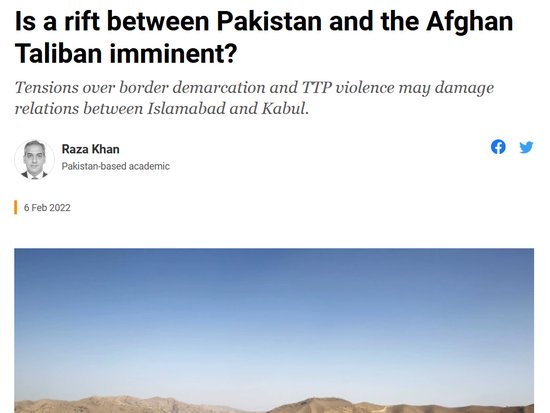
Just as Rubio said: "Secretary of State Marco Rubio said earlier Wednesday the U.S. would carry out an independent investigation before it responded. "We're going to find out exactly what happened here, and then we'll respond accordingly," Rubio said from St. Kitts and Nevis, where he was attending a conference with Caribbean leaders. Rubio added that a shootout in the open sea was "highly unusual" and that the Department of Homeland Security and the U.S. Coast Guard were both investigating." We will gather evidence and see if Cuba is telling the truth, or not. Now in the meantime, Pakistan has invaded Afghanistan. Will the world be up in arms? Who will they side with? For some reason, I currently just don't care. But, maybe someone else does. |
| Tortorella | 27 Feb 2026 7:34 a.m. PST |
Not me these days. Afghanistan is the bottomless pit of military resource waste. Since Victoria was the Queen… Shoot-ups on the opens seas is "highly unusual"? |
| Legion 4 | 27 Feb 2026 10:21 a.m. PST |
Afghanistan is the bottomless pit of military resource waste. Seems those from that region are always fighting about something and killing someone. With the Paks, Taliban, etc. shooting each other up seems to be their favorite pass time. Maybe the Paks will use a few of their nukes. Save for the fall out. I don't see much of a downside … |
| SBminisguy | 27 Feb 2026 11:50 a.m. PST |
Shoot-ups on the opens seas is "highly unusual"? yep, they are. The US has done so as a protective measure against cartel drug boats on a targeted basis, not a general free for all. In this case it's too early to know what happened. Despite the boat registry we don't actually know who was on the boat and what they were doing. Were they smuggling drugs into Cuba?
Were they trying to smuggle people out of Cuba?
Were they lost fishermen?
Did they actually do something as stupid as shoot at a gunboat, or did the gunboat open fire without provocation and then invented a causus belli? Dunno yet. |
| Tango01 | 23 Mar 2026 5:50 p.m. PST |
Does the Donroe Doctrine Now Extend to Outer Space?
link
Armand
|
| SBminisguy | 23 Mar 2026 8:34 p.m. PST |
That was then, and this is now. The December 2025 executive order, calling for superiority, strength and achievement in the name of America First space policy, rings hollow when viewed through the lens of former NASA Administrator Michael Griffin's speech of 2007 on Real Reasons – competitiveness, curiosity and monument building – and Acceptable Reasons – scientific discovery, economic benefit and national security – for having a space exploration program. The US space program has always been an extension of policy. It started off for purely military reasons, then NASA was created to win the PR War with the Soviets during the Cold War and show how the West was superior and peaceful – so NASA got manned spacefliight and exploration, but the military still hd it's own programs. Now, 35 years after the end of the Colc War and the "end of history" and with China emphasizing military space the US under Trump is going back to basics -- commercial and defense issues take priority. |
| Legion 4 | 24 Mar 2026 4:32 p.m. PST |
|
| Tango01 | 24 Mar 2026 6:02 p.m. PST |
Space Force adds cyber units to guard rocket launches
link
Drone Warfare Has Come to the United States
"Amid the raging conflict in the Middle East, the astonishing events at Barksdale Air Force Base earlier this month have attracted only limited media attention. It is reported that swarms of unidentified drones repeatedly loitered over Barksdale between March 9 and 15, drawing no publicly known effective response from the military or the Department of Homeland Security (DHS). Barksdale is the headquarters of the Air Force's Global Strike Command, which is responsible for the nation's nuclear intercontinental ballistic missiles and strategic bomber forces, including B2, B1, and B52 aircraft. The base is home to the 2nd Bomb Wing B52s and is the central hub of communications and logistical support for coordinating and directing those forces. The fact that potentially threatening drones were able to operate over such a critical complex with apparent impunity over several days, after a similar event, spanning 17 days, occurred more than two years ago at Langley AFB, is astonishing. Reports indicate that Barksdale personnel were repeatedly ordered to take cover as drones roamed over buildings and aircraft…" link
DISCOVERY BEFORE DISASTER: THE LOUISIANA MANEUVERS AND THE UNTESTED WARFIGHTING CONCEPTS OF TODAY'S ARMY
link
Armand |
| Tango01 | 16 Apr 2026 5:24 p.m. PST |
Exclusive: Pentagon ramps up planning for possible military ops in Cuba link
Armand
|
| Tango01 | 18 Apr 2026 6:18 p.m. PST |
WHY GRAND STRATEGY IS IMPOSSIBLE IN A CONSTITUTIONAL REPUBLIC
"Herein lies the first and most formidable obstacle for a constitutional republic: the electoral cycle. By design, a republic offers its people the regular, peaceful opportunity to change course by changing their leaders. In the United States our president is granted a term of four, or at most eight, years. This cyclical transfer of power means that any national strategy is perpetually tethered to the next election. A new president, elected with a different mandate from a different political party with a different worldview, has not only the right but often the political obligation to dismantle the grand strategic framework of his or her predecessor. The twentieth and twenty-first centuries are littered with examples of these strategic reversals. President George W. Bush's "War on Terror" defined the United States foreign policy until President Barack Obama's administration sought to end large-scale land wars and initiated a "Pivot to Asia." President Obama's signature diplomatic achievement, the Iran nuclear deal (formally, the Joint Comprehensive Plan of Action), , was promptly withdrawn by President Donald Trump. In turn, President Trump's "America First" approach, which placed American interests before the interests of other nations including those with whom the United States had traditional alliances, was replaced by President Joe Biden's mission to restore those same alliances. The result of such rapid reversals by incoming presidents is that the United States' grand strategy becomes a series of disjointed, short-term strategies, each lasting only as long as the president's time in office. The marathon is perpetually restarted every four to eight years, making it impossible to reach a finish line that lies decades away.
Some might point to the Cold War as proof that the United States can sustain a grand strategy, in that case the forty-year policy of "containment." That example, however powerful on the surface, actually proves the rule rather than the exception. As the eminent historian John Lewis Gaddis detailed in his seminal work, Strategies of Containment, there was never a single, monolithic grand strategy to contain the Soviet Union. Instead, what existed was a consistent objective, which was pursued through a succession of wildly different and often contradictory presidential strategies. Harry Truman's strategy of containing Soviet expansion with economic aid and localized military force gave way to Dwight Eisenhower's "New Look," which emphasized massive nuclear retaliation and covert action. This, in turn, was replaced by John F. Kennedy's "Flexible Response," which led to the disastrous land war in Vietnam. This was followed by Richard Nixon's pursuit of détente and diplomatic engagement, which was later repudiated by Ronald Reagan's strategy of "Rollback" and military buildup. Each of these was a distinct, administration-specific strategy driven by electoral mandates and changing perceptions. The Cold War, therefore, was not a singular grand strategy, but a series of reactive, short-term strategies aimed at a stable, long-term problem. "Grand strategy is the loftiest of statecraft's arts. It is the slow, deliberate orchestration of a nation's entire might—diplomatic, informational, military, and economic—over the course of decades to achieve a paramount, long-term objective. It is the architectural plan for a nation's place in the world. Joint Doctrine Note 1-18 states that "grand strategy aims to secure and advance a nation's long-term, enduring, core interests over time." Authoritarian states can pursue such monolithic projects with unnerving consistency, yet the very structure of a constitutional republic, designed to preserve liberty, makes the sustained implementation of a singular, decades-long grand strategy a near impossibility. This essay argues that the hallmarks of a free society, namely regular elections and a free press, create a constant state of strategic flux. However, this apparent weakness is, paradoxically, the republic's greatest strength, safeguarding it from the perils of unchecked power. The structures of a republic ensure that the ultimate authority rests not with a permanent state apparatus, but with the people themselves….
link
Armand
|
Pages: 1 2 3
|