| Tango01 | 28 Apr 2021 8:27 p.m. PST |
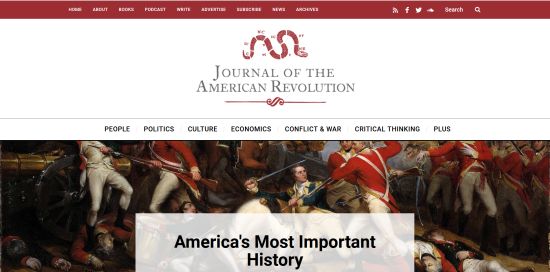
"The American War of Independence broke out on this day (April 19) in 1775, when 70 Massachusetts militiamen confronted 700 British troops on the Lexington green. Six years later, the last engagement of the war ended with the surrender of a British army to George Washington's Continental soldiers in Yorktown, Virginia. The contrast between the two types of American troops – the citizen-soldiers of the militias and the professional and uniformed soldiers of the Continental Army – was a meaningful one to Americans during the war years, and has remained important ever since. Local governments prioritized their own armed forces (the state militias) over the Continental Congress's army with regard to provisioning. Civilians likewise were more supportive of militia (with provisions and hospitality) because militiamen were locals, whereas Continentals were strangers from distant states. Moreover, militia provided various services for local communities – from regional and town defense to suppressing Loyalist opposition – which Continentals did not. These factors explain why civilians were much more likely to perform their military service in the militia –which they did in vast numbers – than in the Continental Army. As a result, the Continental Army struggled to maintain its numbers and became increasingly populated by socially marginal Americans – men at the bottom rungs of the socio-economic ladder and at the outskirts of society – whereas militias featured a more representative cross-section of the male citizenry…"
Main page
link
Armand
|
 John the OFM John the OFM  | 28 Apr 2021 8:50 p.m. PST |
Oh, please. Are you just  ing for a fight between Kevin and me with doc? ing for a fight between Kevin and me with doc? The Americans won. With a little help from their friends. |
| John the OFM | 28 Apr 2021 8:53 p.m. PST |
You know what Kevin is going to say. You know what doc and I are going to say.
Pointless. It's not like we don't dance this pavane every week. |
| BillyNM | 28 Apr 2021 9:36 p.m. PST |
|
| Tango01 | 28 Apr 2021 10:58 p.m. PST |
I enjoy a good dance….
Armand
|
| John the OFM | 29 Apr 2021 12:18 a.m. PST |
Well, I'm sitting this dance out. |
| doc mcb | 29 Apr 2021 1:05 a.m. PST |
|
| Brechtel198 | 29 Apr 2021 4:06 a.m. PST |
You know what Kevin is going to say. Presumptuous of you… As the answer is quite obvious, I wasn't going to post anything until I saw your somewhat inane posting. Grow up. |
| Brechtel198 | 29 Apr 2021 4:09 a.m. PST |
Conflicting views on the same subject: link link Enjoy yourselves without regard to sourcing form credible primary and secondary accounts, as per SOP. 😂 |
| jsmcc91 | 29 Apr 2021 4:12 a.m. PST |
Mel Gibson. I saw it in a movie once… |
| Cerdic | 29 Apr 2021 4:17 a.m. PST |
Well, there is a comedian here in Britain called Al Murray. In one of his routines he says Americans like to think they won the War of Independence, we call it a lucky  in' escape! in' escape! |
| Greylegion | 29 Apr 2021 4:35 a.m. PST |
Cerdic, That made me spit coffee everywhere. Priceless. |
| Au pas de Charge | 29 Apr 2021 4:40 a.m. PST |
men at the bottom rungs of the socio-economic ladder and at the outskirts of society Wow. I thought there were large numbers of Irish, Germans and African Americans in the Continental army. They may have been marginalized both socially and economically but they were hardly second rate morale and physical specimens. Sheesh. |
| 42flanker | 29 Apr 2021 5:09 a.m. PST |
|
| Brechtel198 | 29 Apr 2021 6:29 a.m. PST |
Well, there is a comedian here in Britain called Al Murray. In one of his routines he says Americans like to think they won the War of Independence, we call it a lucky Bleeped textin' escape! And it is well noting that two British field armies in 1777 and 1781 didn't escape-they surrendered to the Americans in 1777 and to the French and Americans in 1781. |
| walkabout | 29 Apr 2021 6:52 a.m. PST |
I don't think you get the joke. |
| doc mcb | 29 Apr 2021 8:18 a.m. PST |
Back in 1976 Irving Kristol gave a great speech, later published, on "The American Revolution as a Successful Revolution." Among many good points he observes that, unlike the French and many other revolutions, the American did not "eat its own." The revolutionary leaders all went on to become national leaders and died of old age in bed, Hamilton being an exception. Also, though there was of course the violence of the war, and some neighbor against neighbor in places like the Mohawk Valley and the Carolinas, there was no large scale POLITICAL violence comparable to the Reign of Terror. Loyalists might be beaten or have their property confiscated or be forced to enlist in the Continental Army, but but were rarely killed. The key was that the American Revolution was conservative; it was to protect existing freedoms more than to create new ones. It also limited its aims, not trying to change EVERYTHING as the French did. |
| Au pas de Charge | 29 Apr 2021 10:19 a.m. PST |
I don't think you get the joke. I think he did. He was countering with an American joke; you know, about the British soldiers being biscuit eating surrender… Because like in Britain we are all still talking about it too, we also have a lot of jokes on the Revolution. Here's one: A Burgoyne, a Cornwallis and a Clinton are drinking in a bar. Clinton says to the other two, "Go outside and pick fights with some Americans, I've got you covered" So they leave the bar and pick fights but Clinton just keeps on drinking. A little while later, Burgoyne and Cornwallis are screaming for Clinton saying "We thought you had us covered?" Clinton replies "Yes, but I meant your drinks" |
| 42flanker | 29 Apr 2021 10:26 a.m. PST |
In two words, that is both ahistorical, illogical, and patently ludicrous. |
| Au pas de Charge | 29 Apr 2021 10:50 a.m. PST |
Lords North and Pitt are talking about the War in the colonies and George III's reaction to the latest war costs comes up Lord North: His Majesty was really feeling blue this morning Lord Pitt: Oh? I thought he was just taking the piss. I got a million of 'em… |
| John the OFM | 29 Apr 2021 10:54 a.m. PST |
A Grenadier, a jaeger and a fusilier walk into a bar.
The bartender asks, "What is this, some kind of a joke?" So they shot him and committed atrocities. |
| Au pas de Charge | 29 Apr 2021 10:59 a.m. PST |
Oh man, you beat me to it, you know that one too? Lord Cornwallis told his captain of light infantry to assault Bunker Hill. The Captain replied" "Bunk her?" "I don't even know her…m'lord" |
| Ferd45231 | 29 Apr 2021 11:08 a.m. PST |
Finally the conversation takes a pleasant turn. H |
| Glengarry5 | 29 Apr 2021 11:30 a.m. PST |
A conflict that leaves the local elites in charge can hardly be called a revolution. |
| Tango01 | 29 Apr 2021 11:44 a.m. PST |
See…?… a good, nice and funny dance!….(smile)
Armand
|
| doc mcb | 29 Apr 2021 2:02 p.m. PST |
Glengarry, that is the French view, and it is terribly wrong and destructive. |
| Zephyr1 | 29 Apr 2021 7:47 p.m. PST |
"You know what Kevin is going to say. You know what doc and I are going to say. " Y'all should just number your previous arguments/answers to each other & post those to save time on typing… ;-) example:
Kevin: #3
OFM: No, I say #6, and counter with #23
Kevin: Ha! #11
etc. |
| John the OFM | 29 Apr 2021 8:07 p.m. PST |
It does speed things up.
Hah! #8! |
| Thresher01 | 30 Apr 2021 11:20 a.m. PST |
|
| Bill N | 30 Apr 2021 12:02 p.m. PST |
The key was that the American Revolution was conservative; it was to protect existing freedoms more than to create new ones. I would argue that the rebels had their liberal as well as conservative wings (as did the Tories that opposed them). The same could also be said at the start of the French Revolution. The difference was that in the AWI for the most part the conservatives who had gained control by the outset of the war managed to keep control. |
| Brechtel198 | 30 Apr 2021 12:02 p.m. PST |
Back in 1976 Irving Kristol gave a great speech, later published, on "The American Revolution as a Successful Revolution." Among many good points he observes that, unlike the French and many other revolutions, the American did not "eat its own." The revolutionary leaders all went on to become national leaders and died of old age in bed, Hamilton being an exception. Some of the early radicals/firebrands did not hold national office, such as Sam Adams and Patrick Henry, and for good reason and good judgment. They had served their purpose in their respective states and were not needed in Washington. As for 'eating their own' perhaps that should also apply to the Loyalists who emigrated or were forced to emigrate? Also, though there was of course the violence of the war, and some neighbor against neighbor in places like the Mohawk Valley and the Carolinas, there was no large scale POLITICAL violence comparable to the Reign of Terror. Loyalists might be beaten or have their property confiscated or be forced to enlist in the Continental Army, but but were rarely killed. There is internicene warfare against neighbors, in order to settle old scores and had little or nothing to do with ideology. The Revolution was the excuse to carry them out, especially in the South. The key was that the American Revolution was conservative; it was to protect existing freedoms more than to create new ones. It also limited its aims, not trying to change EVERYTHING as the French did. The American colonies/states already had liberal systems of government such as legislatures and court/legal systems. France had no such systems or traditions. There was the Estates General, but that hadn't been called together since 1614 and was not an actual general assembly or legislature. And of the three classes of people in France, two-the Church and the nobles, paid no taxes, leaving the tax burden on the middle and lower classes. The French Revolution was initially a middle class revolution that got quite out of hand and extremely violent. A succession of corrupt national governments led to national chaos and the only stable organization was the French Army. The coup against a corrupt Directory, with at least one Director who wanted to bring back the Bourbons, was led by one of the Directors and he recruited Napoleon. Napoleon's accession as First Consul solidified the social and political gains of the Revolution, brought back the Church, pardoned the emigres and instituted social and political reforms and restored law and order. The revolution was successful and Napoleon's reforms completely changed France from government, to education, to the law. 'Everything' didn't need to be changed in the new United States, but in France it most certainly did. And revolting against the king and the mother country was new and successful and what resulted was a constitutional republic with a written constitution with a new form of government. |
| Tango01 | 30 Apr 2021 12:08 p.m. PST |
|
| Rudysnelson | 30 Apr 2021 12:18 p.m. PST |
You know I could do a long post about the gains and losses experienced by each of the combatant nations. But why go through that. Victors and losers vary according to the historical research school that the writer is part of. |
| Brechtel198 | 30 Apr 2021 12:35 p.m. PST |
Go ahead with the 'long post.' It would be interesting. |
| Brechtel198 | 30 Apr 2021 12:38 p.m. PST |
Further, I would consider the American revolutionaries to be the liberals of their day, as they had read and employed the ideas of Montesquieu, Locke, and Rousseau and the Enlightenment as well as the Age of Reason greatly influenced them for motivation as well as forming a new government. And the terms 'liberal' and 'conservative' change over time. |
| GamesPoet | 30 Apr 2021 12:47 p.m. PST |
In reading some of the posts in this thread, I came to wonder how many folks actually read the article that was linked to in the original post. |
| Bill N | 30 Apr 2021 5:43 p.m. PST |
Today we remember Patrick Henry for a few speeches. During much of the AWI though Patrick Henry was the unquestioned leader of Virginia. Even as late as 1788 he was probably on par with Washington in Virginia. Why would he give that up to be just another actor in Philadelphia? Sam Adams did play a role in the early national government, but tends to be overshadowed by John Adams and John Hancock. My understanding is he did play a role in the Articles of Confederation. He did stay on in the Congress, but American history tends to overlook the Congress during that period. |
| John the OFM | 30 Apr 2021 8:52 p.m. PST |
As I understand it, Sam Adams was disreputable. Without any proof, I believe that he fired "the shot heard around the world". And, why not?
This isn't a hill I wish to die on, since I have no proof. I just want to believe it.
Just like I would be delighted to learn I had horse thieves in my ancestry, or Highwaymen back in Ireland.
A nation needs disreputable rogues, proudly a part of its history. They get things done. Alas, I'm not too fond of his beer. (It may have something to do with that scandalous St Patrick's Cathedral incident…) I prefer Yuengling lager. |
| doc mcb | 01 May 2021 4:46 a.m. PST |
"If ye love wealth better than liberty, the tranquility of servitude better than the animating contest of freedom, go home from us in peace. We ask not your counsels or your arms. Crouch down and lick the hands which feed you. May your chains set lightly upon you, and may posterity forget that you were our countrymen."
~ Samuel Adams |
| doc mcb | 01 May 2021 4:49 a.m. PST |
Without looking it up, I believe Sam was a good bit older than John. He was still a power in Mass. in 1788, but declined being sent to the Philadelphia Convention. |
| doc mcb | 01 May 2021 4:51 a.m. PST |
Right, Sam was thirteen years older than his cousin John. |