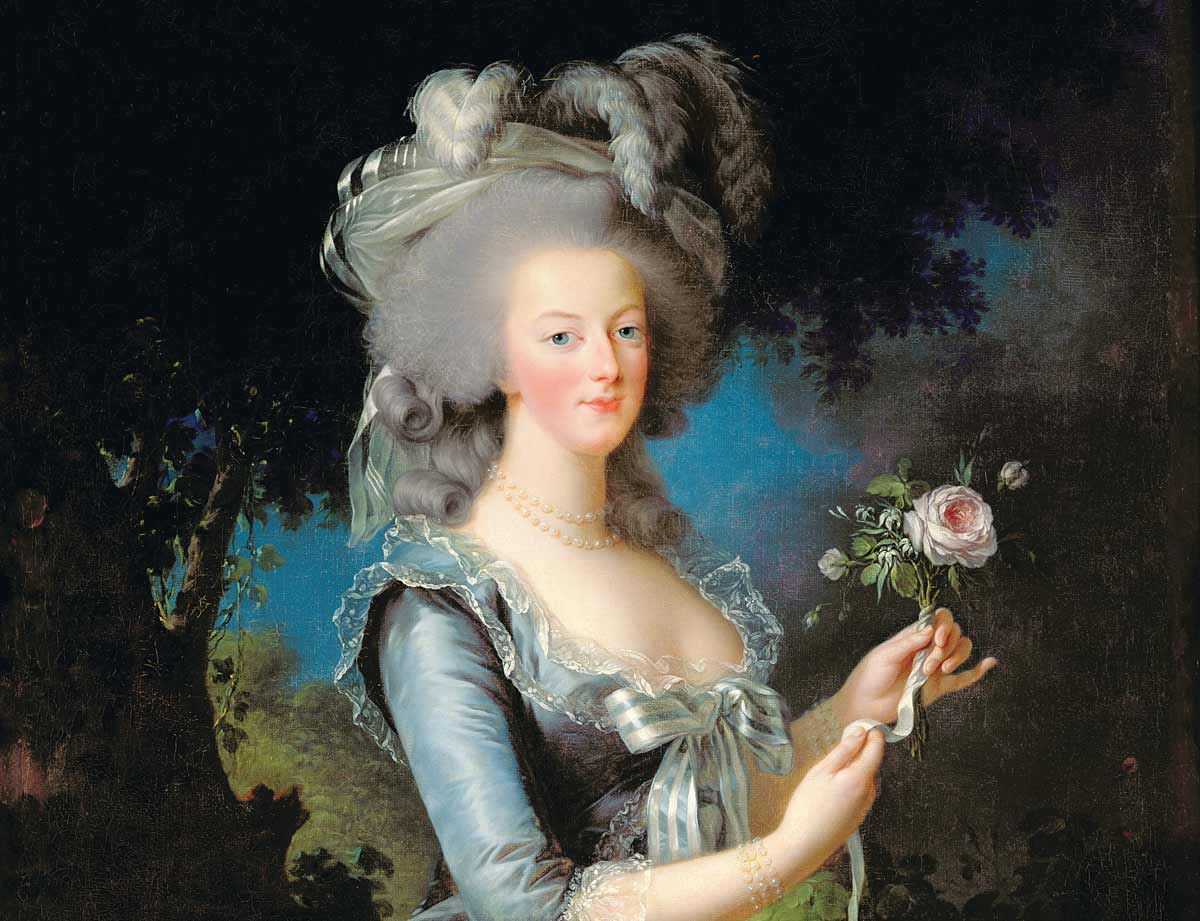
"There’s Something About Marie" Topic
2 Posts
All members in good standing are free to post here. Opinions expressed here are solely those of the posters, and have not been cleared with nor are they endorsed by The Miniatures Page.
In order to respect possible copyright issues, when quoting from a book or article, please quote no more than three paragraphs.
For more information, see the TMP FAQ.
Back to the 18th Century Discussion Message Board
Areas of Interest18th Century
Featured Hobby News Article
Featured Link
Featured Showcase Article The Acolyte Vampires return - based, now, and ready for the game table.
Featured Profile Article
Featured Book Review
|
| Tango01 | 10 Feb 2021 7:56 p.m. PST |
"In August 1855, during a state visit to France, Queen Victoria was treated to a tour of Versailles in the company of Napoleon III. The visitors' final stop was the Queen's Hamlet, the collection of mock-rustic buildings constructed in 1783 as a retreat for Marie-Antoinette. Victoria mused in her journals on the lingering presence of the dead queen: the trees that surrounded them had been ‘planted by poor Marie-Antoinette herself' and the royal party dined in a cottage named by ‘that poor unhappy Queen'. Just what is it about Marie-Antoinette? Almost 230 years since she met her end on Place de la Révolution, now Place de la Concorde, in October 1793, the ‘poor unhappy Queen' continues to fascinate. Visitors to Versailles in the 21st century can purchase compact mirrors, tote bags and hairbrushes emblazoned with her image. In October 2019, an exhibition opened at the Conciergerie in Paris – where Marie-Antoinette spent the last weeks of her life – examining her image and powerful afterlives. In his new biography of the queen, John Hardman goes beyond the clichés of Marie-Antoinette's life – the enormous wigs, her extravagant spending and ‘let them eat cake' – to reveal her as a political mover and shaker with real influence, particularly during the last months of the French monarchy. This French queen was made in the political and social hothouse of Versailles. In her first years in France, the young Austrian archduchess was forced to negotiate court politics, an unhappy marriage and close scrutiny by both the aristocracy and her mother. The lack of an heir – the couple's first child was not born until eight years into their marriage – raised eyebrows at court and among the public. Hardman concurs with many of the queen's biographers, suggesting that her initial pleasure-seeking and early attempts at political interference were a kind of ‘displacement activity' for a young woman yet to establish her role…"
Main page
link
Amicalement
Armand |
 Editor Katie Editor Katie  | 10 Feb 2021 9:24 p.m. PST |
From the History Today website. |
|




 looks at some new terrain products, which use space age technology!