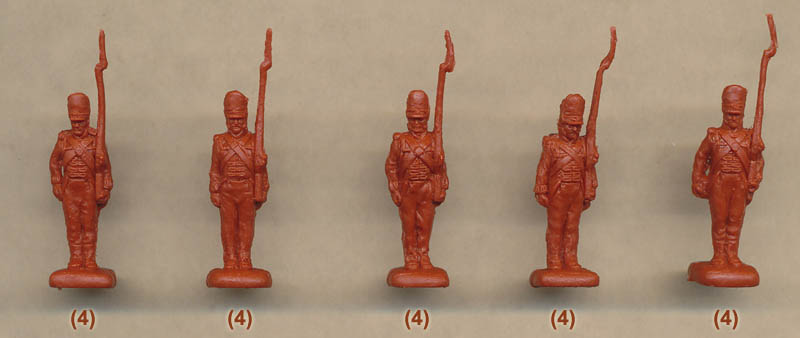
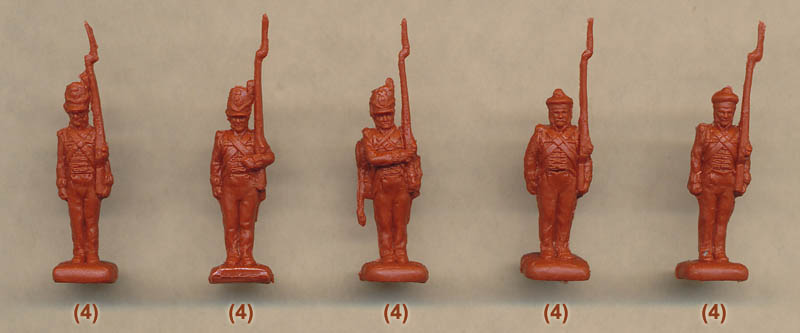
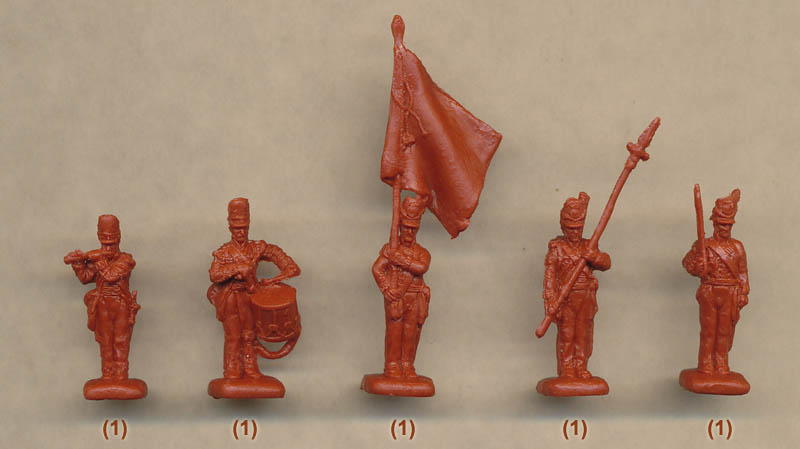
"Review British Infantry Standing Shoulder Arms" Topic
1 Post
All members in good standing are free to post here. Opinions expressed here are solely those of the posters, and have not been cleared with nor are they endorsed by The Miniatures Page.
Please remember that some of our members are children, and act appropriately.
For more information, see the TMP FAQ.
Back to the Napoleonic Discussion Message Board Back to the Napoleonic Product Reviews Message Board Back to the Plastic Figures Message Board
Areas of InterestGeneral
Napoleonic
Featured Hobby News Article
Featured Link
Featured Ruleset
Featured Showcase Article Need some low-pressure clamps?
Featured Workbench Article
Current Poll
|
| Tango01 | 13 Feb 2020 4:14 p.m. PST |
"In the days before Waterloo Wellington is supposed to have been asked in a Brussels park what he thought his chances were in the coming battle. Pointing to a British infantryman, he said "It all depends on that article there. Give me enough of it and I am sure". To Wellington's mind he did not have enough of it, at least not enough of the experienced veterans of the war in Spain. Those that he did have would be the backbone of his multi-national army, and would be positioned between less highly regarded units to stiffen resolve. In the event of course the Anglo-Allied and Prussian armies did prevail on June 18th 1815, after which Britain quickly reverted to a small army, which did not again set foot in anger on European soil for almost forty years. The style of shako and the mess tins in this set date it to between 1812 and 1816, so clearly with Waterloo in mind. The shakos are nicely done, and some have the oilskin cover to protect them from the weather, which may well have been common in the field, but not often modelled today. Two of the poses are wearing a forage cap, which is much less likely to have been seen on campaign (although it cannot be ruled out entirely), so these figures work best on a parade ground instead. The men wear the normal coatee with short rear tails, and campaign trousers over short gaiters and shoes, although two poses have their trousers tucked into the gaiters, a feature usually associated with just the First Foot Guards…."
Full Review here
link
Amicalement
Armand
|
|





 paints "the best plastic sculpts I have seen so far..."