| mwindsorfw | 24 Dec 2015 5:41 a.m. PST |
I've looked to find what makes a Sherman an Easy Eight. The best note I found was on Wikipedia, that said it had an HVSS, which is apparently a better suspension. Was that a big deal, or is there more to it? |
| boggler | 24 Dec 2015 5:47 a.m. PST |
|
| Jemima Fawr | 24 Dec 2015 6:03 a.m. PST |
M4A3E8 The 'Easy Eight' bit comes from the E8 part of the designation (8th modification to 3rd sub-type of M4). |
| kallman | 24 Dec 2015 6:04 a.m. PST |
Yes the HVSS was a big deal. The main benefit of the HVSS was that it provided for a smoother ride of the tank which meant it was easier for the gunner to sight and shoot more accurately. Most tanks in WW II had to stop in order to get an accurate shot as the suspension and jostling of most WW II era tanks was anything but an easy ride. The modern systems in place on tanks today don't have to worry so much about this as they have excellent suspension systems and lots of high tech engineering to stabilize the gun while the AFV is in motion. Another benefit of the HVSS was that it was easy to service and repair. One of the things that made the Soviet T-34 such an effective AFV was its "Christie" suspension invented by American engineer J. Walter Christie. While the American war department had for the most part rejected the Christie suspension, the Soviets took to it like a fish in water and even improved the design over the war. That along with a wide track design meant the T-34 had a long range over cross country terrain and a small percentage chance of bogging down in soft ground. Which was a huge advantage compared to the more narrow track design of the Sherman which even though was a lighter tank in terms of tonnage had an awful tendency to bog in difficult terrain. Not sure if the HVSS would have reduced the amount of bogging but later in the war "duck wadders" were added to Sherman treads (basically an extension that widened the treads) which reduced the risk of bogging. Although I have to think having a better suspension did not hurt. |
| batesmotel34 | 24 Dec 2015 6:56 a.m. PST |
The track width was increased from 16.56" to 23" for the HVSS supsension so it had a lower ground pressure and less chance of bogging. (From link ) Chris |
| 15mm and 28mm Fanatik | 24 Dec 2015 7:08 a.m. PST |
Another distinction is that the Easy Eight's 76mm gun had a muzzle brake. |
| jowady | 24 Dec 2015 7:09 a.m. PST |
BTW "Easy" coming from the phonetic alphabet in use at the time may not have been used during WW2 but may be a post-war term. The HVSS suspension was called the E8 modification to the basic design. While the tank know as the Easy Eight was an M4A3E8 you also had M4A1E8s and M4A2E8s as well as an E8 version of the 105 assault gun. There were also plans had Japan been invaded to modify the M4A3E2 "Jumbos" to have the E8 suspension as well. They were to be designated M4A3E2 HVSS. All M4A3E8s had muzzle brakes but so did some regular M4A3 (76)s. |
| mwindsorfw | 24 Dec 2015 7:31 a.m. PST |
Thanks, guys. Jowady prompted another question. Is the 76mm gun a big improvement over the 76mm? It's one millimeter. |
| Murvihill | 24 Dec 2015 7:39 a.m. PST |
The 75mm was a lower-velocity gun that sacrificed some penetrating characteristics for better HE performance. Basically in terms of velocity:
Mortars were lowest
Infantry guns were next, then
Howitzers
gun
Anti-aircraft and anti-tank guns were highest.
Barrel length followed roughly along where the higher the velocity the longer the gun. AA guns had high velocity to extend their range in the air. The 75mm on the Sherman was intermediate between a gun (like the 155mm Long Tom) and a howitzer (like the 105mm). |
| 15mm and 28mm Fanatik | 24 Dec 2015 7:40 a.m. PST |
The 76mm gun is better than the 75mm gun on standard Shermans due to longer barrel length, which means greater muzzle velocity and penetration power. But as the movie 'Fury' shows, it still isn't good enough against the Tiger's frontal armor. |
| Mako11 | 24 Dec 2015 8:43 a.m. PST |
That big one, shown above, in resin. |
| jowady | 24 Dec 2015 9:01 a.m. PST |
The 76mm was a modification of the 3 inch Anti-tank gun. As has been noted while it had a superior armor piercing capability it didn't have as good an HE. It also couldn't penetrate the frontal armor of the Panther or Tiger, however Tigers were exceedingly rare and repeated hits by the 76 could cause the glacis plate of a Panther to crack, usually leading to the Panther or it's crew abandoning the fight. The original theory was that the 76 would penetrate both but when deployed to England it was discovered that it wouldn't, leading to a few angry communications from Ike back to the War Department. The 76 had another problem in that it's muzzle blast tended to obscure the ability of the tank commander and gunner to follow the shot to see if it hit. The War Departments suggestion that tank commanders dismount, move off to the side, and observe the shot from there was met with the derision it deserved. Often one tank would observe for another. Late in the war HVAP rounds, (high velocity armor piercing) allowed the 76 to handle the Germans however those rounds were extremely rare. The 76mm however was extremely accurate (in this it was better than the 17 pounder, while in most other ways the 17 pounder was a better gun) which did allow Sherman gunners to pull of a "trick shot" against Panthers. They would aim for the very bottom of the curved mantlet and if they hit it right the shot would ricochet through the weak armor on the top of the Panther's hull. The late Panther "G" models had their mantlets modified to keep this from happening. The 76 however could penetrate the side armor of a Panther (so could the six pounder/57mm). And the training of the crews of course played a big part, perhaps the best example was the biggest American tank battle of the war, Arracourt. |
| mwindsorfw | 24 Dec 2015 9:39 a.m. PST |
|
| wrgmr1 | 24 Dec 2015 12:33 p.m. PST |
Picture of American A/P rounds. link Down the page on the right are pictures of British and American A/P rounds. link The propellant charge of the 75mm is a lot smaller than the 76mm or British 76.2mm |
| SBminisguy | 24 Dec 2015 4:43 p.m. PST |
I think the only Sherman variant better than the EasyEight was the British Firefly. |
| Martin Rapier | 25 Dec 2015 1:26 a.m. PST |
The HE effect of the 76 was only about 10% less than a 75. The solution the British Army suggested was just to fire more shells at the target… Iirc the 76 was potentially as powerful as the 17pdr, but for some odd reason wasn't provided with as hot a charge due to concerns with barrel wear. Anyway, for its weight, the Easy 8 was a mean old Tank, and comparing it with Tigers and Panthers which were twice it's weight is a little unfair. |
| Patrick R | 25 Dec 2015 3:34 a.m. PST |
The M4A3 was the preferred variant for the US army. The E8 among other things featured the improved HVSS suspension and tracks. (Note that other variants also were upgraded with HVSS) The original 76mm was going to be almost as good as the British or German equivalent, but because AGF was concerned about tanks and TD's ditching when crossing rough terrain, they arbitrarily lobbed off nearly a foot off the length of the gun, reducing its effectiveness. The 76mm HE was poor because such shells don't do well at high velocities and require a thicker casing to prevent them bursting, reducing the useful payload. How rare were Tigers in 1944-1945 Western Europe ? The US army encountered Tiger I in only three engagements. Of course they did fight a lot more Panthers and Tiger II … |
 miniMo miniMo  | 25 Dec 2015 8:55 a.m. PST |
Tiger I's were not rare in Western Europe. Ask the Canadians. |
| Mark 1 | 25 Dec 2015 6:42 p.m. PST |
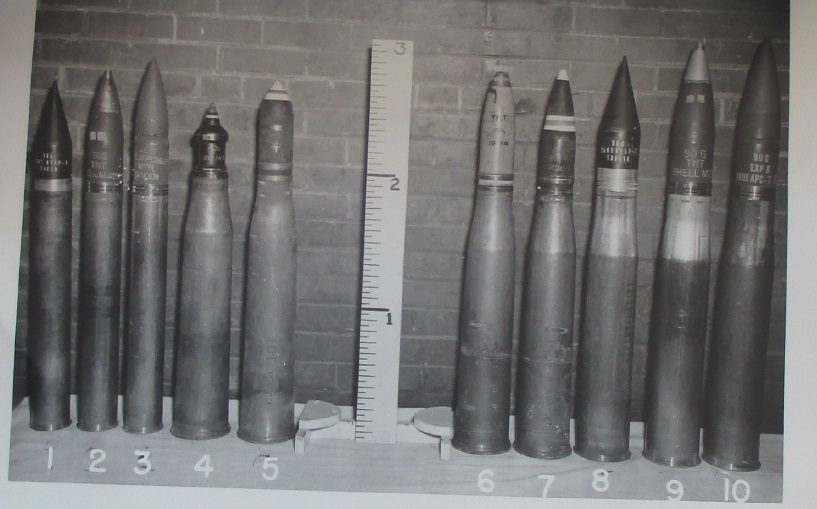
Regarding the US 76mm vs. the British 17pdr … It is true that the US 76mm M1A1 did have the barrel shortened. But this had no significant impact on it's penetration. Barrel length does not equate to muzzle velocity. It is one variable that can influence it, but there are others. The rounds for the US 76mm gun were loaded to match the ballistics achieved by the US 3-inch gun that was already in service (both as mounted in the M10 TD and as towed in the M5 AT gun). When the barrel was shorted, the chamber pressure was upped a bit to compensate. The muzzle velocity remained about the same. (However, the muzzle flash/smoke did become a problem). The reason that the 76mm gun was developed was to provide a smaller, lighter gun than the 3-inch gun. The 3-inch was originally a WW1 era naval dual-purpose gun. Typical of it's time and purpose, it was over-designed and over-built. Ordnance wanted to put a 3-inch class gun on the Sherman, but the 3-inch gun itself, and it's cartridge, were considered too large be efficiently used in the turret space of a Sherman. (Just look at the counter-weights that were put on the M10 to compensate for the over-weight 3-inch gun!) The cartridge was rather larger than needed with WW2 era powders, so a smaller cartridge and a smaller/ lighter breach could be used to achieve the same results. The US 76mm was indeed of lower power than the British 17pdr. It was intended to be from the outset. The breech was notably less massive, and would not have withstood the very high chamber pressures that the 17pdr produced.
From left to right the first 3 rounds are 76mm rounds. The two next rounds are 17pdr rounds. The 17pdr cartridge was significantly larger in diameter. The gun operated at chamber pressures about 40% higher than the 76mm gun (IIRC). So you needed a far more massive breech. The Brits had to cut the back wall out and extend the turret rear to provide room to load the 17pdr. They also had to extend the turret from, mounting the trunions in front of the turret rather than in it, and put a counter-weight on the turret rear, all to balance the heavy gun. They also had to remove the bow co-driver/MG gunner to provide space to store the ammo. All in all it was quite a hash up, and still was a very difficult tank to operate because of the tight fit. The 17pdr had a barrel life of about 100 rounds. USAOrd standards were for 1,000 rounds of barrel life. The 17pdr achieved only fair to poor accuracy by USAOrd standards. The 17pdr firing APDS achieved abysmal accuracy. The US 75m gun achieved good accuracy, and the 76mm gun achieved excellent accuracy. I am not suggesting that the Firefly was a bad solution. I am only putting the considerations that affected the decision-making into the conversation. In fact Firefly was a VERY useful tank, and in the end it was the right set of decisions for the Brits, as the US Armored units often felt rather under-gunned. -Mark
(aka: Mk 1) |
| Mark 1 | 25 Dec 2015 9:56 p.m. PST |
Oops, I spotted two errors in my prior posting. On the Firefly the Brits did not extend the turret front to mount the trunions forward of the turret. That was in the post-war Israeli Super Sherman. My mistake. And … the USAOrd standard requirement for barrel life was 2,000 rounds, not 1,000 rounds. Probably other mistakes in there too. I haven't spotted them yet, but I'm sure someone will be kind enough to point them out to me eventually … ;-) -Mark
(aka: Mk 1) |
| Martin Rapier | 26 Dec 2015 1:48 a.m. PST |
Thanks Mark. Yes, in many ways the 17pdr was "too much gun" for the Sherman turret, but as you say, it worked out OK in the end. |




 explains a simple, quick, and effective way to base troops for Flames of War.