"New clues to fate of lost Roanoke colony?" Topic
4 Posts
All members in good standing are free to post here. Opinions expressed here are solely those of the posters, and have not been cleared with nor are they endorsed by The Miniatures Page.
For more information, see the TMP FAQ.
Back to the Renaissance Media Message Board
Areas of InterestRenaissance
Featured Hobby News Article
Featured Link
Featured Ruleset
Featured Profile Article If you were a kid in the 1960s who loved history and toy soldiers, you probably had a WOW figure!
Featured Book Review
|
| Tango01 | 11 Dec 2013 9:18 p.m. PST |
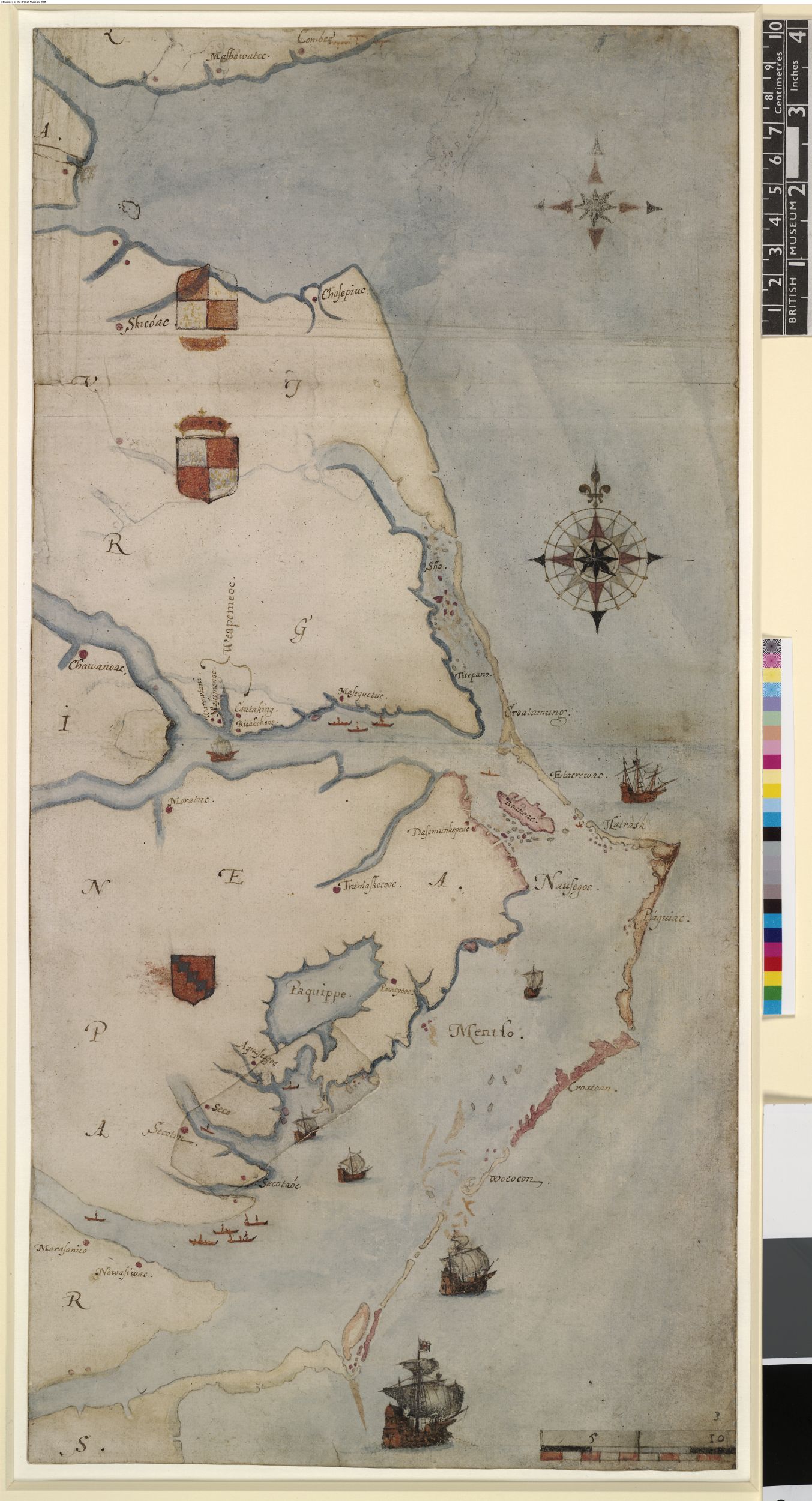
"Last year, an intriguing new clue to the fate of the lost colony of Roanoke was found hidden under a patch on a 16th century map of Chesapeake Bay. The map in question was drawn by artist, cartographer and governor John White who founded the settlement on Roanoke Island that so famously disappeared when he was overseas attempting to secure supplies for them. It's called La Virginea Pars (a partial map of the Virginia territory) and it is an impressively accurate survey of the east coast of North America from present-day Cape Henry, Virginia, to Cape Lookout, North Carolina. Originally made for Sir Walter Raleigh around 1585, the map has been owned by the British Museum since the mid-18th century. There are two patches on the map, one at the southern end over the coast of what is today Pamlico Sound, the other on the northern part of the map where the Roanoke and the Chowan Rivers meet on Albemarle Sound. Adding paper patches to the maps to correct errors was common practice at the time so nobody thought much of it until last year when Dr. Brent Lane of the First Colony Foundation asked the museum to investigate them. He was researching the location of the Algonkian village of Secotan noted on White's map and it occurred to him there might be some relevant information hidden under the patches. Because the patches are original and were thoroughly glued in place by White, they cannot be removed without damaging the map. The British Museum therefore used a variety of imaging techniques including transmitted visible light (shine a light through the map in a light box), infrared and ultraviolet. They found that the southern patch was indeed covering an earlier, less accurate drawing of the coastline, as expected. The northern patch, on the other hand, was obscuring a large four-pointed star outlined in blue and filled in red. There was also a small red circle on the coast to the right of lozenge…"
Full article here
link Amicalement
Armand |
| Xintao | 12 Dec 2013 7:14 a.m. PST |
|
| jpattern2 | 12 Dec 2013 7:29 a.m. PST |
|
| Tango01 | 12 Dec 2013 9:49 a.m. PST |
Glad you enjoyed the article boys!. (smile). Amicalement
Armand |
|