| helmet101 | 18 May 2012 1:42 a.m. PST |
|
| cbaxter | 18 May 2012 7:48 a.m. PST |
|
| firstvarty1979 | 18 May 2012 8:28 a.m. PST |
|
| VonBurge | 18 May 2012 8:39 a.m. PST |
|
ScottWashburn  | 18 May 2012 8:42 a.m. PST |
Stupid name for it. How about "Watch on the Rhine"? |
| Gunny B | 18 May 2012 9:07 a.m. PST |
I think I just stained myself…….. |
 John the OFM John the OFM  | 18 May 2012 10:21 a.m. PST |
I read the discussion about the Americans being RT.
Not from what I read in A;amo in the Ardennes… However, it would be entertaining to see the American motivation and training rolled up like Italians in the 8 Million Bayonets rule. Team Cherry and Team Desobry will also be interesting. |
| VonBurge | 18 May 2012 11:13 a.m. PST |
Stupid name for it. There is book about Joachim Peiper, probably that dude on the cover, called the "The Devil's Adjutant." Perhaps that's where the motivation for this title comes from. How about "Watch on the Rhine"? This is not an all inclusive singular book on the "Bulge." It's the second of three. The 3rd I think we can now expect to focus on the Bastogne and the 101st Airborne, maybe with the 28th ID as well, faced off against Panzer Lehr, 2nd Pz, and 26th VG for the Germans perhaps.
Guess we'll see. Cheers, VB |
| ScottWashburn | 18 May 2012 11:27 a.m. PST |
Reluctant Trained????? Maybe the 106th Division. All the rest of the American should be veterans ranging from confident to fearless. During the Bulge the Americans kicked butt and took names. it was their moment of triumph. The Germans should be reluctant trained or worse, except for some of the panzer formations. |
| VonBurge | 18 May 2012 11:27 a.m. PST |
I read the discussion about the Americans being RT.
Not from what I read in Alamo in the Ardennes… Perhaps for some of the green leg units who were sent to this "quite sector" for a little battle training that would be OK. For other bloodied units that were sent to the line in this "quite sector" for some rest and refit, RV might be better suited. The 101st at Bastogne and 82nd at St Vith ought to be just as FV as ever. However, it would be entertaining to see the American motivation and training rolled up like Italians in the 8 Million Bayonets rule. That could be interesting. I think there's more of a case for troops being reluctant as they progress into the later stages of a war whose outcome is all but certain. Nobody wants to be one of those guys that "gets it" in one of the last battles. Team Cherry and Team Desobry will also be interesting. A comment on the BF forums by Wayne, or JP, or somebody official BF that I saw makes me think we will not see these. I think their belief might be that the major tank forces have already been adequately addressed in BG&G. I do note that the US formations there can already take Parachute Rifle platoons as support options…so we may have the list we need to build a Team Cherry and Team Desobry. I'd love to see these specifically addressed myself, but there's only so much room in the books and a lot of formations begging to be covered. If we see Team Cherry and Team Desobry covered at all, expect it to be in book three along side of the 101st.
What I do expect to be added into book 2 is the US Light Tank. I say this because we've already seen M24 Chaffees models on the BF pages. So I expect those to be incorporated into a new list in book 2. Cheers, VB |
| helmet101 | 18 May 2012 11:35 a.m. PST |
title's just fine. It rings KG Peiper loud and clear. |
| VonBurge | 18 May 2012 11:44 a.m. PST |
Reluctant Trained????? Maybe the 106th Division. Yes some will be justified. All the rest of the American should be veterans ranging from confident to fearless. During the Bulge the Americans kicked butt and took names. it was their moment of triumph. That's not universally true. Some US units broke rather easily. Almost all units on the line were spread out way to thin and not well supported. Most were horribly caught off guard by the initial German assaults and many did not acquit themselves well. You might look upon the lower motivation as a "temporary" result due to them being so surprised and reflective of a loss of faith in their command that did not give them any indication that this attack was coming. Certainly not every unit had the same morale level every day…and December 16th, 1944 was a very bad day for many US units. I'm sure I might have a bit of a "F-it!!!" attitude if I was on the front line that line that day. Perhaps John the QFM's suggestion of random ratings for some US units is something taking a real hard look at? The Germans should be reluctant trained or worse, except for some of the panzer formations. Maybe…assuming they did not believe their own propaganda. Do recall that most of the German units involved with Wacht am Rhien were specifically pulled off the line months before and given the opportunity to rest, train, refit, re-man, etc. They are being told that this offensive could have a devastating effect on the Allies and that Hitler's wonder weapons are having a huge impact. They could be very well fired up, even if for just one last time, for what they think may be a game changing push. And do note following months of being "back on their heels" by being continually pushed back by the Allies, they are now finally taking the initiative again. So some "normal units" could be "normal" here. That being said most Volksgrenadier divisions will remain at lower training and morale levels but will have those Assault rifles and high density of Panzerfaust to help make up for that and the SS will be as fanatical as ever. |
| VonBurge | 18 May 2012 11:46 a.m. PST |
BTW…it's a really nice cover. I think one of the better ones by BF. |
| jdginaz | 18 May 2012 1:19 p.m. PST |
@VonBurge
Can you name the units that "broke rather easily". From the reading I've done the Germans initial infantry attacks were in the main unsuccessful on the first day and put off their timetable from the start. It wasn't until they committed the armor that the breakthroughs were achieved and that was largely due to the lack of US armor & the thinly manned lines. |
| ScottWashburn | 18 May 2012 3:03 p.m. PST |
Yes, and even the German commanders themselves said that their infantry was seriously substandard. The initial German success was due to an overwhelming numerical superiority in men and materiel. Anywhere the numbers were even close to equal the Americans held the line. |
| Henrix | 18 May 2012 3:14 p.m. PST |
A surprisingly nice cover for a FoW book. That is not their forte. Looking forward to this. We ought to see some volkssturm here, right?
Wonder how that'll play. |
| McWong73 | 20 May 2012 4:13 p.m. PST |
Patience, all will be revealed |
| John the OFM | 21 May 2012 8:15 a.m. PST |
|
| VonBurge | 21 May 2012 9:57 a.m. PST |
Paitence is always easy for playtesters. |
| jdginaz | 23 May 2012 6:34 p.m. PST |
So VonBurge no reply on the "broke rather easily" question? |
| VonBurge | 23 May 2012 7:12 p.m. PST |
Feel free to edcuate me if you know I'm off.
Cheers, VB |
| jdginaz | 24 May 2012 2:02 a.m. PST |
Well, first I'm not the one who made the claim that "some US units broke rather easily". I'm just waiting for you to backup that statement. Second, I already pointed out the majority of the initial German attacks were halted across the front and that the breakthroughs didn't happen until either late on the first day or in some cases not until the second day after the German armored units were committed. |
| John the OFM | 25 May 2012 10:03 a.m. PST |
The most famous American unit that "broke rather easily" was probably the 106th Infantry division. Two of its regiments surrendered on Dec 19th. They were cut off and surrounded, and when their attempt to counter-attack and break out failed, they were forced to surender.
I might point out that they were first attacked on Dec 16.
For a unit that was nothing but a training depot in the US, and had been deleted by drafts sent overseas NINE times, and then suddenly shipped out they seem to have held out better than would be expected. The 424th Regiment of the 106th got out and continued to fight on the St Vith front. |
| ScottWashburn | 25 May 2012 11:43 a.m. PST |
In addition, the 106th came on to the line less than a week before the attack began. The previous division holding that area (the 2nd Division IIRC) had come to the conclusion that in the event of a major attack the position was simply untenable and had made detailed plans to retreat to better ground. Unfortunately they didn't share those plans with the 106th when they took over. The 106th's commander in the short time he had came to exactly the same conclusion and had drawn up his own withdrawl plans which he intended to distribute to his officers --on December 16th. Just a tiny bit too late. |





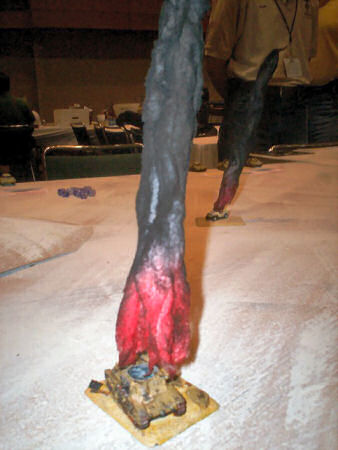
 has been watching some documentaries lately set in the Western Desert, and was inspired to create this...