| Battlescale | 09 May 2012 3:28 a.m. PST |
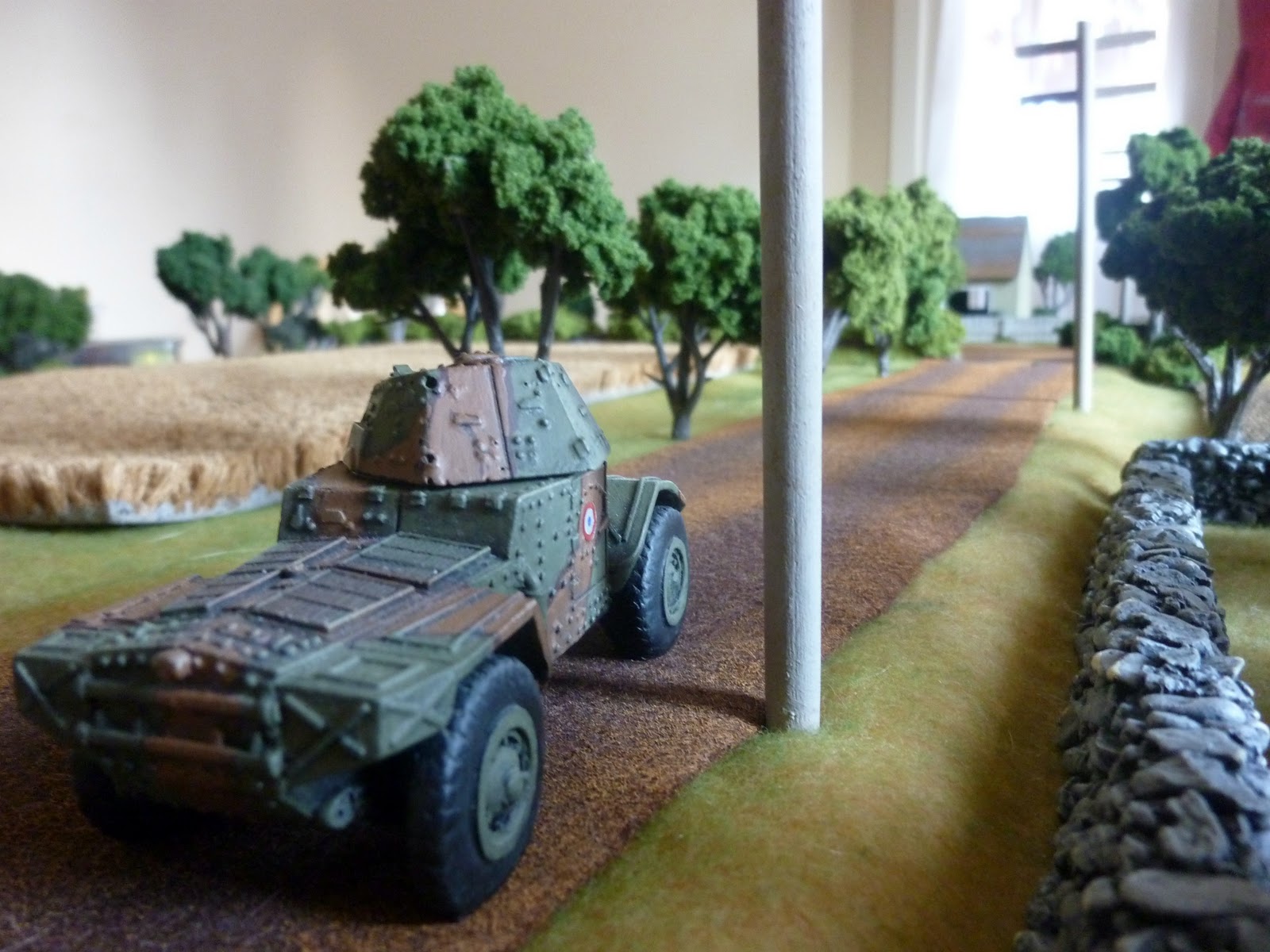
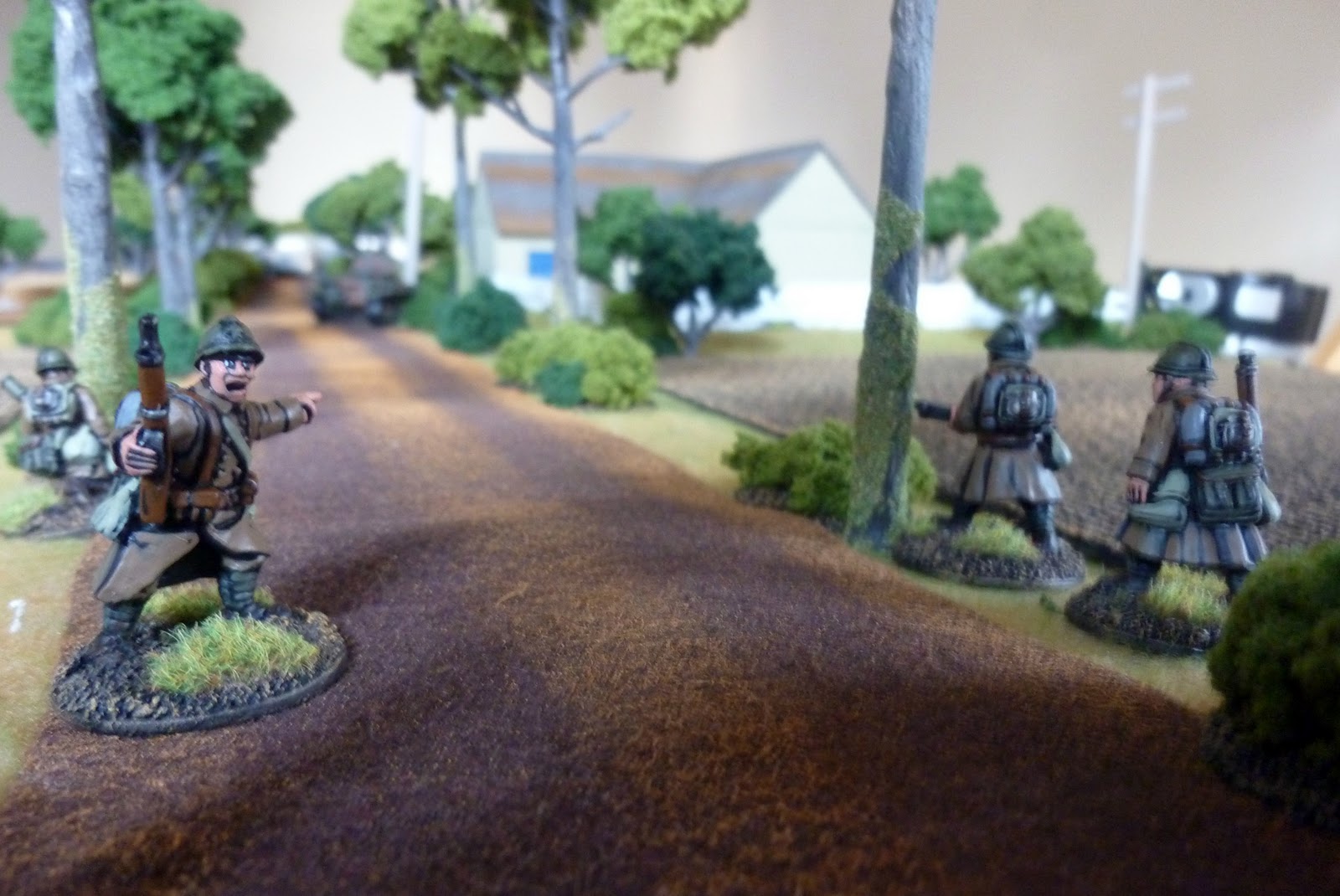
Does anyone have any good ideas for making road sections? I've just thrown my last attempt in the bin as it just didn't look right!
I'm looking for dirt/mud tracks rather than metalled surfaces so if anyone has any top tips? Cheers |
| GeoffQRF | 09 May 2012 3:37 a.m. PST |
Real mud. Messy (and not popular with the wife) but very realistic looking (as long as you keep it nice and wet). TSS has rubber roads: link |
ScottWashburn  | 09 May 2012 4:05 a.m. PST |
|
| Sane Max | 09 May 2012 4:16 a.m. PST |
Stanley Go to Wilkinson and buy some of the webby stuff you put under rugs to stop them slipping Buy some Decorator's Caulk -comes in tubes like nomore nails or silicone sealant. Make sure it's BROWN. If they don't stock it, go to B&Q One tube will make about 30 feet. loosely stick the webbing onto a sheet of waxed paper or a similar non-stick surface- pva is good for this. cut into road-section shapes Spread the brown caulk onto it, adding the ruts at this stage. Allow to cure, trim the edges,paint, remove waxed paper backing – you have flexible dirt tracks Pat |
| dBerczerk | 09 May 2012 4:38 a.m. PST |
The brown corrugated slip-on cup holders given when you buy hot, gourmet coffee make passable dirt roads. Remove the holders from the coffee cup, separate them along their glued seams, flatten them out, trim the edges to the angle you wish, and join the two flattened-out holders together with tape on the smooth (non-corrugated) side. Lay the joined sections out flat, corrugated side up. Spray-paint the section. When dry, dry-brush grey. A little work, but decent-looking and inexpensive. |
| Pijlie | 09 May 2012 4:38 a.m. PST |
If you like the roads in these pictures link let me know, and I'll post a how-to. They are insanely easy to make. |
| moonhippie3 | 09 May 2012 4:44 a.m. PST |
I haven't tried this yet, but I got some brown FIMO clay, and I plan on making an extremely thin layer, and glueing it to sheet metal. I know it will most likely crack here and there, but I also have some fine ground sand of the same color so I'm hoping to fill in the cracks with that, and possibly mix in a little green turf to show little incursions by the surrounding vegetation onto the path. If you think about it, dirt roads are never free of grass or weeds attempting to grow there. |
| redbanner4145 | 09 May 2012 5:06 a.m. PST |
I pour fine brown ballast for roads. This avoids the jigsaw puzzle problem of making road sections fit right where you want them. I have a hand vac to sweep up my roads for reuse. I do a lot of historical battles and this system is very flexible. |
 Extra Crispy Extra Crispy | 09 May 2012 5:22 a.m. PST |
I think ballast works fine for gravel. But for s dirt road, use dirt. The best kind is from a baseball diamond infield. Just help yourself to a coffee can full and strain out the pebbles. The dirt they use has an incredibly fine texture. Then just vacuum up when you're done. And redbanner is right – with this they always lie flat, aren't too "thick", flow up and over other terrain perfectly, and never move. |
| nvdoyle | 09 May 2012 5:48 a.m. PST |
Pijilie, we always want how-tos – please post! |
| Battlescale | 09 May 2012 7:05 a.m. PST |
@Pijlie. I'd be interested too! |
| richarDISNEY | 09 May 2012 7:25 a.m. PST |
Skrapwelder makes some crazy good roads outta caulk.
I am sure if you PM him, he can give you his 'secret recipe'.
And they are a sight to behold.
 |
| Ranger322 | 09 May 2012 8:01 a.m. PST |
|
| CorSecEng | 09 May 2012 8:02 a.m. PST |
Liquid Nail seems to work great. I've seen some trenches for Wings of War made out of the stuff. Roads would be easy. It dries flexible as well. |
| bruntonboy | 09 May 2012 8:37 a.m. PST |
Well I use very long strips of sand coloured felt (at least a metre long. Sand coloured with the middle grass strip done in marker pen. They don't look as good as some of the caulk roads mentioned above as they lack texture but they compensate by having very few joins- the bane of all sectional terrain. The other thing is that they can be curved very easily, flow over hills and elevations and cling to grass matting like the old childs fuzzy felt toy. One day I am going to try jazzing them up a bit with flock, more pen ruts added and maybe even edging them as well. |
| Pizzagrenadier | 09 May 2012 9:39 a.m. PST |
The rubber latex roads are a good way of doing roads, and probably your best bet if you have the time. If you want to do cheap and fast, I also agree with doing felt. However, you can jazz them up really fast by spray painting brown felt with textured spray paint (also brown). After that is dry, you can drybrush the road lanes on to give them some nice highlights. Here is a pic of the ones I have made.
I do plan to replace these some day with the rubber versions when I get the time, but these have served me well over the years. This same technique of felt works well with gray felt and gray textured spray paint as well. The bonus is as mentioned, the felt sticks well to most game mats. I also plan to add tall grass down the middle of some of the smaller dirt tracks using the tufts you can get from some model RR companies. |
| 45thdiv | 09 May 2012 9:44 a.m. PST |
Archetecs of war has a great how to for making roads out of roofing shingles. Not too costly and durable. |
| Mako11 | 09 May 2012 10:26 a.m. PST |
I've tried using liquid latex, but getting it to dry can be difficult. An oven is recommended, but I didn't want to subject myself to the fumes from the stuff in the house. So, I suspect, you either need one in the garage, or to work on a really hot day. |
| bridget midget the return | 09 May 2012 10:47 a.m. PST |
Iron Ivan Keith – Those look fantastic, especially considering how close up the photos are. |
| Pijlie | 09 May 2012 10:57 a.m. PST |
My ( or rather, WI´s how-to IIRC) is as follows: Go to your local gardening center, more specifically where they sell stuff for garden ponds. They should have either neoprene rubber (the better, more expensive stuff) or PVC (cheaper) rubber used to repair ponds. Go for the thick variety, preferably at least 1,5 mm thick. It is usually sold by the meter/yard. Buy the accompanying glue as well. Cut strips from the rubber in the desired width. Apply glue to one side liberally. Just slosh it on and then push it with the glue side into a container filled with fine sand and grit. Any sand will do, but that from children´s playgrounds or beaches is best. Let dry thoroughly. The cheaper PVC may curl a bit with drying. Applying glue to the underside will partially correct this. Storing the roads rolled up with the sanded side outwards will also counter any curling-up. If so desired, add additional glue to the middle and sides of the road and repeat, to create wagon wheel tracks. Spray the topside brown, (ArmyPainter leather brown is perfect) and drybrush in two lighter shades. Add some grass or flock, always using the accompanying glue, as this will remain flexible after drying. The roads are flexible and will follow any elevations in terrain. Don´t make them too short or they will become too rigid to do this. Store them rolled up with the road side outwards to counter curling up. You can attach separate pieces to eachother with tape stuck to the underside. Avoid using thin rubber, as this will curl up terribly. The thicker, the better. The sand and grit will remain attached, as long as you are not too frugal with the glue. The result can be seen on my blog as mentioned above. BTW, the felt roads look terrific. And so simple! Amazing! |
| Battlebook | 09 May 2012 11:36 a.m. PST |
We at Battlebook have used carpet strips to make long stretches of road.
If you go to battlebook.com and look at the photo section under Tunisian Campaign 43 you can see some lengthy roadway in 28mm. |
| Battlescale | 09 May 2012 12:25 p.m. PST |
Those felt jobs by Iron Ivan Keith are very impressive! |
| Chris B | 09 May 2012 12:49 p.m. PST |
Sheets of cheap craft foam cut into strips, cover with liquitex sand and paint.
Borrowed the idea from this guy: link Very satisfied. Durable, flexible and pretty inexpensive. |
| bruntonboy | 09 May 2012 2:35 p.m. PST |
Iron Ivan Keith, are yor felt roads flexible laterally? I.E Can you form curves with them or do you need to make curved sections? They look brilliant to me, I am off to get some paint tomorrow! |
| Pizzagrenadier | 09 May 2012 3:24 p.m. PST |
Thanks for the compliments! They aren't flexible laterally unfortunately due to the felt itself. I found that they do better with as light a spray of the textured paint as possible otherwise they get a little more stiff than you want. I cut out curved, T and Y intersections as well though they aren't pictured. I used to use the PVC sheeting mentioned above, but I found that they curled and lost too much shape over time. The felt is much cheaper and faster and gets a similar result for your time and they stay flatter even when rolled. Hope that helps, Keith |
| Maddaz111 | 09 May 2012 5:32 p.m. PST |
Thin Self adhesive vinyl tile, cut into road width strips. On the Sticky side, put a thin layer of the Brown coloured Silicone Sealant (from pound shop) texture slightly raised edges with grit and or sand and grit. When dry, add brown / black ink wash and a few puddles with PVA, and a little bit of flock. Fine for both 15 and 25 mm roads, and providing you have the right kind of sealant flexible enough for gentle climbs (not the vertical hillsides found on many tables however!) The same technique can be used to make plowed areas, back gardens and suchlike… |
| Fonzie | 09 May 2012 5:50 p.m. PST |
PDF link This is my PDF tutorial on how to build our Flexi-Roads. Fons
MMPS |
| jgibbons | 09 May 2012 6:04 p.m. PST |
Great topic and suggestions… thanks all!! |
| fogsoldiers | 11 May 2012 3:29 a.m. PST |
|
| Alfrik | 11 May 2012 5:53 a.m. PST |
Here's my take on dirt roadways: link |