"Ephesian Cavalry" Topic
9 Posts
All members in good standing are free to post here. Opinions expressed here are solely those of the posters, and have not been cleared with nor are they endorsed by The Miniatures Page.
Please remember not to make new product announcements on the forum. Our advertisers pay for the privilege of making such announcements.
For more information, see the TMP FAQ.
Back to the Ancients Discussion Message Board
Areas of InterestAncients
Featured Hobby News Article
Featured Link
Top-Rated Ruleset
Featured Showcase Article More figures for the 28mm Amazon army!
Featured Workbench Article
|
Please sign in to your membership account, or, if you are not yet a member, please sign up for your free membership account.
| ether drake | 07 Mar 2012 9:21 p.m. PST |
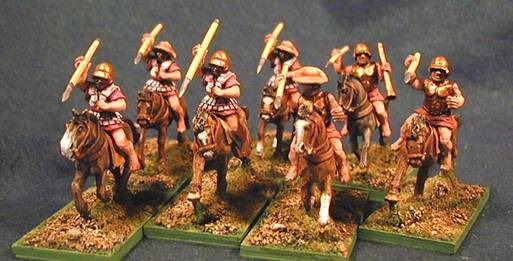
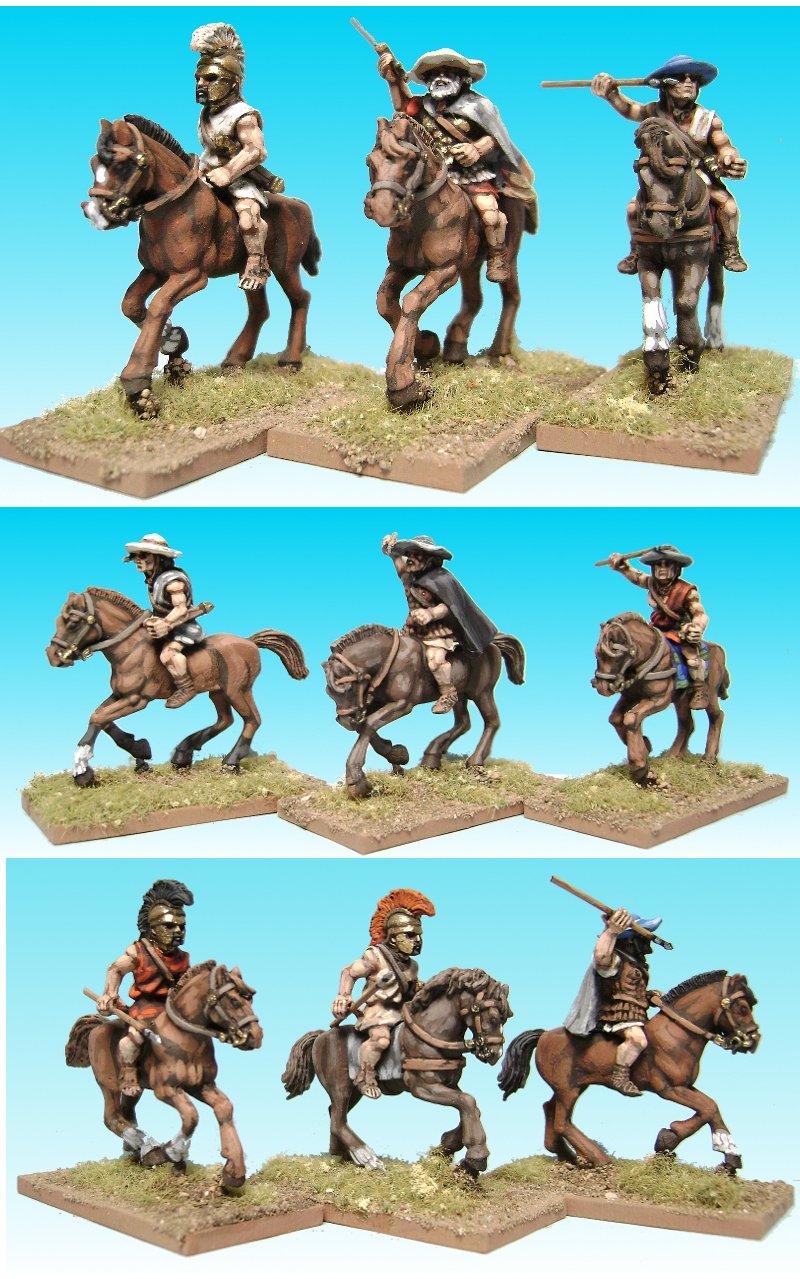
I'm trying to identify what the Asian cavalry employed by Spartan king Agesilaus II c. 395-4 BC may have looked like, as well as their appropriate troop classification in Hail Caesar. While he did enjoy the services of Paphlagonian horse for several months, he seems to have raised most of his longer serving cavalry in the region of Ephesus in Ionia. These, I presume, were the ones who defeated the famed Thessalian cavalry as Agesilaus returned to Greece. Referring to the Late Archaemenid Persian list in the Hail Caesar Army Book, do people think they were light cavalry with javelins, medium cavalry with spears, or – I doubt it – heavy cavalry with spears? Is the feigned flight ability assigned to the light cav appropriate to retain? I associate the heavy cavalry option with the elite unit attached to the Persian king, and thus likely unavailable for hire in Ionia, but include it out of completeness. So, given that Ephesus was a Greek colony, would Ionian cavalry looked more Greek or Persian? Greek cavalry was on the whole quite weak, so perhaps they wouldn't be expected to defeat the Thessalians? Taking the options from Warlord/Immortal, would they be more this:
like this:
like this:
or something else entirely? Any help appreciated, thanks. |
| adster | 08 Mar 2012 7:13 a.m. PST |
Ephesus was a Greek city, so probably more like the Thessalians out of that selection |
| JJartist | 08 Mar 2012 9:41 a.m. PST |
I doubt cavalry from Ephesus would look different from other Greeks,except maybe their cloaks. There was an Osprey plate that had an Ionian armor maker with a heavily embroidered purple cloak, with a bee design for a shield. I need to rustle up that image.
Jj |
| ether drake | 08 Mar 2012 10:00 a.m. PST |
Would love to see that pic. Thanks. |
| HarryHotspurEsq | 09 Mar 2012 3:16 a.m. PST |
Yep, certainly Ephesians would have looked as Greek as anyone from the mainland. Re: JJartist's comment:
The bee (one of the symbols of Artemis) was used as a symbol for the city on its civic coinage, and as a control mark on Hellenistic regal issues from the city, but 4th century Greek cavalry didn't carry shields in battle. I'm aware JJ wasn't suggesting that they did, just don't get mixed up. |
| ether drake | 09 Mar 2012 3:23 a.m. PST |
Thanks for the clarification, Harry. The heraldry info is still useful since I'm featuring Ionian Greek hoplitai in my army. I earlier found this link which suggested that Ionian cavalry may have been spear-armed. Trying to find support within the Hellenika on this. Any thoughts? |
| JJartist | 10 Mar 2012 1:35 p.m. PST |
The iilustration by Richard Hook in the Osprey Elite on Spartans has the illustration I recollected. The cavalry man is reconstructed wearing purple (probably from the word phoinike which should be more crimson or even magenta- from the Murex dye). The cavalryman has purple boots as well as a purple cloak.. so he's very purplfied… with gold embroidery and diamond patterns on the upper chest, with a sea swirl bottom hem… super ornate. with a reddish brown petasos hat and a hoplite spear. It's based on a vase of spartan castor and polydeukes which I could not find. So from the Warlord collection they would be the last photo. I personally don't care for the Immortal range--- but they do have an extensive range. I'd use these (below) if I was going that route:
Older Foundry 25mm Greek cavalry are nice too. These are my armored variants- but they have tunics and cloaks as well, but they should have riding boots:
Igor painted these nice later 28mm Foundry figures that are bigger than mine, they are nicely detailed:
hope this helps
JJ |
| ether drake | 11 Mar 2012 9:29 a.m. PST |
Thanks very much JJ. I read through the relevant section in the Osprey book (don't know how it escaped my attention). I've been wondering what kind of cavalry to classify them as, though. The Osprey illustration seems to present them as spear-armed, presumably medium cavalry. Whereas a number of the mini options are for light cavalry armed with javelins. Those Foundry cavalry are very nice, though pricey and Immortal/Warlord is easier for me to acquire since my shop has a good relationship. Mind you, there's no suitable medium cavalry option from them. If medium cavalry is the way to go, are there other good manufacturers? I like the Gorgon sculpts, but their cavalrymen's legs are cast far too wide for their mounts. EDIT: It's also interesting that the Osprey book depicts the cavalryman in a fairly mainland Greek style, but goes on to mention that the Ephesians had Asianised (Medised?) in their styles. |
| GurKhan | 15 Mar 2012 7:24 a.m. PST |
I think Sekunda's Osprey only meant that they had partially Iranicized their clothing – long-sleeved tunics in bright colours, like the purple in his plate or the red-and-yellow of the Ephesian armourer in the same plate – and perhaps their horse-harness. In a skirmish in 396, Agesilaus' Greek cavalry found their thrusting-spears breaking: "There was a hand-to-hand tussle, in which any Hellene who succeeded in striking his man shivered his lance with the blow, while the Persian troopers, armed with cornel-wood javelins, speedily despatched a dozen men and a couple of horses". This is probably the very incident that led to Xenophon later (in the "On Horsemanship") recommending that Greek cavalry should get themselves a pair of stout Persian "palta" dual-purpose javelins instead of a long spear. After this incident Agesilaus spent a lot of effort re-organizing, trainng and equipping his army, and it might be possible that he re-armed the cavalry with Persian palta. Of course, a plate in one of the other Ospreys shows a relief of an Athenian cavalryman with both long spear and a pair of javelins, and that might have been commoner than we think. For classification, then, it depends what rules: but note that they _did_ close with the Persian cavalry, not skirmish, so "light" cavalry in the sense of most rules is probably not a good idea. |
|




 finishes his 40mm Norse Gods project.