| Matthew83 | 27 Jan 2012 7:07 p.m. PST |
Hi all, I won't pretend to be an expert on small arms so value your opinions.
The SA80 was introduced in '86 I believe, and had nothing but bad press from the men on the ground before it's reworking by H&K.
However, watching a documentary on an arms fair a few years back where the reworking was discussed, an American arms dealer from whoever makes the m16 (was it colt?) stated that he had been in touch with the ministry of defence and their offer to supply the weapon to the British army as a replacement was turned down.
He said that the m16 is a more reliable weapon than the reworked SA80 (A2) and would have been supplied with a saving of many millions.
Infact, he stated that each m16 supplied would have been cheaper than each reworking.
If this is so, why did we stick with the SA80? Of course, with H&K involved, things have improved significantly, yet still some gripes remain in the rank and file. So, was it a bad move, or do you consider the SA80 an ongoing project which in time and with further development will be worthwhile? Cheers Matt |
| epturner | 27 Jan 2012 7:16 p.m. PST |
Since it's been reworked, I can say it's a superior weapon to the M-16A2. I've had the chance to fire both and I've been deployed to Iraq. I would rather the SA-80 in it's current, re-engineered form than an M-16A2. Eric |
| By John 54 | 27 Jan 2012 7:24 p.m. PST |
Agreed, SA-80, beyond accurate! John |
| cherrypicker | 27 Jan 2012 7:41 p.m. PST |
We got the SA80 in 86 (RGJ) and we had problems with it, I got out in 87 and re joined in the Royal Hussars who had only just been issued it and there was a big differnce even then. Jules |
| Steve64 | 27 Jan 2012 7:58 p.m. PST |
I will always remember the comments that one of our older training warrant officers made about the M16, whilst we were having a debrief somewhere in Queensland. "Yeah, its not a bad piece of kit. I gave one to the grandkids to shoot the rats in the lounge room – knocks the little &$ckers dead without denting the furniture" That image sort of stuck with me for a long time. I have never really trusted anything with less of a kick than a 7.62x54 since. As far as the argument about 'savings' .. its all a little rubbery really. Governments spending their own coin in their own backyard is a little different to buying similar kit from 'foreign' private companies I would imagine. Something about fiat currencies and balances of trade comes to mind. But then again, I don't trust economics either. |
| Russell120120 | 27 Jan 2012 8:28 p.m. PST |
The early Colt M-16 did not have a very good reputation either. To my mind the better comparison is with the current U.S. M4. Because the U.S. won't go to a bullpup configuration, the M$ has a shorter barrel length, and yet is overall longer in length. Supposedly they won't go with the bullpup (as I understand it) because of the mushy trigger. But by the time you are shooting a .223 (NATO 556)out of a 14.5" length barrel, you are coming awfully close to it being a sub-machine gun with extra kick. An effective sidearm to whatever badness the squad is otherwise carrying. As a battle rifle, the U.S. likes the 5.56 so well, they seem bound and determined to go with the 6.5 Grendel. |
| Harbinger3 | 27 Jan 2012 9:52 p.m. PST |
Won't dent the furniture? Inside 90 meters out of a 20" barrel the 5.56 is a devastating round which will yaw and fragment catastrophically inside the human body. Problem is with the shorter and shorter barrels that fragmentation affect creeps in closer and closer to the shooter. Still with the larger ammo capacity than the 7.62 and the close range firefights trending in modern combat I'll stick with the 5.56 any day. The wounds caused by the "small" hyper velocity round that I've seen are large and impressive to say the least. |
| Dennis0302 | 27 Jan 2012 10:20 p.m. PST |
As to which is better I'll leave to those who have experience with both. One thing worth noting is the very poor "off shore sales" the SA80 has had compared with the M-16 family or even the Aug.
The 5.56 debate has been around for many years and will go on for a lot longer.The old M193 round did strange things and apparently the verdict still isn't in the M855. Time will tell. One thing I will say, I saw my radio operator hit an NVA with a 5.56 round from a range of about 10 meters.The round tore his arm off at the shoulder and slammed him so hard on the ground he bounced.So I guess kids could shoot rats on thesofa with it. |
| Steve64 | 27 Jan 2012 11:09 p.m. PST |
Didnt mean to open a can of worms over the 5.56 debate. Its well proven that the damn things are lethal. Having said that, maybe you haven't seen the furniture they make in the backwoods of Queensland ;-) Its more to do with that elusive 'confidence in your weapon' that can be worth a +1 on a real-life die roll at times. Its the confidence thing that plagued the SA80 on the first round, and took some time to cure with the A2 variant I assume. Ditching the whole program and going for the M16 … what message would that have given to British soldiers still using other British designed kit ? I grew up the the L1A1 (SLR) before the F88 AUG replaced it over here. The AUG is no doubt a better weapon, even though it feels like a KMart toy … but I would still much prefer the excessive weight of an SLR, the wood, the brass plate on the butt and waking up every morning with a mouthful of ulcers from the kick on the damn thing. It just feels like a real weapon and inspires confidence. Digressing from that, my all time favorite is my old 1917 Carl Gustav long barrelled mauser in 6.5mm – straight bolt and all. It is by far the loudest weapon ever issued ! If you miss the target, they will still keel over from fright alone. |
| doug6125 | 28 Jan 2012 4:18 a.m. PST |
Biggest unresolved problem is that the SA80 cant be fired left handed and so adopting a firing postion on the left side of a building/cover means a soldier needs to expose a greater deal of his body. never seen this dealt with in any rules though |
| Lion in the Stars | 28 Jan 2012 4:38 a.m. PST |
My personal guess? Not invented here. |
| 14th Brooklyn | 28 Jan 2012 6:02 a.m. PST |
Lets put it this way… The H&K 416 is the same internals as a SA-80A2 or a G36 but in a M4 / M16 body.
The only troops in the US military that have complete choice over what weapons they use are Special Forces. They replaced their M4 / M16's with the H&K 416 a few years ago since those were better.
Go figure! |
| yorkie o1 | 28 Jan 2012 6:18 a.m. PST |
"Biggest unresolved problem is that the SA80 cant be fired left handed and so adopting a firing postion on the left side of a building/cover means a soldier needs to expose a greater deal of his body." Since the deployment to Helmand, we have come up with ways to fire from the left shoulder. With the red dot EBS on top of the sight, the weapon can be fired in the left shoulder,Its certainly not perfect and feels very alien. Just holding the rifle like this feels wrong, but at close quarters clearing compounds, then it works….Just watch you dont take an empty case in the face! Steve |
| John D Salt | 28 Jan 2012 7:03 a.m. PST |
The SA-80 procurement was a horrific story of clueless mismanagement from start to finish, and a dreadful ending to the story of Enfield Lock. It's not as if many nations had not already got perfectly adequate 5.56mm asaault rifles in production; once the 4.85mm round had lost the NATO small-arms round competition, it would have made more sense to buy off the shelf. The M-16 is not a bad rifle, but I think I would have gone for the AR-18 or the SAR-80 in preference. Once an adequate design has been arrived at, I don't think the design of a weapon can make all that much difference to the performance achievable with a given cartridge; the main strength of the SA-80 is the optical sight, but there is no reason we couldn't have put an optical sight on any other rifle. The severest idiocy of the SA-80 programme was the replacement of the secion light-role MG with a weapon that was clearly not up to the job. Fortunately this error has now been corrected, but for a number of years the British Army fielded an infantry section without an effective section MG. But we could have procured the Minimi or the Ultimax 100 at the time the LSW was being introduced. I wonder what flavour of imbecility will afflict our procurement staff when the time comes to replace SA-80? At least the "not invented here" syndrome will no longer be a problem, for I believe that there are no British manufacturers of military small-arms left. All the best, John. |
| GNREP8 | 28 Jan 2012 7:21 a.m. PST |
If this is so, why did we stick with the SA80? -----------------------
as said – the home grown factor – look at all the grief the current govt is getting over sourcing trains etc |
| parrskool | 28 Jan 2012 7:29 a.m. PST |
I know this is the opinion of an "old codger" but….. if you have to knock over some fanatic at long range, the old SLR must surely take a lot of beating ? |
| Greylegion | 28 Jan 2012 7:41 a.m. PST |
I watched a demonstration at Ft. Sill, Oklahoma that compared the 5.56 round to the 7.62. The range NCOs filled milk jugs with water. First the 7.62, fired from an AK-47, was used. It was round in and out. One hole bout the size of a dime. The milk jug looked like a nice little water fountain. With water spilling out of neat round holes Then the 5.56 round was fired from an M-16. The round in was the diameter of a pencil but the back of the jug was practically gone. The tumble and fragmentation of the 5.56 round is quite impressive. |
| Phillip Forge | 28 Jan 2012 8:16 a.m. PST |
I used the SA80 1990 – 2010 during my time in the army. As a range weapon it was superb, but a nightmare on ops and exercises. Quite unreliable. Even the cleaning kit supplied with the weapon was pants. The gas regulator was a pain to alter. The sling was pretty good though and a few tweaks in the mid 1990's helped, such as the new magazine release catch. Oh yes, I loved the SUSAT. Even I could pass the APWT with one of those. I did struggle with the iron sight though. However, after the A2 mods I found it a superb weapon, albeit one still had to do the 'forward assist'. It became an extremely reliable bit of kit even in extreme conditions in the hands of a remf like myself. The operational cleaning kit was a minor tweak that was a surprisingly excellent mod to the system. Should we have gone with the M16? Don't know as I never used one! |
| Connard Sage | 28 Jan 2012 8:19 a.m. PST |
I know this is the opinion of an "old codger" but….. if you have to knock over some fanatic at long range, the old SLR must surely take a lot of beating ? Let 'em get closer. More chance of a hit, more chance of a kill/serious wound. Inside 90 meters out of a 20" barrel the 5.56 is a devastating round which will yaw and fragment catastrophically inside the human body. Then the 5.56 round was fired from an M-16. The round in was the diameter of a pencil but the back of the jug was practically gone. The tumble and fragmentation of the 5.56 round is quite impressive. |
| bgbboogie | 28 Jan 2012 8:53 a.m. PST |
Never had a problem with mine………a good weapon great for house clearance. The SLR superb long distance, as any old codger the matchstick trick!!!!!! m |
| John D Salt | 28 Jan 2012 9:01 a.m. PST |
Greylegion wrote:
First the 7.62, fired from an AK-47, was used. It was round in and out. One hole bout the size of a dime. The milk jug looked like a nice little water fountain. With water spilling out of neat round holes
Pff. The 7.62 x 39 is only an intermediate round. Try 7.62 x 51 or 7.62 x 54, they're proper rounds. All the best, John. |
| Buff Orpington | 28 Jan 2012 9:05 a.m. PST |
All the general points have been covered. The original SA80 was a pain, every time we refreshed on it the drills had been extended to cope with some new problem. The poor rep killed export sales. Traditionally small arms were either local, American or Warsaw Pact with Belgium bucking the trend. Btitain had markets in the Commonwealth but the SA80 wasn't good and Steyr came up with a better product so they got the business. The reference to the railway situation is very appropriate. No one gives a toss until we're down to the last manufacturer. I moved into rail after I left the RAF, nobody raised an eyebrow when the next to last train builder closed down but we'll fiddle contracts to ensure we get a sub standard train that's bolted together in Derby rather than buy German or Spanish sets. |
| Norman D Landings | 28 Jan 2012 11:26 a.m. PST |
I LOVE the whole SA80/L85 saga.
Here's the story: UK Gov. wants to sell RSAF. (Royal Small-Arms Factory, Enfield.)
RSAF has no… absolutely NO orders on the books, and zero interest from prospective buyers. BUT… the MOD's looking round for a new rifle. You can see where this is going! UK Gov. asks RSAF what it's got in the way of new rifles. Nothing. But it has got one, very OLD rifle design… a progressive development of the short-lived Enfield EM2 Rifle No. 9, updated in 1976 for the 5.56mm NATO round. UK Gov. asks them to dust off the design and get one ready for tender. So they do. And that's not all they do:
RSAF have a cunning plan. At a time when the governmental contract price of an assault rifle is running around 300 USD, RSAF are going to offer this new rifle for $150. USD
How? By manufacturing it almost entirely of stamped metal components. All-round WIN! RSAF gets the contract… how could they not?
MOD gets half-price new toys…
UK Gov. gets buyers interested in the – suddenly busy – RSAF. Prototype weapons arrive. They're wicked kewl! They're not made of stamped metal, though. They're fully machined bespoke items (and contain several components lifted directly -and without licence- from M16A2's). Nobody enquires too deeply about this. They're put through testing, proclaimed to be very successful, and officially adopted. Here's the problem.
The design was never meant to be made of stamped metal. It was meant to be a proper piece of British hardware, fully machined, with hardwood furniture and brass portholes.
There's a myriad of individual faults, but you might as well just say: it doesn't work.
And nobody can fix it.
The design has been sitting on the shelf for so long that NONE of the original engineering team are still in practice. Nobody currently involved in manufacturing the gun was involved in the original design. In the meantime…. UK Gov. have sold RSAF, to BAE. BAE announce that they do not intend to keep the site operational after the production run finishes.
They're going to pocket the money for the SA80, then asset-strip the company and develop the land. BaE has put no work into RSAF, but they're going to get three paydays out of it. Everybody at RSAF knows that when the last SA80 rolls off the line… they're out of a job. No-one has the slightest incentive to try and 'fix' the SA80 problem. Towards the end of the production run, there are stories of ill-fitting components just being bashed into place with a hammer. The rifles begin being issued in 1985.
By 1990, the LANDSET report detailing a horrifying list of major faults, failures, breakages and, basically, over 50 seperate problems. Ten years later, in 2000, a half-hearted programme of component replacement and tinkering had addressed just seven of these.
UK Gov. bit the bullet and started a major recall programme, sending 200,000 rifles away for major rebuild. The successful bidder for the rebuilds was Heckler & Koch.
At the time, H&K was owned by Royal Ordnance.
Royal Ordnance was part of… BAE.
It's… it's PERFECT, isn't it? The rifles are rebuilt and reissued, renamed as the 'SA80A2'. The original purchase price, plus the price-per-weapon of the recall programme, plus the rebuild cost, means the actual cost of each weapon has been around $2,000. USD They're now pretty good, apparently. Which is nice, 'cause we all like a happy ending. |
| John D Salt | 28 Jan 2012 12:46 p.m. PST |
As a morality tale of financial impropriety and managerical incompetence, pretty much correct. On the technical gunsmithing side, though: The SA-80 shares its bullpup configuration with the EM-2, but not much else (the EM-2 was a good idea). SA-80 is not a development of the EM-2, and the bits it thieved from the Armalite series were from the AR-18, not the AR-15 (M-16). Notably, it uses a gas piston, instead of the direct-impingement system Eugene Stoner designed for the AR-15. Finally, the weapon was not designed in 5.56mm; it was originally designed around a new 4.85mm calibre round. If only Winnie had been able to persuade the Yanks to adopt a modern small-arms round in the 1950s, we might have had EM-2 rifles and TADEN LMGs in the rifle section, a combo that looks pretty darn good over half a century later. Even if the US had been in a mood to change their minds about SAA calibre, the middle of the Korean war was probably not a good time to try to change -- even though the US Army had already missed one chance of changing to an "ideal" rifle calibre in the 1930s, when Dugout Doug switched John Garand's marvellous rifle from the .276 calibre resulting form the Pig Board studies. People have known how to design pretty much ideal small-arms ammunition, rifles and section LMGs since the 1930s. It is one of the miraculous achievements of modern management that it has succeeded spectacularly in preventing them being fielded. All the best, John. |
| thejoker | 28 Jan 2012 1:58 p.m. PST |
Part of the reason the Army got the SA80 was that the contract to produce was part of the sweeteners in the selling off/privatisation of RSAF. |
| Norman D Landings | 28 Jan 2012 3:20 p.m. PST |
John: the production model of the SA80 shares elements, (ahem) 'thieved' from the AR-18 design, true (or rather, thieved from Sterling, who had legally licenced them)… …but the prototypes which the MOD trialled had actual components physically removed from M16's and bodged in as last-minute, short term solutions. Really basic stuff – pins and things.
ARRSE had a very entertaining thread contributed to by people involved both in the trials and the bodging. I wasn't aware the EM2 was originally designed for 4.85mm – I thought it the original EM2 cartridge was the 'British .280' (7mm).
Nevertheless, the design certainly was updated in 1976, as I said, for 5.56mm… just as it had been in 1970 for 6.25x43mm. (neither attempt got a sniff of interest, though.) |
| thejoker | 28 Jan 2012 5:08 p.m. PST |
The EM-2 was in cal. .280 .
In the seventies a new 6.25 mm calibre was tried in modified EM-2s. Then work started on the L64/65 Cal. 4.85 which allegedly took its inspiration from Sterling's model of the AR-18
Once again the British calibre lost out when the US decided to adopt the Belgian 5.56mm round as NATO standard.
|
| John D Salt | 28 Jan 2012 5:57 p.m. PST |
Norman D Landings wrote:
I wasn't aware the EM2 was originally designed for 4.85mm
The EM-2 wasn't. The IW was. All the best, John. |
| WarpSpeed | 28 Jan 2012 6:13 p.m. PST |
|
| epturner | 28 Jan 2012 7:12 p.m. PST |
As I said in my first post. With the re-engineering, the SA-80 is, in my opinion, based on 20 years of service, a superior weapon to the M16A2. I'm a loggie, so that's my frame of reference. My two shillings/sheckels/cents/piastres/etc. Eric |
| Lion in the Stars | 28 Jan 2012 10:16 p.m. PST |
There are times a full-power rifle seems nice (like when the BG's are over 300m away!), but the 6.5mm Grendel carries more energy than a 7.62NATO at those ranges *and* is less affected by wind. And I can carry more rounds for the same weight? That's why I'm half-expecting the US to transition to 6.5 in everything from personal weapons to SAW/GPMG (same weapon, SAW on the bipod, GPMG if on a tripod). |
| tuscaloosa | 29 Jan 2012 11:35 a.m. PST |
"With the re-engineering, the SA-80 is, in my opinion, based on 20 years of service, a superior weapon to the M16A2." It may well be. But can anyone provide authoritative comparisons to the M4? |
| Lion in the Stars | 29 Jan 2012 1:14 p.m. PST |
Well, the US Marines don't like the M4 due to the shorter barrel, and have actually adopted the HK416 as the M27 Individual Automatic Rifle (SAW replacement for room-clearing). So, that implies that at least some organizations (who would be expected to know about such things) regard the SA80's action as better than the M4. |
| BullDog69 | 30 Jan 2012 5:59 a.m. PST |
I converted from the SLR to the SA-80 and was always impressed with the new rifle. The only complaint I would have about it was the magazines – cheap, tinny crap. Oh, and the cleaning kit that came with it was cheap and nasty too.
But it was great weapon and I never found it to be unreliable.
I remember being on a falling-plate FIBUA range shoot (section in defence sort of thing) against a USMC team – them firing their M-16s and us using the SA80… and we absolutely hammered them. So if nothing else, it gave us some bragging rights for a few minutes.
( s beat us on the five mile run to the range though!) s beat us on the five mile run to the range though!) Re. foreign sales – I wouldn't read too much into that. America has a good deal more clout in that regard and there are always plenty of other factors to consider than simply how good the weapon system is. Also, the fact that the M16 pre-dated the SA80 meant that anyone who was likely to consider an SA80 had likely already bought the M16 – and there's certainly no reason to ditch the perfectly good M16 for the SA80. |
| Fred Cartwright | 30 Jan 2012 10:07 a.m. PST |
Interesting trivia is that Phil Barker (of WRG fame) was one of the few people to actually fire the EM-2. A good rifle in his opinion.
It is ironic that after 60 years of chopping and changing with the US calling all the shots it looks like we will be back to a round very similar in characteristics to the EM-2's .280 – assuming the 6.5mm round is adopted by the US as looks likely. |
| thejoker | 30 Jan 2012 12:33 p.m. PST |
FN FAL, G3, vs M16 and AK47. Why versus ? The latter 2 were often 'sold' at a discount to countries for political reasons. |
| Norman D Landings | 30 Jan 2012 6:23 p.m. PST |
The entire question of foreign sales is a Red Herring when applied to the SA80… The moment BAE decided to take the money and close the plant, foreign sales were out of the question. There just plain weren't going to be any more rifles made. Maybe they'd have reconsidered if the world was hammering on the door with buckets of cash, but foreign interest had been very lukewarm indeed. |
troopwo  | 29 Jun 2012 6:20 a.m. PST |
I have read this with a bit of interest.
Might I suggest the book, "Reluctant Rifle, The Last Enfield", by Collector Grade publications in Canada. It gives the history of this rifle quite incredibly well. It is written by an RM armourer. To say that it is scathing indictment would be an understatement. Starting with the round. The 5.56mm is actually a decent round. It is inherently acurate due to its' trajectory. The weapon design itself was simply the copying of the AR18 system and converting it into a bullpup design. Sadly, the design was copied without the knowledge of how the AR18 worked. They didn't understand the concept of mechanical dwell time of the recoil of the weapon. You need to see the bullpup that the Sterling company made out of scrap AR18 parts just to mock the SA80! Not only is it sarcastically scary, it is probably better. Next are the problems of trying to make the weapon on the cheap. It has already been explained of the fifty plus noted and obvious problems. The British use of cord powder in ammunition was another needless problem. Cord powder was the tradition and standard in 7.62x51mm, why should it change in 5.56mm? Well, the 5.56mm is a finicky round that makes extreme demands of the powder proppellant. Such as being an immediate rather than a progressive powder. This creates specific pressures in relation to the time for the powder to burn and ignite, and expectations of what the pressures should be at the muzzle. Olin discovered how finicky powder problems could be when they ramped up production in the mid '60s and got it wrong. The MOD never bothered checking. Testing on the SA80 was done using US produced ammunition, it worked. UK 5.56mm production and use in service created all kinds of nightmares. The combination of progressive ammunition powder and the mechanical dwell time created a nightmare. H&K did what Enfield should have done to begin with in fixing problems. While the rifle is better than it started out as, it is still an abomination. All that Heckler and Koch managed to do was to polish a .
Oh, problems had been recognised. The Landsat Commision tried to deal with it in 1990. So did other commissions and investigations in 1991 after Gulf War One, in 2003 after Gulf War Two. The funniest comments were from the government officials blaming Royal Marines and Paratroopers of poor weapon maintainance! The fixed show tests are something else to read about. I started on the FN or SLR as you call it. I switched over to the Diemaco C7 in 1987. Probably one of the best M16 versions made. I have handled the SA80 as far back as '89. I loved the SUSAT sight. However, the rifle made the STEN gun look like a piece of lovingly created artistry in comparison. When the UK was looking for weapons for their special forces, they spent more money on testing them than they did on their purchase and then they bought Diemaco produced C8s in the end. The L119. |
| Goose666 | 29 Jun 2012 8:49 a.m. PST |
As a seargent once said to me in private.. If the SA80 was bloody good, then why do the SAS and SBS use the M16s or M15 by preference? The poor regular got no choice.. they do! |
| BritishCrab | 29 Jun 2012 12:34 p.m. PST |
The L85 with the ACOG sight and an EBS, coupled with the new polymer mags, was, for me a very accurate, reliable weapon. While I have only used the M4 and M16 family of weapons in Nevada, the terrain conditions are similar, and I found the M4 jammed alot more frequently. Also it just didnt "feel" as smooth as our own rifle when firing. As to the question on SF. A part of it will no doubt be due to the fact they spend alot of the time in US command chains, and therefore easier to resupply and repair. You coulndn't go to a US armourer and expect him to fix a ed SA80. Also, don't underestimate the desire to be "ally" in the SF world :) |
| Lardie the Great | 01 Jul 2012 10:47 a.m. PST |
I seem to remember H&K offered us the G36 as it would be cheaper to replace than re-engineer the SA80, but it would've been politically embarassing. |
| 138SquadronRAF | 01 Jul 2012 1:16 p.m. PST |
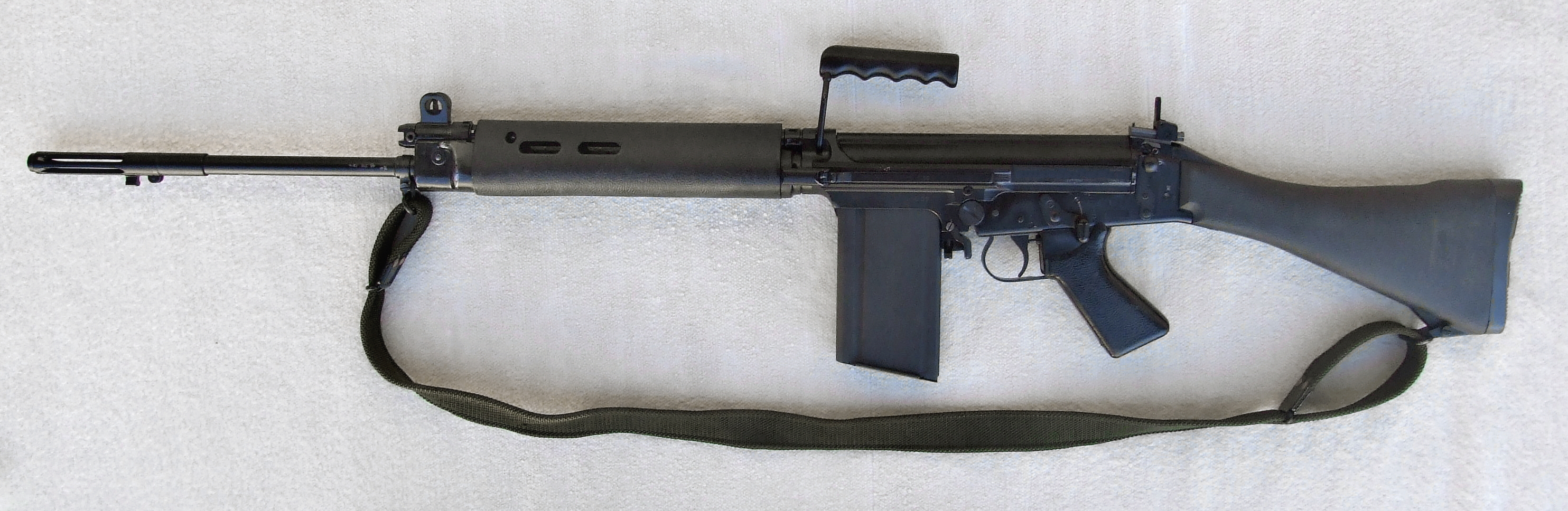
Should have stuck with the L1A1 SLR a much better weapon than either:
|
| Skarper | 02 Jul 2012 4:58 a.m. PST |
Has the assault rifle concept really 'won' hands down? Might it have been better to stick with the SLR + GPMG + SMG rather than embark on this costly saga? Advantages – 1) The weapons already existed and were in stock.
2) Everyone knew how they worked and were maintained.
3) They had functioned without complaint(?) for decades in all climates. Most likely, the troops weren't going to have to use them in anger anyway. Was it just for political reasons or was the British Army clamouring for a new small arms system? I'm inclined to think the old tried and tested SLR + GPMG with extra SMGs (maybe buying in one that worked better than the Sterling) would have been adequate for all the activities the British Army has been involved in since 1980. It also looks a lot better. |
| 6milPhil | 02 Jul 2012 5:48 a.m. PST |
Good thread. I think a Colt dealer, as mentioned in the first post, is bound to say how his product is better, cheaper, etc. Secondly the WD/MoD has a fine track record of not getting it right made worse by the seemingly never ending defence cuts. It's a tradition – green coffee beans in the Crimea anyone? Finally, squaddies are fine whingers. The best in the world. |
| Lion in the Stars | 02 Jul 2012 6:45 a.m. PST |
Has the assault rifle concept really 'won' hands down? For operations in Europe and other built-up areas, where the typical combat engagement is at less than 300m, yes. (You know, where 90% of all wars have been throughout human history) For operations in places where the typical engagement range is out to 450m, there might be some arguments whether it's better to have a full-power rifle or an intermediate rifle. Afghanistan and Iraq have been the exception to the expected battlefields, where you really can have shots at 600+m. That distance is starting to make the 7.62NATO insufficient. Not that you *can't* get hits at that distance, but that the 7.62Nato isn't really intended for shots at that range. At least not with iron sights, since the front sight post is wider than a human torso! I'm actually expecting the US to transition to a 6.5mm for the squad standard (rifles and SAWs), since that will handle targets out to 600m rather handily; and quite possibly changing to something between the 7.62 NATO and .50BMG for the support weapons. Not the .338 Lapua, that's a very long case, needs a long, slow action. |
| GeoffQRF | 02 Jul 2012 8:35 a.m. PST |
If the SA80 was bloody good, then why do the SAS and SBS use the M16s or M15 by preference? The M16 was originally adopted as it was lighter than the SLR, with full auto capability. I suspect they just never changed. Might it have been better to stick with the SLR + GPMG + SMG rather than embark on this costly saga? I'm sure every major rifle change throught the ages has had the same question asked. "Them rifles is so slow to fire, might have been better to stick to the old musket…" |
| Skarper | 02 Jul 2012 9:21 a.m. PST |
Given that the skill and motivation of the soldiers using the weapons far outweighs any marginal difference in performance and as long as you have a basically functional individual weapon – maybe they should have stuck with the old SLR and paid/trained the squaddies more?? Just a thought. |
| Lion in the Stars | 02 Jul 2012 10:21 a.m. PST |
maybe they should have stuck with the old SLR and paid/trained the squaddies more?? Paid the troops more, or spent money on training them? The same Ministry of Defense that refused to issue detachable magazines because 'the soldiers would intentionally lose them' (and then need to have them re-issued)? Tell me another joke, that one was a riot! |
| troopwo | 02 Jul 2012 12:32 p.m. PST |
I started with the FN or SLR.
I am not going to lie, I miss mine horribly so.
Perhaps I just loved the wood furniture and the fine machining. However, I don't miss the ten pounds empty, or the five mag total of a hundred rounds or the gentle bruising from range work. As a Canuck, I also had the priveledge of toting around the full auto, heavy barrel support version of the SLR. Most infantry were capable riflemen out to 250 or even 300 yards with iron sights. We were concentrating on central Europe then, and we would never need more range than that,,, right. Well, the 5.56mm round is accurate. For most riflemen 300 yards is well within their ability to hit something at 300 yards with iron sights. I have even used it to 500 yards with iron sights. Somewhere during the late eighties and early nineties, most western countries went to a fixed power sight. The US adopted the ACOG, (3.5x power) Canada the Elcan (3.4x) and the UK went from the Trilux to the SUSAT. (3x I believe)
This brought a great deal of accuracy forward,,, and range imcreases too. What used to be a 300 yards rifle was now a 500 yard rifle in most infantrymens hands. A lot of people will complain that even if you hit someone at 500 yards, the 5.56mm round is not enough. Dead or alive, if hit at 500 yards the target is equally incapacitated. Somewhere out there, there are people who will tell you that their target needed another burst of fifty caliber to take it out. Being the first one wasn't enough. This goes for all calibers and systems. Another thing to take into account is the more pwerful the round the stronger the recoil and the longer it takes to re-aquire the target back into the sights. A man can fire four or five well aimed 5.56mm shots in the time it takes to re-aquire your sights with a 7.62x51mm NATO round. |
| BritishCrab | 02 Jul 2012 2:18 p.m. PST |
Troopwo Agree with all the above. However,Susat was 4x, though we have evolved through ACOG to now FIST, another 4x with a red dot on top. I've always been sceptical about this "lack of stopping power of 5.56mm" claims. Everyone I've seen hit with 5.56 has been screaming very loud or been very, very quiet. Either way they have been incapacitated. As for the SLR, we need the 7.62 accurate reach(hence the sharpshooter rifle) but the contacts at shorter ranges were what we worried about. At 300m plus it tended to be harassing fire and you'd just crack on. Also, think of it this way. Certainly during 2006-2009 the primary tactic was massive weights of fire to pin the enemy unti air could be called in. Trying to carry enough 7.62mm to provide this weight of fire in your rifles would add alot to an already horrendous load. |