"Could/should we have attacked the Soviets in '45? " Topic
156 Posts
All members in good standing are free to post here. Opinions expressed here are solely those of the posters, and have not been cleared with nor are they endorsed by The Miniatures Page.
In order to respect possible copyright issues, when quoting from a book or article, please quote no more than three paragraphs.
For more information, see the TMP FAQ.
Back to the WWII Discussion Message Board
Areas of InterestWorld War Two on the Land
Featured Hobby News Article
Featured Link
Top-Rated Ruleset
Featured Profile Article
Featured Movie Review
|
Please sign in to your membership account, or, if you are not yet a member, please sign up for your free membership account.
Pages: 1 2 3 4
| tbeard1999 | 16 May 2013 5:53 a.m. PST |
At the end of the day, the Soviets would have lost because they simply were not as strong as the US and its allies. As the GDP figures show, the US could outproduce the Soviets, the Germans, the Italians, the Japanese AND the British. And that is probably why (a) the US was willing to essentially disarm in 1946-47 and (b) Stalin, despite being a murderous megalomaniac, never had the guts to attack the West in the late 1940s. as the Japanese showed, you might win some early victories against the US. But in the end, the overwhelming American economic advantage would result in an American victory. (Assuming the US thought the war was worth the effort). |
| Jo Jo the Idiot Circus Boy | 16 May 2013 5:56 a.m. PST |
>>1/3 of the population? Who makes up this third that was in "effective slavery" in the US in th 1940s? I was wondering that myself. I suspect the figure was plucked from thin air in a moment of frothing at the mouth, keyboard pounding rage. Among other things, "Rapier Miniatures'" screed is full of factual errors, including this one. As a point of fact, census reports put the overall percentage of the black US population in the 1940s as being slightly less than 10%. Of this, only about half or so lived in states with "Jim Crow" laws on the books. That's a far cry from "a third". Heck, even today blacks are only 13% of the overall population. And did he REALLY compare the mind-numbing body count racked up by the Soviets in their various purges and other mass murders to things like stting on the back of the bus? * So much for his credibility… This had been up to that point a "fun thread", albiet one on an oft discussed topic. Too bad he went and ruined it with his….
In any event, I reported his posts for flaming, hate speech, and out of place politics and urge others to do so as well. Perhaps some time munching on puppy chow in the DH will (as we used to say when I worked for the prison system) "get his heart right"! ;-) Martin *-Please don't take this as my excusing or minimising Jim Crow. I just hate to see the use of blatant false figures and making outrageous comparisons like that to make a poorly considered political point. |
| tbeard1999 | 16 May 2013 5:59 a.m. PST |
"On 29 August 1945, a fortnight aft the war against Japan ended, the RAAF had 173 622 personnel personnel [sic] operating 5585 aircraft." PDF link In any case, quibbling over the size of the RAAF doesn't materially alter the fact that the Allies greatly overmatchd the Soviets in airpower. I took my figures for the RAF from the same article (and they seemed rather low to me). If your RAF numbers are correct -- and I suspect that they are -- then the Soviets were even more overmatched. |
| Archeopteryx | 16 May 2013 6:03 a.m. PST |
tbeard, not meant to be a quibble, just trying to get the right figures for all of the data quoted before which seemed a bit off – i guess the difference is between frontline aircraft and all aircraft. But the issue is allies had overwhelimg air power. |
| tbeard1999 | 16 May 2013 6:05 a.m. PST |
Archeopteryx -- Sorry about the term "quibble"; I didn't consider its perjorative implication when I used it. |
| Archeopteryx | 16 May 2013 6:06 a.m. PST |
No issue – all smiles here! |
| tbeard1999 | 16 May 2013 6:07 a.m. PST |
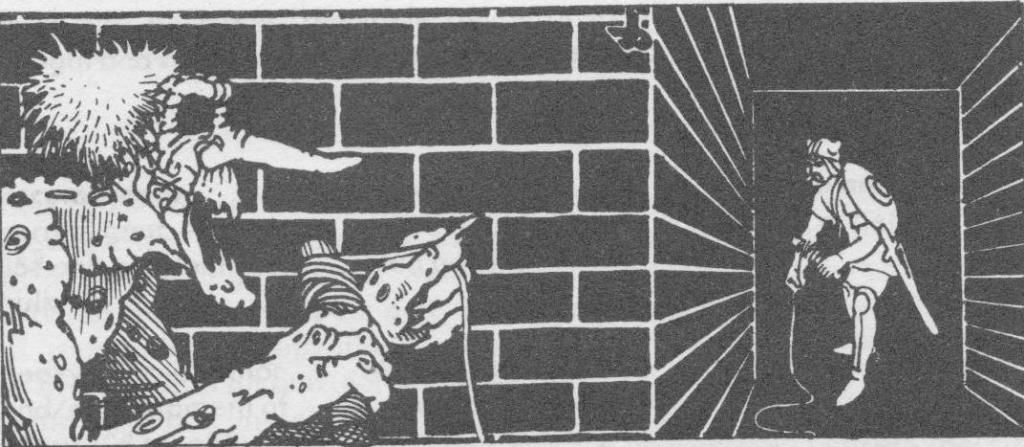
Trenchraider-- A triple-dog HEH for that image. From the original AD&D PHB or DMG, yes? |
| Barin1 | 16 May 2013 6:10 a.m. PST |
Funny thing that Zhukov and some of the other generals were proposing to Stalin the assault on allied force when they saw that "allies" were ready to rearm germans that were fleeing to the west and surrendering in droves. Apart of the quick execution, the plan relied of using high numbers of pro-communist resistance in France and Italy to paralyze the ports and logistics. However even with all-powerful propaganda machine it would be very difficult to explain how former allies became enemies, plus the army was tired of the war. But fighting a defensive war to protect your own country against new agressor would be a different thing.
Indeed flogging of dead horse of "soviets are no better than Germans, why we haven't nuked them to save the world" takes place too regularly on TMP….
Well – what would you have done even after bitter fight you have occupied the Soviet Union? You'll have armed resistance for ages, and even if you found marionettes to rule on the territory it would never be safe. Think of it as a huge Afghanistan. Sooner or later to suppress the resistance occupation force would move to violence, and let's rememeber that american occupation on the Russian North during civil war was quite….uncivil. So I'd be careful about high moral ground and similar stuff… |
| Archeopteryx | 16 May 2013 6:21 a.m. PST |
Barin – good post, I think common sense prevailed… no-one had the stomach for more war in '45, but there was concern over the fate of Eastern Europe. Also at that moment two victorious and hugely over-armed politically incompatible blocs faced each other, and each jockeying for the spoils of war and not trusting of the others intentions – so it was a time when great case was needed to prevent another war. It is a tribute to our global common sense that despite this, and before nuclear weapons became so dominant, neither side did the unthinkable. |
| Jo Jo the Idiot Circus Boy | 16 May 2013 6:50 a.m. PST |
tbeard1999-
Scanned from page 102 of my first edition AD&D Player's Handbook! ;-) Martin |
| Klebert L Hall | 16 May 2013 7:39 a.m. PST |
Our military was pretty darn exhausted. Also, turning on an ally, even a scumbag ally, would have been sort of a jerk move.
-Kle. |
Patrick Sexton  | 16 May 2013 7:53 a.m. PST |
Though I think the general will to do it was non-existent,IF it happened I think the West would have been able to prevail if they didn't actually invade Mother Russia. Up until that point all the factors listed above would have prevailed but once it became a crusade to protect the Rodina all bets would be off. |
| Jemima Fawr | 16 May 2013 8:23 a.m. PST |
Having just elected a Labour Government, having handed all our treasure over to the USA and furthermore having saddled ourselves with the mother of all sovereign debts, there was no way on Earth that Britain was ever going to be involved in this stupidity, even if it wanted to. |
Chortle  | 16 May 2013 8:29 a.m. PST |
@Barin1 "let's rememeber that american occupation on the Russian North during civil war was quite….uncivil" News to me. I must have that back to front: Graves, America's Siberian Adventure, "Before the Armistice.":
The United States never entered into a state of war with Russia, or any faction of Russia. It was equally as unconstitutional to use American troops in hostile action in Siberia against any faction of Russia, as it would have been to send them to Russia with a view to using them in hostile action against the Russians. If I had permitted American troops to be used in fighting ‘Red armies,' as stated, I would have taken an immense responsibility upon myself, as no one above me, in authority, had given me any such orders. The fact that I did not permit American troops to be so used was responsible for nine-tenths of the criticism directed against us, while in Siberia. I was told by General Leonard Wood, upon my return from the Far East in December, 1920, that if I did not have copies of my papers I would be "torn limb from limb, in the United States, because I did not take part in fighting bolshevism." Actions such as "A small American force led by a lieutenant chased the Soviets for seventy-five miles south along the Archangel-Vologda railroad." – seem to be an exception, from individual initiative, rather than policy. There was also a lot of obstruction of White forces by the Americans. But I'm no great authority on the subject. Thank you for that D&D Blast from the past, Martin. |
| tbeard1999 | 16 May 2013 8:49 a.m. PST |
Barin1, Chortle and Others -- Saying that the Allies would likely have defeated the Soviets is not the same as saying that the Allies would have likely declared war on the Soviets. I've said several times that I think the Soviets would have had to strike first, and Stalin just wasn't that stupid. Nor have I ever stated or implied that it would have been a cakewalk. i think an Allied victory was about as certain as these things can be, but I also think that it would have been a very costly victory. And while I speculate that the world would've been better off had we ended the Cold War 45 years early, that is, of course arguable. All that said, I do not think that any rational person can argue with a strait face that the Soviet Union was no worse than the US (or UK). By any reasonable measure, the Soviet Union was murderous, vile, horrific and EVIL. Pointing out comparatively modest failings on the part of the US does not alter the fact that the Soviet Union was FAR worse. I've always considered it unfortunate that the Western left chose to willfully ignore how horrible the Soviet Union (and other Workers' Paradises) was. When the truth finally came out, they had to choose between (a) admitting they were duped, (b) admitting that they willfully and hypocritically ignored Communism's true nature or (c) resorting to absurd, morally bankrupt defenses of an indefensible regime. |
| Martin Rapier | 16 May 2013 8:49 a.m. PST |
The operational possibilities were considered as part of Operation Unthinkable in 1945. link iirc someone posted a link to the original operational study document on TMP a while back but I can't find it now. |
| Barin1 | 16 May 2013 9:01 a.m. PST |
Chortle, in Arkhangelsk region both american and british troops were involved in the campaign against Bolsheviks. USA had 5000 to 6000 troops at peak times, lost 110 KIA and 70 dead to illness. In 1929 86 bodies were returned to USA at the time of improving relations between the countries. Some of the encounters and subsequent actions were bloody, but to be fair some of the cases might have been with british contingent, and not US troops. |
| CooperSteveOnTheLaptop | 16 May 2013 9:06 a.m. PST |
'equating being enslaved in Siberia and systematically starved with, er, being "unequally treated".' Kept in poverty, denied justice, lynched? A lot of UK Commie groups had stopped agitating with the outbreak of war because the fascists were a greater threat. Turning on the USSR would have led to a load of radicals with access to home defence weaponry turning on the government PDQ |
| Chortle | 16 May 2013 9:12 a.m. PST |
People on both sides of the Atlantic covered up Soviet atrocities. Reports of Soviet horrors had been coming out since the Bolshevik revolution. That doesn't mean much unless they get column inches. As you say, there were many "civilian" movements which idolized the Soviet system. Then there were the traitors we eventually came to know about; the Cambridge spies, and those who gave away atomic secrets. We would have had a fifth column to fight before being able to fight the Soviets. Having just elected a Labour Government, having handed all our treasure over to the USA and furthermore having saddled ourselves with the mother of all sovereign debts, there was no way on Earth that Britain was ever going to be involved in this stupidity, even if it wanted to. The election was in July? The war might have kicked off before an election e.g. with an incident as the Soviets met allied forces. How about the Bradbury pound mark II for the debt? It worked in WW1. |
| Chortle | 16 May 2013 9:19 a.m. PST |
Thanks Barin for that info. Thanks Martin for the link. |
| Supercilius Maximus | 16 May 2013 9:23 a.m. PST |
Another factor nobody seems to have considered, is that the UK was attempting to reassert control of its empire, in order to divest itself of it in a more controlled manner, whilst the French and other Europeans were trying to recover theirs. This chore, plus policing the UN mandate territories (eg Israel, Vietnam), kept our own forces fully occupied – although a continued war in Europe would have had the benefit of distracting the US from meddling with our overseas interests. In other parts of the world, an extension of the war in Europe would have been seen as an opportunity by various independence movements other than the ones that obtained power democratically when we left. Many of these "other" movements were fundamentally leftist in nature, and thus many Communist regmimes would have been springing up by default, rather than with Soviet support. If we had still been fighting a war in Europe, defending Malaya against Chinese-backed insurgents from 1948-56 would have been nigh impossible (an act for which the current Malay government was so grateful, that for its 50th birthday celebrations in 2008/9, it invited back every British serviceman who had fought the Chinese Communists to take part). |
 Editor in Chief Bill Editor in Chief Bill  | 16 May 2013 9:30 a.m. PST |
…most if not all of the charges he levels against the USSR can also be made against his free, equal and democratic country. I thought he was British. |
| Fred Cartwright | 16 May 2013 10:26 a.m. PST |
By any reasonable measure, the Soviet Union was murderous, vile, horrific and EVIL. Pointing out comparatively modest failings on the part of the US does not alter the fact that the Soviet Union was FAR worse. Quite true, but it doesn't alter the fact that the western allies have supported equally vile, evil regimes when it suited them. Even supporting some quite unpleasant people against a democratically elected government due to its leftist ideals.
Regardless of the rights and wrongs and who would have won it would have been an unholy mess with likely communist/leftist groups causing trouble across Europe and the Poles, Romanians etc. turning on the Soviets and probably slaughtered. And if the Soviet army was defeated in Europe what next? Invade the whole country and close down the gulags? War crimes trials for Stalin and his cronies? Looks like a big job to take on. |
| donlowry | 16 May 2013 10:44 a.m. PST |
Your comments about supply lines being very long into Russia are well taken, but the Red Army would have been defeated in Central Europe, not deepest Russia. Even if the Red Army had suddenly changed its doctrine and tried to withdraw into Russia, it would have been savaged by Allied airpower. Strategically, such a move would have been senseless, as the only hope the Soviet had would be a quick victory. Retreating into Russia would simply give the Allies time to fully deploy their forces and supplies. (While systematically devastating Soviet industry with strategic bombing. Note that the Allies would have had the benefit of analyzing german bombing targets and would have likely dramatically improved the effectiveness of strategic bombing). Sounds very much like what happened to the Germans after D Day. |
| Inkpaduta | 16 May 2013 11:01 a.m. PST |
Rapier, First, the 1/3 number is way off as other people have noted.
Second, comparing a reservation to a death camp is also way
off.
Third, for your wonderful views on the US I will not stifle you but I doubt I will ever buy anything from you again. |
| Pan Marek | 16 May 2013 12:15 p.m. PST |
Rapier-
I support your efforts to offer a different viewpoint in the midst of the armchair Field Marshalls. Nevertheless, the fact is that phrasing the topic "should" we have…?
was inappropriate from the start, and virtually guaranteed the way the discussion went here. |
| Who asked this joker | 16 May 2013 12:23 p.m. PST |
"We" means USA and England I presume. 1) USA would not have done it. The people wanted the war to come to an end.
2) England was bankrupt and exhausted and couldn't have attacked effectively if they tried.
3) France was happy to rebuild and get things behind them.
4) Germany was wrecked.
5) Italy was on the road to recovery and forming a new government.
6) While the US had the A-Bomb, they were out of nuclear material and it would have been many months before they had more. If Patton was correct and the Russian supplies were running thin, the attacked might have worked. However, think about what is being asked. "Should we turn on one of our allies who stood with us throughout the war?" John |
| Prince Rupert of the Rhine | 16 May 2013 12:31 p.m. PST |
One thought. People have highlighted the many socialist movements in western europe that would/could cause the allies problems but the soviets already had problems with partizans in eastern Europe that took until the 50s to finally stamp out so I think both sides would have to worry about attacks on rear areas and supply routes if it came to blows. link |
| Supercilius Maximus | 16 May 2013 12:42 p.m. PST |
True, but one side would have dealt with the problem more "permanently" than the other. |
| AzSteven | 16 May 2013 12:47 p.m. PST |
The Soviets had a huge army in 1945, but that army was quite literally the product of scraping every last available resource together. The British were in a similar boat (actually maybe a bit better off than that), and the Americans were probably tired of war but were nowhere near full mobilization. If the war had continued (which I think could only be if the Soviets started a fight), I think the Soviet Union would have collapsed through internal dissent and desertion – that mighty Red Army that has crushed the Nazis was pretty brittle there at the end – look at how they had to scramble to refit right before the Battle of Berlin when an exhausted German Army managed to actually stand in defense for a bit on the Seelowe Heights. My guess is that the end result would not have been an occupation of the USSR, but instead it would have been the fracturing of the USSR into a dozen successorstates, some friendly to the Allies, some opposed, and all mutally loathing one another. The Eastern European states would have actually been free after the war. One thing certain though – it would have been messy. |
| Wolfprophet | 16 May 2013 12:50 p.m. PST |
Well, I'll never be buying from Rapier… |
| Patrice | 16 May 2013 1:31 p.m. PST |
"Amateurs study tactics; professionals study logistics…" This is true for military and wargamers. But state rulers also consider other matters. Lots of jobs and profits were created by the reconstruction of Europe. 30 years of plenty. And do you think that the Cold War was really a bad thing for the Western economies? (I'm not talking about morals here). It was profitable for rulers on both sides: The Soviet rulers were happy with the part of the world they owned; they did not want more they just wanted stability to stay in power (that's why they let the Greek communists be defeated, and forbidden the French communists to make too much trouble, etc). The military industry in the USA and Western Europe was happy too, it gained huge profits to prepare a war which never happened and it did win the Cold War when the arms race eventually bankrupted the Soviet Union. Well, I'll never be buying from Rapier… I'll do. Thanks to this thread I've just discovered his 28mm witches range! :-) |
| BattlerBritain | 16 May 2013 2:28 p.m. PST |
Hmmm, not sure if this has been mentioned before but 'Operation Unthinkable' is a really good place to start with this:
link I did have a link to a scanned doc on this and it makes fascinating reading. Basically there was absolutely no way the Allies were ever going to attack the Soviet Union. |
| latto6plus2 | 16 May 2013 2:56 p.m. PST |
Oh yes."Witch on broom with side car & gunner" looks a must have and the mushroom men.
And the runequest stuff. link |
| BlackWidowPilot | 16 May 2013 2:57 p.m. PST |
And yes I mean George, I will slap a private because I can Patton. he was an arrogant abject coward and the world was a better place without him.
Hmmm, would that be this George S. Patton, Jr.:
link
IIRC my Great War history, Patton was wounded in the leg while he was leading an ad-hoc platoon of American tank crewmen whose FT-17s had been disabled or knocked out in attacking German positions.
Leland R. Erickson
Metal Express
metal-express.net
|
| Sparker | 16 May 2013 3:04 p.m. PST |
Could we have – No! As stated, public opinion, and British bankrupcy would have ruled out British involvement, and thus an Allied front. (The French really didn't matter then, but were even weaker that the Brits) Should we have – Yes! The reason Britain went to war in the first place was to free Poland! Morally, we should have fought on until that at least was achieved. However,  for example. for example. |
| thomalley | 16 May 2013 3:11 p.m. PST |
5) Italy was on the road to recovery and forming a new government. This statement made me smile. Could have been written just about any day in the last 65 years.
Bigger problem is that no one had any infantry left. Not the Russian, not the US not the Brits.
Did Patton make his statement before or after Hiroshima. May guess is that he wouldn't have know about the bomb till after it was used. |
| spontoon | 16 May 2013 4:18 p.m. PST |
Perhaps someone knows better than I do, but I believe that the Soviet Union was actually a Co-belligerant, rather than an Ally. I don't think that could/should have happened in 1945. Both western and Soviet sides were exhausted. Perhaps in '46 or soon after. |
| Cardinal Hawkwood | 16 May 2013 4:24 p.m. PST |
hasn't got any less weird. |
| Mark 1 | 16 May 2013 4:26 p.m. PST |
Putting the politics aside for the sake of discussing the military / operational issues …. I think many of the posters in this thread have a very different impression of the Red Army of 1945 than I have. Also, many posters here seem to view the US Army of 1945 through the lenses of the US Army of today. That is a sharp error. The principal fighting doctrines of the US Army of 1945 were FIREPOWER and ATTRITION. It operated much like an enormous assembly line, dumping hurt on the enemy's head. By-passing centers of resistance was a very controversial concept in US command tiers. The accepted operational approach was bringing the enemy's forces to battle, and establishing firepower superiority. The US Army of 1945 was no where near the level of competence and professionalism as the US Army today. Most of the junior officers were conscripts. At any one time the ratio of combat experienced leaders to "green" officers was less than 50% in most US Army formations. It was not an elite fighting force, and had no institutional appreciation for modern concepts of maneuver warfare and decision-cycle disruption. The Red Army, on the other hand, was 4x larger than the western allied armies in ETO. It had destroyed 80% of Germany's land forces during the war, as well as taking out half of Italy's forces, all of Romania's forces, and giving the Fins a (much less decisive) bloody nose. The US Army suffered exactly ONE operational level offensive during the entire war (the Ardennes offensive, or "the Bulge" if you prefer). Kasserine … maybe it could be considered an operational offensive, but given the scale of European combat it was actually more of a tactical attack. The Soviets launched offensives of the scale of the Bulge 5 to 6 times per year from 1943 on. The US had Patton. Whoop-di-frikkin'-doo! One general. There were also 3 or 4 Patton-esque divisional commanders in the US and allied (particularly French) armies in ETO. But none of the other generals at Patton's level, or above him, were of his ilk. Among Bradley, Hodges, Montgomery, and in particular Eisenhower, there was not another advocate of bold maneuver warfare. Eisenhower's style of leadership and generalship was political positioning and compromise. His greatest asset was his ability to keep the alliance intact. To do that he focused on re-enforcing weakness. His doctrine was the wide slow offensive. The Soviets had dozens of Patton-esque commanders above the corps level (a Red Army corps being about equivalent to a US Army division). Study the campaigns of Katukov, Rybalko, or Kravchenko if you want to learn how all the stuff Patton was yammering about actually WORKED in practice! The Red Army had experience both in dealing out, and taking in, the kinds of mobile offensives that Patton advocated. The US response to the German offensive in the Ardennes was to re-enforce the shoulders at the base of the bulge, and then to push the tip back towards its start-line. How very imaginative! Patton advocated cutting across the base of the Bulge to entrap the Germans in a pocket. He was veto'd by Eisenhower. But that is exactly what the Soviets would have done. To the Germans, or to Patton. It would have mattered little to them. There was exactly one occasion where the western allies managed to cut off and capture an operational-sized force of Germans in WW2. That was in Tunisia. They were able to cut the Panzer Armee Afrika off because, well, they only needed to "encircle" two sides, the other two sides being backed by the Mediterranean. In Sicily, even WITH the Med, they managed to fail to entrap the German forces. The Soviets, on the other hand, managed no fewer than 10 major encirclements of German forces during 1943-45. On ONE occasion they had a body of water to back them up (in the Crimea). Every other time they had to draw their ring through 360 degrees to trap the Germans. Multiple armies, and dozens of Korps, were encircled. By the summer of 1944 it was routine for German forces to be encircled. The Germans developed their own doctrines for tactical and operational responses to encirclement. The western allies? No such operational or tactical experience, and so no such doctrines. My prediction if, somehow, the political issues had not put a damper on things and war had broken out between the western forces and the Soviets? First, we must make an assumption of who launches the first offensive. If it is the West, the offensive will probably start on a wide front. Resistance will be inconsistent … in some places the line will hold or flex, in others the attacking forces will achieve breakthroughs. Some bold commander or two will really start to push. If it is Patton, it will be a multi-corps sized penetration. If it is not, it will be one or two armored divisions (likely candidates being the 4th US or 2nd French). Six to ten days into the offensive, the penetrations will run out of supplies and grind to a halt. Why? Because they are consuming supplies at 4x their normal rate, and no one expected that, and besides, the majority of supplies have to go to the commanders who have not yet achieved a break-through, because well we can't let them fail, can we? And then, out of no-where, a Soviet counter-punch will start on one flank of the penetration. Within hours a breakthrough will be achieved. Mobile forces will be rushed to the area to seek to redress the situation. At that time, a second counter-punch will start on the other flank. Only local forces will be present, and they will be overwhelmed within an hour. By the end of the 2nd day these pincers will meet, and the entire penetration will be encircled. There will be a conference of commanders held far behind the lines. There will be much arguing and debating, as even their appreciation of the risk will differ from one CO to another, much less any appreciation of what to do. On the second day of the conference there will be a message that a Soviet tank army of 4 corps has broken through some 400 km from the encircled force, and already by that time (just 3 hours into the Soviet offensive) contact has been lost with 3 divisions. Reports will begin to arrive about Soviet forces 20, 40 and 60 miles in the allies' rear. An airfield will be over-run, and even though this deep penetration was only a raiding force, a general panic will ensue as artillery, supply and air support troops all begin to bug-out. Different from the German offensive at the bulge, this one does not run out of steam. As each attacking unit becomes exhausted, it takes up defensive positions, and another fresh unit passes through to continue the attack. Also different from the Bulge, it is not possible for the allies to re-enforce the shoulders, as the penetrating force seems to maneuver in a mushroom shape rather than a single direction, and forces which try to stand firm on the shoulders are quickly encircled. It is only after a penetration of more than 100miles that the offensive seems to run low on momentum, and grinds to a halt. As the allies prepare to counter-attack, the original pocket has been eliminated, and a new Red Army offensive begins 300 miles away. All of this description is taken from the histories of how Soviet offensives were run, and how US (and allied) troops behaved when surprised by break-throughs. If you assume the Soviets go first, well, it only looks worse. The question in my mind is whether the western allies could have absorbed enough blows to have time to learn how to fight this new foe. The US Army was the "senior" partner, and had NO experience with the German army of 1940. With the Soviet army of 1945 they would have met a force that practiced the same operational (though not tactical) concepts, but on a MUCH larger scale. The advantage that the Soviets have is that their campaign would be limited. They only need to push the US, British and French forces back to the coast. The distance they need to cover is a trifle compared to what they have just achieved, and the force they fight against is only a fraction of what they faced in the German army, with no where near the tactical proficiency. The dis-advantage that the Soviets have is that they are incapable of winning a long war in western Europe. If they don't push the western allies off of the continent within the first 6 months or so, then the economic might of the US will turn the tides against them. Four months into the conflict the US will be able to start a strategic bombing campaign (yes, it will take that long to set up new bases, as nothing from the UK can reach the Russian heartland). If the US is foolish and starts slow, the Soviets will be able to mount a reasonable defense. They have several good high-level interceptors in their inventory, but not in any numbers. So an early storm will be hard to stop. Atomic bombing will be quite a challenge. IIRC there were two additional bombs ready by the end of 1945, and a production rate of one bomb per two weeks was projected. But there is no tactical doctrine for atomic bombing from large formations (the shock wave from one bomb would destroy half the attacking force if they did not make the drastic maneuvers that Enola Gay and Bock's Car made). And there is no un-inhabited ocean to use as an approach route. Lone (or paired) B-29s flying high-altitude 800 mile missions will be easy targets over the Eurasian landmass. Still, US forces were always quite good at improvisation and innovation, so after one or two failures, something will be figured out. So the Soviets are in trouble if they don't win it within their first 6 months. But those six months will be hell on the western allies. That's my assessment. -Mark
(aka: Mk 1) |
| Timbo W | 16 May 2013 5:17 p.m. PST |
Doesn't Falaise count as an encirclement? |
| number4 | 16 May 2013 5:26 p.m. PST |
Superb assessment, Mark. Also, the posters who cite poor Soviet logistics forget that in this scenario, the communists forces are on the defensive and falling back on their own supply lines, while the western allies (who use more supplies to start with) are the ones with a supply problem that only gets worse…. And then we're into winter. Winter in Russia. Soviet kit is made to work in the Russian winter and the Soviet soldier is used to living and fighting in it. P.51's and B.29's iced up on crude airstrips – if they can operate from them at all – won't be much help. Gentlemen, the debate is somewhat pointless because we saw what happened in Korea, against communist forces that were nowhere near as well armed and equipped as the Red Army in 1945. It wasn't pretty and didn't end well. In fact it didn't actually end at all |
| thomalley | 16 May 2013 5:58 p.m. PST |
Mark I, I think you greatly overplay the Russians ability. First, to react that quickly. And secondly, how many of those encirclement were because Hitler wouldn't allow a retreat. The Russians too worked on attrition and the broad front concept. And many of those gains also took place after Normandy, after half the Luftwaffe had been pulled out of the East.
Also the basis of any Russian offensive is their artillery concentration. Something the Western armies could easily match and which the Eight Air Force would have a lot of fun with.
No real argument with your analysis of the US Army.
Not sure if after Japan surrendered if a sustain campaign from Iran (especially air) could have cut off the Soviet oil supplies, or how a Soviet offensive to take Iran/Iraq would play out.
Think the war would have come down to who ran out soldiers first, not any great maneuvers on either side. |
| Mechanical | 16 May 2013 6:06 p.m. PST |
|
| Mark 1 | 16 May 2013 7:10 p.m. PST |
>Doesn't Falaise count as an encirclement? It is the perfect example of how poor the allies were at encirclements. We don't call it the Falaise Gap for nothing. That gap was not closed until the vast majority of German forces had escaped. Allied forces were almost within eyesight of each other, and yet they did not close the gap. Why not? Because it did not seem important at the time. There was no cohesive allied operational doctrine emphasizing the encirclement of enemy forces. So instead, they sat on the hills and called in artillery fire and airstrikes against the escaping Germans. Allied -- and in particular American -- doctrine was to find the enemy and shoot him up. Not encircle him, not bypass him, not dislocate his command decision cycle. None of that "fancy" stuff. So if you have the enemy on three sides, well all the better for the shooting! Why bother to take him on the fourth side? >…how many of those encirclement were because Hitler
>wouldn't allow a retreat. Yes, it is always amazing how the Russians never managed to achieve anything without the help of Hitler. Because … well we know that no German general on the Eastern Front ever made a mistake. Right? No doubt about it, Hitler was a weight around the ankles of the Germans on the Eastern Front. But not nearly so big of a weight as the generals' memoirs make him out to be. And Stalin was a weight around the Russian generals' ankles. And Roosevelt around the Americans', and Churchill around the Brits'. And pity the poor French! But a far bigger weight around the Germans' ankle was that they had no idea that the Russians were out-maneuvering them. They never knew when they outnumbered the Russians locally. They never knew when or where the Russians were concentrating their forces. They always assumed they were badly outnumbered, because, well, every time they saw the Russians they saw LOTS of Russians. All hyperbole aside, yes, the Germans tended to stand fast for too long. And the Soviets learned to take advantage of that. And the Germans developed tactics and operational doctrine for breakouts, reliefs, and "wandering" pockets. Do you think the US Army would have been faster to make coherent withdrawals? As they did from Djebel Lassoouda, or from the Schnee Eifel? And when/if an encirclement did occur, do you think the US Army would have had any idea what to do? If we could not figure it out for a battalion or a regiment, would it have somehow been easier with a division or a corps? It might help clarify this issue if we note that the US Army, in 1944, had NO DOCTRINE for the conduct of a withdrawal, at the tactical or operational level. It was not covered in the field manuals. Defensive warfare in general was woefully under-covered, as the spirit of the generals who led the expansion of the US Army in 1940-43 was offensively minded. Beyond the tactical issues of preparing positions and creating defensive fireplans, defensive warfare was not written into the manuals, it was not built into unit training, and it was not studied in the officer courses. Everything that US units did from Sidi bou Zid through Kasserine, and during the Bulge, was improvised. There was no doctrine to fall back on. Do you think the Soviets would not have been able to take advantage of that little weakness? -Mark
(aka: Mk 1) |
| Kaoschallenged | 16 May 2013 7:35 p.m. PST |
"And yes I mean George, I will slap a private because I can Patton. he was an arrogant abject coward and the world was a better place without him." Arrogant.Yes. Egotistical. Yes. But "abject coward"? I'm not a big supporter of Patton but I don't think what he did in WWI and what he did below are the acts of a "abject coward". Robert "May 14, 1916 Second Lt. George S. Patton and his force, riding in Dodge touring autos, approach the San Miguelito Ranch from the south, appropriately at high noon. Patton positions two carloads—eight soldiers and a guide—at the southern wall around the hacienda and its two gates. He and the remaining two soldiers and a guide park their car northwest of the compound. They make their way east along the low north wall, heading toward the big arch of the main gate. Patton carries a rifle in his left hand, with his right on the pistol butt at his hip. He is almost at the gate when three horsemen dash out of the hacienda into the courtyard and head southeast. They run right into the Americans stationed there. The Mexicans immediately wheel around and charge toward Patton. Bullets whiz around the lieutenant as he pulls his Colt single action from its holster and returns fire. One bullet breaks the left arm of the lead rider, who is later identified as Capt. Julio Cardenas, a close aide to Pancho Villa. Another shot takes down his horse. The wounded man scrambles for cover as Patton retreats to a wall to reload. The other two Mexican riders split up, trying to escape. Patton sees one of them go by and shoots the horse in the hip, knocking down the mount and the soldier. In an act of chivalry, the American waits for the Mexican to extricate himself, stand up and pull his weapon—only then does Patton (and a couple of his men) shoot and kill him. The third Villista has almost made good his escape, riding hard some 100 yards east of the hacienda. Patton holsters his pistol and aims his rifle. He and several of his command open up. The Mexican falls dead in the dust. Meanwhile, in the confusion, Cardenas has exited on foot through the southwest gate and is running for some fields. One of Patton's guides, an ex-Villista named E.L. Holmdahl, catches up with the wounded man, who falls to the ground and puts up his good, right arm in a sign of surrender. Holmdahl approaches with a drawn revolver to take the Mexican into custody. Cardenas drops his hand and pulls his pistol. His shot misses. Holmdahl puts a bullet in the captain's head. George S. Patton has had his first experience in combat, and he loves it. Patton's Path to San Miguelito General John "Black Jack" Pershing was looking for a few good officers to accompany him to Mexico in the spring of 1916. He had orders to get Pancho Villa, who had raided Columbus, New Mexico, on March 9, killing 18 Americans. Black Jack liked the enthusiasm and drive of 31-year-old Second Lt. George S. Patton, who was itching for a fight. The general invited the officer along as an aide. (Okay, Pershing was also dating Patton's younger sister Nita, which probably persuaded him.) The Punitive Expedition headquartered in Dublán, about 100 miles south of Columbus. Pershing and Patton soon focused attention on Capt. (also referred to as Gen.) Julio Cardenas, head of Villa's Dorados force of mounted bodyguards. His family had a hacienda at San Miguelito, about 150 miles south of Dublán. Patton had previously checked out the place, looking for Cardenas. On one of those visits, he allegedly put Cardenas's uncle to the "hanging torture"—stringing the old man up to make him talk. Patton got nada for his efforts. On May 14, Patton went on a foraging mission near San Miguelito. He was accompanied by 10 soldiers and two civilian guides, split among three Dodge touring cars. No surprise—Patton decided to check out the ranch. The man who would later earn the nickname "Old Blood and Guts" was about to test his intestinal fortitude and draw blood for the first time. Aftermath: Odds & Ends Patton and his men strapped the bodies onto the hoods of their cars. As they finished, 50 mounted Villistas approached, firing. Patton and company hightailed it north to headquarters. *** The sight of the corpses, which had bloated in the hot sun, horrified Gen. Pershing. He ordered graves dug on the spot. A sergeant reportedly commented: "Ashes to ashes, dust to dust, / If Villa won't bury you, Uncle Sam must." *** Nine days after the shoot-out, Patton, dubbed "Bandit" by his general, was promoted to first lieutenant. A year later, he was made a captain. *** When asked why he intentionally shot the horses, Patton explained that Texas Ranger Dave Allison—whom he had befriended a few months earlier in El Paso—advised him to do just that if he got into a fight with cavalry. *** The Cardenas shoot-out garnered international headlines; the ego-driven Patton loved that papers dubbed him the "Bandit Killer." It paved the way for him to accompany Pershing to Europe the next year in World War I." link |
| tbeard1999 | 16 May 2013 7:49 p.m. PST |
CooperSteveOnTheLaptop-- The highest estimate I've seen of lynchings in the US was 4799 from 1882 thru 1959 (3466 being African-aAericans). Are you *seriously* trying to equate that with 15-30 MILLION deaths (in only 1/3 of the time)? Really? |
| Toshach | 16 May 2013 8:35 p.m. PST |
Did you see Band of Brothers? Did you see what condition those guys were in during the closing months of the war? Our armies in the east and west were pretty much done, and I can not imagine that any president would have considered for very long asking them to campaign in Russia. And if he had, he would have faced a rebellion at home from parents and wives who wanted their soldiers home now. It would have been a colossally foolish decision |
| Mark 1 | 16 May 2013 9:07 p.m. PST |
> Mark I, I think you greatly overplay the Russians
> ability.
I may well overplay their ability. It is hard to judge from this distance. But … the numeric measures of proficiency I have seen places the Germans at about 1.7 times as proficient, at the tactical level, as the US or British armies in 1944/45. The Soviets decisively defeated that German army on the Eastern Front. And that German army on the Eastern Front was significantly larger than the armies of the Western Allies in ETO. So we speak of a Red Army that just finished the destruction of a larger and more tactically proficient army than what they would face in the western allies. So I give the edge to the Soviets on the ground. > First, to react that quickly. From all I have found in my readings, many formations in the Red Army were notable for exceptional staff work. Americans always seem to like to find the one "star" player, but it is a competent and experienced staff that gives a military unit the ability to react quickly and coherently. The commander may make the decision, but it is the staff that presents him with information, analysis and options, and creates the unit briefings and orders to implement his decisions. This was particularly true of mobile formations (mech and armored corps, and tank armies), and higher level formations (fronts). It was less true of infantry formations (rifle regiments and divisions), which were a hit-and-miss affair. > The Russians too worked on attrition and the broad front
> concept. This is where my reading of history differs from yours. I look at the Crimean campaign (destruction of the 17th Army), at the Byelorussian campaign ("Bagration" – the destruction of Army Group Center), at the Romanian campaign (destruction of 6th Army, for the 2nd time!), and I see deep penetrations, rapid advances, swirling maneuvers to bypass and encircle, to cut off retreats … I don't see anything that looks like a slow advance on a broad front. Yes, if I look at the Eastern Front on the whole I see the front line broadly moving westward month by month. But that is the result of a succession of multiple deep penetration offensives in an un-ending procession from August 1943 through April 1945. The moment one petered out, another started 400km away. This was not an accident or coincidence, it was a very deliberate strategy. It was a strategy of unrelenting pressure, that took into account the logistical limitations of the Red Army … which had the staff competence to amass supplies at the front to support offensives, but struggled to carry them forward once the units had penetrated into the enemy's rear echelons. > Also the basis of any Russian offensive is their
> artillery concentration. Something the Western armies
> could easily match Easily match? The Allies did not have any such formations as Artillery Divisions, Artillery Corps, or Shock Armies. The Soviets had more than 50 artillery divisions in 1945. Not only did the western allies have no organizational matches, they had no doctrinal matches, no experiential matches, no conceptual matches. The first time a Soviet Artillery Corps of 1,500 tubes opened fire on US forces, it would have shocked the army all the way to the high command. A regiment or two of infantry disappearing from the order of battle in half an hour was not something that the US Army had experienced before. German artillery had, throughout the US experience in WW2, been highly limited in the size of its concentrations and the ammunition available to it. Still US vets describe the shock of suffering through a barrage. The Germans had learned by 1945 simply NOT to be in place when the Soviets fired, because nothing survived a genuine concentration. So defense in depth, with numerous false positions with interspersed outposts were the German norm. Again, the US Army had no such tactical training or doctrine. What the US did have, and the British too, was a remarkable ability to concentrate the fire of the artillery they did have, and an ability to bring reactive fires down faster than anything the Soviets had experienced. So US forces would have suffered terribly from Soviet artillery during initial breakthroughs, and Soviet forces would have suffered terribly from US and British artillery in later stages of their operations. > … and which the Eight Air Force would have a lot of fun
> with. Nope. It would have been the 9th Air Force. After Normandy, the US Air Force was done using B-17s and B-24s for tactical targets. Too many friendly casualties … Still, I do agree that the Soviets would have been in for a surprise with the abilities of US and British tactical air. By 1945 they had become sloppy about things like camouflaging and digging-in their gun lines. Still, it was only about 2 years since they had gained air superiority over the Luftwaffe (first achieve in the Kuban campaign of 1943), so their training and manuals still provided lessons on air defense doctrine, and their TOEs still included AA units. How would the question of tactical air power have played out? I expect the western air forces would have dominated in time. But it would have taken some time, as initial tactics and SOPs would have been all wrong. The Western Allies had excellent high- to mid-altitude capabilities. The Soviets operated mostly at low-altitudes. The most common US fighter, the P-51, was a rather poor performers at low level. The P-47 was preferred at low level due to its robust construction and heavy load-carrying capability, but it was a real dog when it came to dog-fighting at low levels. The British Typhoon had good performance at low levels. It would have grown in importance to the allied cause. The Tempest would have been even more important. The new US A-26 would also probably have made a name for itself. Particularly as most of the fighters that the western allies used against the Germans for ground-attack would have become busy being fighters again … at least for a while. In any case, the history of WW2 showed that air forces, when confronted with changed circumstances or un-familiar adversaries, took time to adapt. So I expect that neither side's tactical air would have been fully effective at the outset of any hostilities. Over time, the western allies would have adapted better and come to dominate, as they had both a greater resource base and a more extensive history of adaptability. The question is how fast they would have adapted, and would that be fast enough to have a significant impact on the ground campaign? I recall a cold-war cartoon I once saw. Two Russian tank commanders are sitting in a Paris sidewalk café, sipping their cappuccinos. One looks at the other and says "Tell me, comrade, who did win the air war?" -Mark
(aka: Mk 1) |
| Chortle | 16 May 2013 10:44 p.m. PST |
I don't know about you, but all of this discussion makes me want to dust off my WW2 models. |
Pages: 1 2 3 4
|