| Bandit | 17 Sep 2009 11:20 p.m. PST |
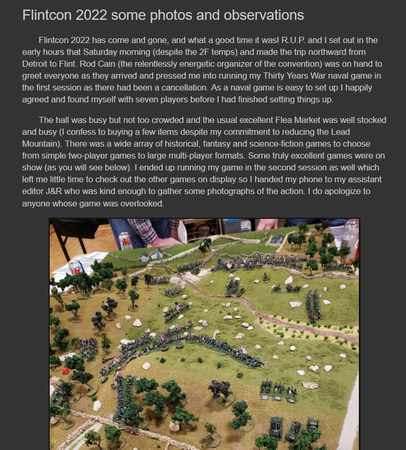
Batteries were a lot deeper than generally represented on the tabletop, but limbers and caissons (for those represent them) always seem disproportionately large. At a ground scale of 1 inch to 50 meters a limber or caisson that takes up 4" of depth (likely with 15mm figures) or about 200 meters … plus the depth of the artillery stand, likely another 1.5" or so, should a battery really be 350 meters deep on the table? Is this realistic? Not asking to bait anything, I've read reports that ~230 meters is to be expected – The "Talking Wargames" article by Chris Scott in Battlegames #17. (NB: Battlegames is an excellent magazine… highly recommended for historical miniatures gamers) – quoted link Even if 250 yards is realistic (228 meters) which seems believable, the average 15mm limber, or worse, caisson is going to be more like 350 meters when the artillery stand is included. Thoughts? Cheers, The Bandit |
| Whatisitgood4atwork | 17 Sep 2009 11:38 p.m. PST |
I entirely ignore depth, for infantry, cavalry and guns. The ratio of frontage to depth on the table is nearly always so wonky that it pretty much has to be ignored. Either that or I'd have to scrap my 32-ish man battalions in two ranks and rebase with 60 man battalions in one rank. |
| Grizwald | 18 Sep 2009 1:12 a.m. PST |
"but limbers and caissons (for those represent them) always seem disproportionately large." That is a result of the distortion between figure scale and ground scale. I tend not to use limbers and caissons for that reason. |
| Captain Clegg | 18 Sep 2009 1:24 a.m. PST |
Although by representing them you can see that
1. it is not that quick to limber up
2. the amount of ground behind the battery that is impassable to other troops, and
3. changing the face of a battery would entail a lot of time and effort to complete. therefore in showing something behind the line of guns does tend to reduce the quick march behind the battery. How about using just one limber placed across the rear of the battery rather than one for each gun, to indicate the 'dead' ground behind the guns. This indicates the battery is positioned but does not take up a disproportionate area of table. The base could even be scaled to the ground scale and include limbers, teams, wagons or other battlefield clutter. |
| WKeyser | 18 Sep 2009 1:26 a.m. PST |
Bandit
I think you are on to a very important part of the representation of the battlefield in our games. As you say the depth of batteries is much larger then we as gamers have represented. If you look at some of the drill and descriptions of the period, you find two to three lines of equipment behind the batteries. And yes the depth of a battery could be up to 300 meters. There are really two impacts this has on our games. The first and most obvious is that friendly units moving in that zone behind the guns would cause quite a bit of disorganization to both the battery's operation and the unit moving through the area. The second and perhaps even more important is how does this affect units zipping around on the battlefield as we have all seen in games?
William
|
| Grizwald | 18 Sep 2009 1:58 a.m. PST |
"2. the amount of ground behind the battery that is impassable to other troops,"
"As you say the depth of batteries is much larger then we as gamers have represented."
"There are really two impacts this has on our games. The first and most obvious is that friendly units moving in that zone behind the guns would cause quite a bit of disorganization to both the battery's operation and the unit moving through the area." There is a simple answer to this – just make the base of the artillery battery deep enough to represent the area to the rear of the battery occupied by limbers, caissons etc. |
| 4th Cuirassier | 18 Sep 2009 2:26 a.m. PST |
Mercer's RHA troop at Waterloo had IIRC about 270 horses. His diaries don't break down how these were allocated, but given that a troop's ration strength was around 165 men, it's clear that the number of horses significantly exceeded the number of men. The horses alone in such a battery thus number about three-quarters of the number a contemporary cavalry regiment would have brought to a battlefield, British cavalry regiments typically sending about 400 men on campaign. In addition, though, these horses also had a lot of stuff to lug around. Limbers; caissons; field forges; spare wheel wagons; joinery supplies and equipment, for field repairs to carriages; a veterinarian, and his accoutrements. The fact that Mercer's was a horse artillery unit may have made only a relatively marginal difference to how many horses he needed compared to a foot battery. With 60 to 100 of his men riding on guns, caissons or limbers, presumably he would have had about 60 horses more than a foot battery. When you think of how much space all that stuff must have taken up, it seems to me that an artillery unit – whether deployed or not – must have occupied more real estate than a cavalry regiment. Deployed in action, some of that stuff would clearly have been placed out of everyone's way, but it was still there and still represented an obstacle. I think there is a good case for modelling a limber and team for every battery, and if necessary placing these in a parc at the rear where they form a realistic obstruction should you need to flip troops from one flank to another. |
| Grizwald | 18 Sep 2009 2:41 a.m. PST |
"I think there is a good case for modelling a limber and team for every battery, and if necessary placing these in a parc at the rear where they form a realistic obstruction should you need to flip troops from one flank to another." Wouldn't it make more sense to put them where they really were – behind the battery they served? Depending on the ratio between the figure scale and the ground scale there may not be room for a full limber and team model. If you want obstructions in the rear areas there are plenty of other things such as baggage trains. |
| 4th Cuirassier | 18 Sep 2009 2:56 a.m. PST |
I'm not sure the battery's entire kit would have been located right behind a battery in action, Mike. I would have thought there'd be a ready supply of ammunition, but continually replenished from wagons that, along with the rest of the non-fighting kit, would have been located somewhere to the rear and out of the line of fire. Wellington's orders to his gunners to shelter in adjoining squares would have made no sense unless this were so. |
| Connard Sage | 18 Sep 2009 3:08 a.m. PST |
I'm not sure the battery's entire kit would have been located right behind a battery in action, Mike. I would have thought there'd be a ready supply of ammunition, but continually replenished from wagons that, along with the rest of the non-fighting kit, would have been located somewhere to the rear and out of the line of fire. Eh? I think you're a little confused. The discussion is about the footprint of limbers, caissons and teams. These WERE the batteries 'entire kit'. Where else would you park them if not behind the guns? There's no point having your ready ammunition parked over with the bloody baggage. It rather makes a nonsense of having it at all. See diagram p278 of Adkins' 'Waterloo Companion'. It shows Mercer's G Troop RHA deployed, with the guns and limber boxes up, the limbers and horseholders behind and the ammunition wagons at the rear. A depth overall of ~250 meters. |
| Grizwald | 18 Sep 2009 3:13 a.m. PST |
"I would have thought there'd be a ready supply of ammunition, but continually replenished from wagons " That's what the caissons are for. The limber carried the ready ammunition, the caisson the re-supply. Further ammunition supplies might well be in the baggage train along with all the army's "non-fighting kit", camp followers etc. In the French army caissons were allocated at the rate of 2 to each 4 pdr, 3 to each 8 pdr and 5 to each 12 pdr.
link "Wellington's orders to his gunners to shelter in adjoining squares would have made no sense unless this were so." Sorry, I don't see the connection. |
| Keraunos | 18 Sep 2009 3:20 a.m. PST |
I agree they must be represented on the table. I'm planning on a 1 model per 2 guns, 1 limber per model, 1 cassion per battery when I remodel my chaps next year, for that very reason But let us not forget that the French were instructed to ensure that limbers and cassions were not in the line of fire. (I read that bit in Dawson, Dawson and Sommerville last night, no less) So a slightly deeper base for the guns is not really going to cut it. We have to paint limbers. Hence, we also need to be able to put limbers (and cassions) all over the place as well, to really get the feel of the clutter. the big change for gamers, though I think, is to space out the table enough that you get a feel for the space which a battlefield took up. When you have that, the gun kit makes a lot more sense. If you pack too many figures into the table, its not going to work (and as most rules do exactly this, most rules don't expect you to model limbers and cassions) |
| Grizwald | 18 Sep 2009 3:49 a.m. PST |
"I agree they must be represented on the table. I'm planning on a 1 model per 2 guns, 1 limber per model, 1 cassion per battery when I remodel my chaps next year, for that very reason" Like I said, it depends on the ground scale whether you will have enough room for limber models. In most of the rules I have seen there isn't. "But let us not forget that the French were instructed to ensure that limbers and cassions were not in the line of fire. (I read that bit in Dawson, Dawson and Sommerville last night, no less)
So a slightly deeper base for the guns is not really going to cut it." See the diagram in the page I linked to above:
picture "Hence, we also need to be able to put limbers (and cassions) all over the place as well, to really get the feel of the clutter." Why? Again like I said, there are plenty of other things to clutter up the battlefield rear areas. "the big change for gamers, though I think, is to space out the table enough that you get a feel for the space which a battlefield took up. When you have that, the gun kit makes a lot more sense." Which is why I like to use historical scenarios. "If you pack too many figures into the table, its not going to work (and as most rules do exactly this, most rules don't expect you to model limbers and cassions)" Have you ever tried to fit all the troops at Waterloo into the space available? It's VERY crowded! |
| Keraunos | 18 Sep 2009 4:13 a.m. PST |
Sorry Mike, I don't agree a deeper base alone is good enough. I believe if you refer to Adkin, you will see his placement of the grand battery limbers behind the slope the guns stood on. That is the easiest reference I can call to mind just now (and one which casued discussion here years ago). D D and S confirm for me that this was standard doctrine to keep this impedementa out of the firing line. With a deeper gun base, you simply cannot represent that, so its back to the old days with a 4,5,6 to kill a limber since the model can't be hidden even though it wouldn't be anywhere near the target zone if at all possible. I refer you to Silbourne's model in the National Army Museum for a reasonable idea of the space required to do a representation of an historical enggement well. We can use a ground to figure scale ration to make this playable, but that should not be a reason to have things overly compromised where there really isn't any need to do so. (and baggage in the rear areas is also a good thing). |
| 4th Cuirassier | 18 Sep 2009 4:39 a.m. PST |
Mike, AFAIK, one would not have deployed ammunition wagons close to the guns and in the line of fire, for the obvious reason. Neither could there have been any advantage in having your non-combatant support gear – farrier wagons, field forges etc – right next to a battery in action. They'd take losses from stray rounds while adding no value by being there. All such stuff would surely have been in the rear – possibly quite close, if there were dead ground available, but not otherwise. If the entire supporting apparatus of a battery including its transport and reserve ammo really were routinely positioned right behind the guns, then all the French cavalry (or the Scots Greys for that matter) had to do at Waterloo was lead them away. The gunners would then have emerged from their squares to find intact guns, but no ammunition. CS: I'm not familiar with the Adkins book, but since neither Mercer nor anyone else has left us a diagram of how every element of an RHA battery was deployed in any actual specific battle, anybody else's stab at it can only be reconstruction based on conjecture. Limbers, caissons, and teams were not the entire kit of an artillery brigade. Horses and guns require blacksmiths, farriers, wheelwrights, veterinarians, fodder (horses can't live and work on grass), spare parts and tools for the guns, seasoned timber and raw iron, and spare horses possibly. The crew – the officers at least – would also have personal effects in baggage wagons, plus spare horses of their own. Mercer had two horses in the 1815 campaign. This all travelled with the battery, but none was needed in the front line. All the front line required was the guns themselves, plus limbers, caissons, and teams. Even if you assume two or three caissons per gun (and I can't see why you'd expose more than two or three per battery to the enemy's fire at any one time), that's only about 144 horses. It implies 120 seats or saddles for the crew. If the battery needs to move quickly, then allowing for a few bodies attending the other kit, you don't need any more horses than that. That total of about 140 horses is only half what an RHA troop actually had, so where were the rest, and why would they be placed in the way of harm / damage / explosion / other units, to no useful purpose? |
| Grizwald | 18 Sep 2009 4:47 a.m. PST |
"I believe if you refer to Adkin, you will see his placement of the grand battery limbers behind the slope the guns stood on. That is the easiest reference I can call to mind just now (and one which casued discussion here years ago)." But they're still behind the battery, not somewhere else. "With a deeper gun base, you simply cannot represent that" Don't see why not. It should just be a case of positioning the base relative to the crest line. Of course many rules do not distinguish effects on artillery batteries from effects on the limbers/caissons, in which case it's not an issue. "I refer you to Silbourne's model in the National Army Museum for a reasonable idea of the space required to do a representation of an historical engagement well." Absolutely, seen it several times, but remember his figure scale is 1:2(!!) and the whole model is ~400 sqft, which is (one reason) why it works. "We can use a ground to figure scale ratio to make this playable, but that should not be a reason to have things overly compromised where there really isn't any need to do so." A ground to figure scale ratio? I presume you mean the ratio of distortion between the figure scale (1 figure represents x men in y ranks) and the ground scale (1 inch represents z yards). The size of the figures (e.g. 15mm) also has an effect. I agree there is no need to "overly compromise" but other considerations usually drive the decisions about figure scale and ground scale. |
| Grizwald | 18 Sep 2009 4:53 a.m. PST |
"Mike, AFAIK, one would not have deployed ammunition wagons close to the guns and in the line of fire, for the obvious reason. " Then please tell me why everyone says they did (e.g. in the link I posted above). There may well have been further ammunition wagons (caissons?) carrying reserve ammunition back in the artillery park (see below), but the working ammunition supply, for obvious reasons, needed to be as close to the guns as possible without being too exposed (again if possible). If a limber carried any ready ammunition (and not all of them did) it was not enough for sustained artillery fire during a typical battle. "Neither could there have been any advantage in having your non-combatant support gear – farrier wagons, field forges etc – right next to a battery in action. [snip] All such stuff would surely have been in the rear" Yup, all part of the baggage train (well actually the artillery park, but effectively the same as the baggage train), but as others have already noted we are not talking here about that stuff, but specifically about the limbers and caissons. |
| MichaelCollinsHimself | 18 Sep 2009 6:40 a.m. PST |
For a deployed battery, I have limbers placed behind, at 90 degrees to the guns and the front of the battery.
The width of the gun models roughly covering the length of my horse teams and limbers.
This is not a scale footprint perhaps, but the models make it to the table and the potential obstacle is represented. I suppose, to be more exacting, these models could be kept at a distance from guns, but so far I`ve been happy with the representation. |
| 50 Dylan CDs and an Icepick | 18 Sep 2009 7:00 a.m. PST |
There are a couple of possible solutions: 1. Somebody needs to invent magic expanding and contracting figure bases, so that our bases can reflect the ways in which units were sometimes packed tightly together, and the ways in which they were sometimes spread out across a lot of open space. 2. Somebody needs to invent the stackable miniatures base, so that we can show the ways that units sometimes overlapped and intermixed. 3. Somebody needs to invent a new line of (very) soft-plastic horses and limbers, so that they can turn and bend and properly reflect the way that a battery or limber or cluster of caissons could conform to terrain and/or the presence of other units. 4. Somebody needs to invent a way for us to have pretty 28mm Napoleonic figures in two or three ranks, yet only about 2mm deep, so that our infantry formations will be the correct sizes.
Until those things have been invented, we're stuck using figures that are wildly out of scale, bases that are inflexible, and units that can't do many of the things their historical counterparts routinely did.*
That's why I gave up years ago, trying to use the "Our games should mimic what happened historically" mantra. We don't have the right tools to get literal about that. It's like that scene from "The Holy Grail" in which Arthur is told to "go cut down the tallest tree in the forest… using a Herring!" Decide upon a satisfying and convincing make-believe, and it will look and feel right.
* Can you imagine Gneisenau saying to Blücher, "Sorry, mein Chef, but the Pomeranian Landwehr can't pass through that horse battery – which isn't really there, it's just the figures – because the Pomeranians don't have enough movement to pass completely through and end on the other side by the end of this turn… they'd end up overlapping."
|
| pbishop12 | 18 Sep 2009 7:17 a.m. PST |
I do the same as Mike Collins. Limber 90 degress across the rear of the deployed battery. Not the best, but a representation. If I can get my table deep enough, caisson models are laid out. Further, to prevent wild firing at every turn/bound, I limit with small counters (on a brown background to be subdued) limiting to 8 shots. At that point, a caisson better be in the area. And I typically don't fire on a caisson, but if its in the way, or a chance shot hits it, then it takes casualies and its role is impacted on replenishment. So artillery firing is selective and not blazing at every turn/move/bound unless the target is real close and/or threatening. Occasionally I'll use smoke (cotton wool) to restrict vision and constant firing. Couple that with consideration of the caissons, I'm judicious aout firing. All this of course is when I solo game on my static table at home. Finally, if I have the depth, I'll arrange for a park, brining up the caissons accordingly. And they'll be subject to being fired upon or hit by stray shots. Yeah, it can get crowded, espcially behind the front lines, so I have to carefully plan out maneuvre. And depth is distored in any case with infantry, cavalry and command also, so sacrifice has to be made for the 'look of the thing.' Paul |
| Connard Sage | 18 Sep 2009 7:52 a.m. PST |
CS: I'm not familiar with the Adkins book, but since neither Mercer nor anyone else has left us a diagram of how every element of an RHA battery was deployed in any actual specific battle, anybody else's stab at it can only be reconstruction based on conjecture. Well actually, he did. His 'Journal of the Waterloo Campaign. Still available in two volumes link link That's what Adkin's extrapolated his drawing from.
As it happens, Mercer's Journal details all of the men under his command. Among them he had
One Farrier
Three Shoeing Smiths
Two Collar Makers
One Wheel Wright Farrier Price was with the limbers in the deployment I mentioned above. Perhaps if you read Mercer's writings you would be better placed to contradict both him and me? Limbers, caissons, and teams were not the entire kit of an artillery brigade. Horses and guns require blacksmiths, farriers, wheelwrights, veterinarians, fodder (horses can't live and work on grass), spare parts and tools for the guns, seasoned timber and raw iron, and spare horses possibly. The crew – the officers at least – would also have personal effects in baggage wagons, plus spare horses of their own. Mercer had two horses in the 1815 campaign. It's a little disingenuous to try to include all the supernumeraries into a discussion about the 'footprint of [guns] limbers and caissons'. The thread title and the OP rather makes it clear that the question is about 'front 'line' troops. Otherwise one can make the same case for infantry and cavalry units. Unless you are trying to suggest that forage wagons and blacksmiths forges followed a cavalry regiment around the battlefield? |
| Rudysnelson | 18 Sep 2009 8:25 a.m. PST |
The battery deployment depth is why in Guard du Corps back in 1981 we had our stand base for a battery (at 1" equals 50 yards) at 1 1/2" wide by 3" deep. In regards with trafficablity horizontally across a battery deployment area, gun support wagons were not parked in a way to block cross trafic. |
| Bandit | 18 Sep 2009 9:17 a.m. PST |
Several posters have gotten to the heart of my interest on this subject: Limbers and caissons (not the baggage train, munitions wagons, or sutlers) were located relatively close to an artillery battery's firing line and this would have prevented movement directly behind the guns by other units. Infantry battalions can't walk through a limber, nor can they or formed cavalry charge through limbers and what-have-you to assist in the defense of the guns. Wargamers largely get to ignore artillery when moving other units around the table, more so than we get to ignore even fairly minor terrain features for whatever scale we play … this seems broken to me and drives unrealistic command decisions.
Cheers,
The Bandit |
| 50 Dylan CDs and an Icepick | 18 Sep 2009 9:20 a.m. PST |
I think some people are missing the point. Artillery guns and crew are *already* much too deep on the table – especially if you're using 28mm figures. A big 28mm gun needs about 2" or 50mm of depth just to fit on a base. How many yards is 2" in your game? For a lot of games, that's already about 100 yards or more. Thus – the depth is already about right, or at least close enough, and there's no need for a "limber/caisson zone" – imaginary or otherwise, unless you're playing a very small-scale game. |
| Bandit | 18 Sep 2009 9:40 a.m. PST |
Milo, I can't speak to 28mm games and how that affects the issue. But in 15mm at 1:60 my ground scale is around 1" = 50 meters and my gun stand is 1.5" or 75 meters, that is *far, far* short of the actual depth of the battery when one accounts for the limber/caisson zone and that is my concern. The estimates I am hearing for depth are around 250 meters give or take 50, that is a decently large error margin but it is also twice what you are accounting for in your example so it is a notable difference. Cheers, The Bandit |
| MichaelCollinsHimself | 18 Sep 2009 9:47 a.m. PST |
Yes Milo,
ditto what Mr. Bandit said… the scale depth of my gun bases is only about 45 yards, so we can easily take some more depth and model limbers! |
| Grizwald | 18 Sep 2009 11:03 a.m. PST |
Like I said it all depends on the difference between your ground scale and your figure scale. If your ground scale is (say 1" to 50yds) then the depth of the battery including limbers/caissons is going to be around 4". With 25/28mm figures that's enough room for a gun model and crew, but no limber
With 15mm figures you'd have room for a gun and a 2 horse limber
With 6mm figures you'd have enough room for a 6 horse limber as well as the gun. Horse for courses, innit? The important thing is to get the size of the battery base correct for the ground scale (i.e. about 100-150yds frontage by 150 – 250yds deep) and see what will fit in your chosen figure scale. Simple. |
| Widowson | 18 Sep 2009 2:35 p.m. PST |
1. There had to be SOME ammunition close behind the guns. Otherwise, they could NOT FIRE. 2. There would be a progression of vehicles behind the guns: limber, caisson, reserve caisson. 3. This would, indeed, amount to about 250-300 yards 4. A limber model drawn by 4 horses, placed directly behind the gun figure, should represent the correct depth more or less accurately. Any unit passing through this would become disordered – moving in any direction. 5. This is why it is so important to provide a limber model with every gun model. Wargamers often forego the limber model for economy's sake. This is a mistake. A battery should be represented by at least one gun and one limber. After all, don't we provide as much effort to an infantry battalion or cavalry regiment? Don't go cheap on the artillery. It obviously has battlefield significance. Just one guy's opinion. |
| Grizwald | 18 Sep 2009 3:04 p.m. PST |
"4. A limber model drawn by 4 horses, placed directly behind the gun figure, should represent the correct depth more or less accurately. Any unit passing through this would become disordered – moving in any direction." Not always. Depends on the ground scale and the figure scale. See my examples above. "5. This is why it is so important to provide a limber model with every gun model. Wargamers often forego the limber model for economy's sake. This is a mistake. A battery should be represented by at least one gun and one limber." Nope, see above. |
| Flight Sergeant Reggie | 18 Sep 2009 7:48 p.m. PST |
I am investing in limbers for each of my guns, all based per General de Brigade. Whatever the mathematics of scale, from a purely visual perspective, I am very happy with the look and feel The battlefield clutter also adds to the sense of realism. I also go with 1 caisson per battery. The ability to have Train d'Artillerie, Train d'Equipage drivers, plus the elegant RHA facing them, adds a lot of colour to the battlefield. |
 Der Alte Fritz Der Alte Fritz  | 18 Sep 2009 9:18 p.m. PST |
Here is a picture of how I represent artillery batteries on the tabletop: picture link This takes up about 20 inches of depth on the tabletop, which is close to the figures that others have cited in Adkins, et al. I am a big believer in having limbers for every one of my artillery pieces. I know that it takes a lot of time to paint each limber team of horses, riders and limber, but the end result pays back the investment of time and money. Now that Front Rank is producing limbers for the Napoleonic era, I am adding these to my armies as well. |
| Grizwald | 19 Sep 2009 1:28 a.m. PST |
"This takes up about 20 inches of depth on the tabletop, which is close to the figures that others have cited in Adkins, et al." Ground scale at about 1in to 10yds then? |
| Mike the Analyst | 19 Sep 2009 3:05 a.m. PST |
Some other considerations when you use limbers and consider space behind the battery. Most importantly there needs to be some ground behind the guns for the limbers, caissons and the support vehicles. Does anyone prevent guns from deploying with woods, rivers or built up areas directly to the rear? Using limbers and teams forces this point more readily than just using gun models on a base. The reserve artillery and the second echelon may be separate from the firing battery allowing the firing battery to operate a little more freely (especially for Horse Artillery). Someone within the battery needs to maintain contact between the two parts and ensure ammunition is replenished in a timely fashion. If you wargame at the smaller scales (6mm or 2mm)and have ground scales the give you space for operational movement then you can experience the effect of long columns of artillery on the roads. Allow 20m per vehicle plus some for the crew and mounted gunners at rest and double or treble this for intervals (artillery at the trot need a decent stopping distance). |
| Keraunos | 19 Sep 2009 4:14 a.m. PST |
Mike, what is your figure scale and ground scale? |
| Mike the Analyst | 19 Sep 2009 4:25 a.m. PST |
6mm figs, ground is 1:10000 so 1cm = 100 metres so that is musketry range or if you prefer 10 cm = 1Km. Kriegsspiel is 1:8000 A 6 gun battery then is 120m for the guns plus another 240m for the limbers, caissons etc. I base to 45mm for a battery on the road to allow for crew, supernumeries etc. When moving there has to be intervals between batteries and these can stretch during a days's march. |
| Grizwald | 19 Sep 2009 5:17 a.m. PST |
"Mike, what is your figure scale and ground scale?" 1 cm = 75yds, 6mm figures, 5 to a battalion so ~1:100.
An artillery battery is mounted on a base 2cm square, so is 150yds square. Based on this conversation I'm thinking I need to extend the depth of the base to say 3cm. Still not enough room for a limber even with 6mm figures. |
| Marcus Ulpius Trajanus | 19 Sep 2009 6:06 a.m. PST |
"Mercer's RHA troop at Waterloo had IIRC about 270 horses. His diaries don't break down how these were allocated, but given that a troop's ration strength was around 165 men, it's clear that the number of horses significantly exceeded the number of men." Page 88 & 89 of the Da Capo single volume edition of The Journal: With out retyping the whole thing, shows 192 Officers and men including Mercer. 179 Government Horses 6 Mules 11 Horses owned by the Officers themselves. The are no diagrams in this edition. While the space taken is considerably more than some uninformed wargamers allow, its also worth considering the practicality of running back and forward carrying iron balls weighing 6 – 8 – 9 – 12 pounds. Immediate ammunition was close,reserve and battery wagons further away. |
| Marcus Ulpius Trajanus | 19 Sep 2009 6:10 a.m. PST |
Whoops! Missed a sub total in Mercers list! Add 30 spare Troop Horses to the above making a total of 226 |
| Marcus Ulpius Trajanus | 19 Sep 2009 8:41 a.m. PST |
Speaking of Mercer, I was recently in Brugge where his troop stopped on their way from Ostende to Waterloo. In the book Mercer writes that the men and equipment were housed in the old cavalry barracks, the remnants of which still exists. On the outside wall there is a plaque commemorating the Belgian Lancer regiment that was based there in August 1914 and their leaving to fight the invading Germany army. Interesting to think on these two events around the same location 99 years apart! |
| Bandit | 19 Sep 2009 9:59 a.m. PST |
I have a feeling that the smaller your scale model figures the harder more disproportional to the ground scale you are likely to encounter with your rules – rather than the opposite which is what others seem to be saying. Here is my thinking: comparing 6mm figures to 15mm figures my ground scale is increased at a higher rate than the footprint of my figures is reduced. Therefore, you are more likely to find that you have room for limbers and caissons in 15mm than you do at 6mm. The examples given so far by Mike Snorbens and myself, to recap: Total estimated depth of a battery is 250-350 yards (270-380 meters) and we can assume some margin of error here. 6mm figures: 1 cm = 75yd ground scale, ~1:100 figure scale, gun model is 2 cm when mounted (150 meters)
15mm figures 1" = 50 meters ground scale, ~1:60 figure scale, gun model is 1.5" when mounted (75 meters) "Correct" depth of a battery (each at their relative scales):
6mm would be between 3.5-4.5 cm deep
15 would be between 2.5-4" deep So you see, the 6mm gun stand takes up double the proportion of ground compared to the 15mm gun stand. I would also note that if you use say 28mm at the same man to figure ratio as 15mm (say both are played at 1:60) when the problem will reverse. Make sense? Cheers, The Bandit |
| Der Alte Fritz | 19 Sep 2009 12:20 p.m. PST |
@Mike Snorbens: yes I use a scale of 1" equals 10 yards. BTW, I just received my order of Front Rank French limbers today and they really, really look nice. And as a bonus, the mail arrived while Herself was out running errands so she doesn't know about the purchase. It is a good day. |
| Widowson | 19 Sep 2009 3:29 p.m. PST |
Mike Snobrens: Using 6mm figures, you have 5 figures per battalion? I can see why you would disdain the use of limbers. At 1-100 figure scale and 1"=75 yards, that's almost a board game in my world. It's just a matter of personal preference, of course, but it seems to me that the whole point of using such tiny figures as 6mm would promote employing MORE figures in a miniature battalion, not LESS. An artillery battery taking up a one-inch square base must look like an Avalon-Hill cardboard counter when one looks at it on the table from a standing postion. But I've never played smaller than 15mm, so what do I know? But at that scale I would agree – there is no point painting limbers or caissons. But you also cited 28mm figures:
"With 25/28mm figures that's enough room for a gun model and crew, but no limber." I don't see how any 28mm game could possibly employ a ground scale of 1"=50yds. Every 28mm game I've ever seen employs battalions of at least 12 figures. No way that works at 1'=50yds. More like 1"=20yds. |
| Grizwald | 20 Sep 2009 5:20 a.m. PST |
"I can see why you would disdain the use of limbers. " I don't disdain the use of limbers, it's just that I don't have room for them. If you do, then fine! "I don't see how any 28mm game could possibly employ a ground scale of 1"=50yds. Every 28mm game I've ever seen employs battalions of at least 12 figures. No way that works at 1'=50yds. More like 1"=20yds." I have a set of 18th century rules, where 1 figure = 100 men, 1in to 100yds and battalions are 6 figures. Played with 30mm Spencer Smith figures. Works fine. Volley and Bayonet (quite a popular rules set) has the same ground scale (1in to 100yds) and has about 8 28mm figures on a 3" square base representing a BRIGADE. Sam Mustafa's Grande Armee is similar. Another of my own rules for the ACW has a ground scale 1in to ~125yds and 1 figure is about 750 men (15mm figures) Horses for courses… |
| 138SquadronRAF | 20 Sep 2009 7:28 a.m. PST |
The old problem of ground scale to figure bases. Lot of rules don't get the ratio between, infantry, artillery and cavalry correct. Der Alt Fitz gave us a nice view at 28mm, Here's how we've tackled in at 10mm link It's even worse in column of march link |
| Grizwald | 20 Sep 2009 8:40 a.m. PST |
"Here's how we've tackled in at 10mm" Call me pernickety, but I really don't like the look of the limbers ar right angles behind the guns. Just looks wrong to me, although I perfectly understand why you have done so. |
| Widowson | 20 Sep 2009 12:18 p.m. PST |
I would say the same about an infantry unit of 5 to 8 castings. |
| LORDGHEE | 22 Sep 2009 7:35 p.m. PST |
our battalions are 6 to ten figures and our table seems fine, and we fight whole battles. marengo
picture
neerlinden
picture
waterloo
picture In kriegspeil the Prussian had an ammo train with each 2? batteries that was the same size of a battery Lord Ghee
Lord Ghee
|
| Bandit | 22 Sep 2009 8:57 p.m. PST |
What do people think of 2 horse limbers? Most companies seem to package or encourage 4 horse limbers but it would likely create a far more accurate battery depth at least for 15mm batteries allowing the limber to sit behind the gun stand in parallel. Cheers, The Bandit |
| Keraunos | 23 Sep 2009 6:32 a.m. PST |
four horses is clearly correct. but for most figure scales, it is also clearly wrong. I compromise by using 4 for the horse limbers and two for the foot. its not a happy medium, however. |
| pbishop12 | 23 Sep 2009 7:30 a.m. PST |
Same as Keraunos. I do it in 28MM. I also use 4 horses for 12 pounders. 2 for 8/9p and below. Always 4 horses for horse artillery. At some point, I recognize ground scale may be distorted, but its the 'look' that wins our for me. Paul |




 explores the Master & Commander starter set for Black Seas.